

School Buildings Constitute "Place For Custody Of Property" ; Attracts Offence Of House Trespass U/S 442 IPC: Chhattisgarh High Court
The Court noted that while a school building does not qualify as a place of worship and human dwelling house, it squarely fits the third criteria i.e. place for the custody of property.

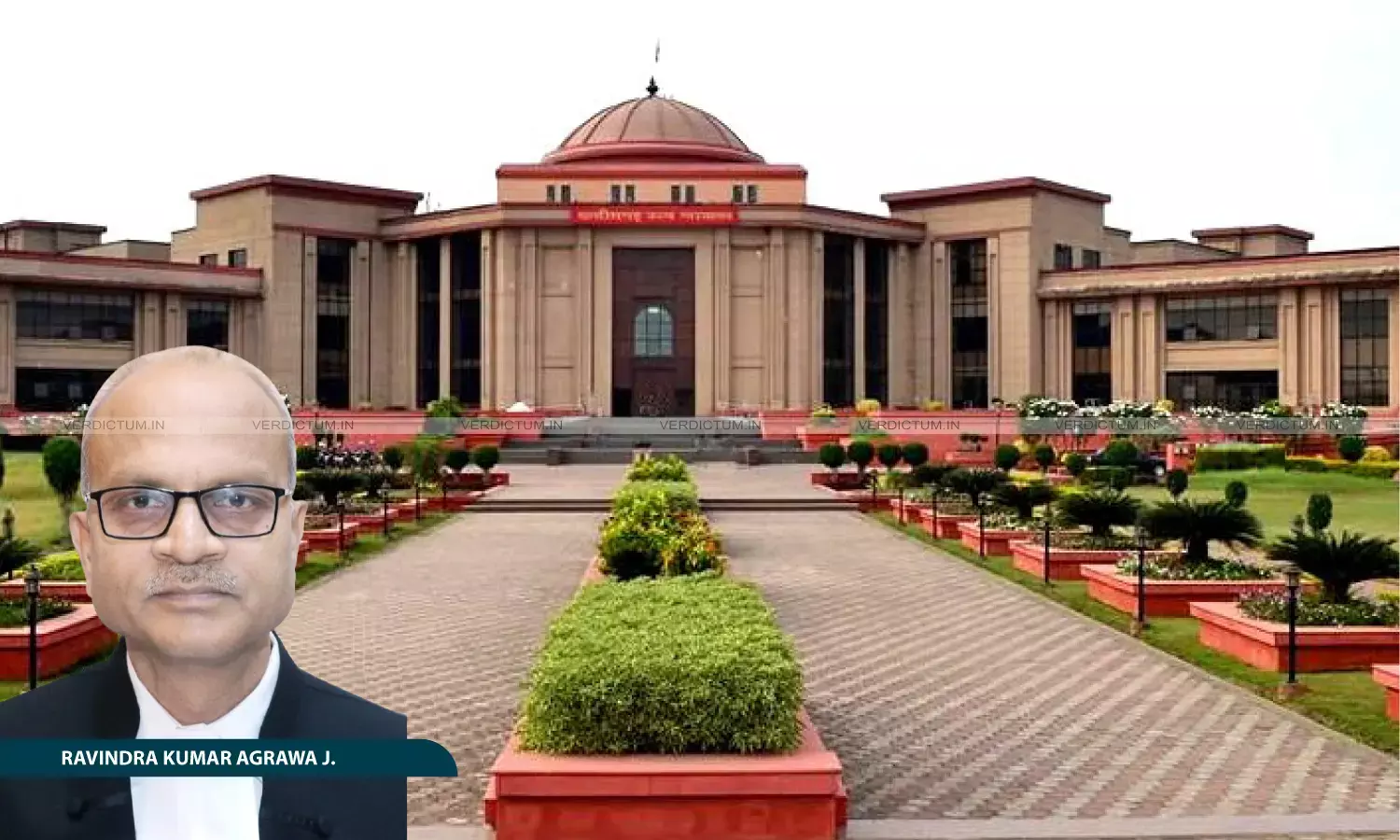
The Chhattisgarh High Court has observed that a school building, while not a "human dwelling," falls under the legal definition of house-trespass because it serves as a place for the custody of property, such as furniture and educational assets.
The court noted that because the school was in the exclusive possession of the complainant, the petitioner had no right to enter the premises forcibly without permission.
The Bench of Justice Ravindra Kumar Agrawal observed, “From the conjoint reading of these three Sections it would clearly demonstrate that whoever criminally trespassed by entering into any building, tent or vessels used as a human dwelling or any building used as a place of worship or as a place for custody of the property, said to commit house trespass. There are three separate ingredients for house trespass i.e. (i) any building used as a human dwelling (ii) any building used as a place of worship (iii) any building used as a place for custody of the property. The school building would definitely cannot be a human dwelling house or place of worship but it can be considered to be a place for custody of the property where school furniture and other educational assets are being kept in safe custody. The School building was in exclusive possession of the complainant and the petitioner was not having any right to forceful enter into the premises under the possession of the complainant without their permission.”
Advocate Vaibhav P. Shukla appeared for the Petitioner, while Government Advocate Sunita Manikpuri appeared for the Respondents.
Facts of the Case
A criminal miscellaneous petition was filed under section 528 of the BNSS, 2023, by the petitioner against the impugned order passed by the Additional Sessions Judge, Raipur, whereby the Criminal Revision of the petitioner was dismissed, and the order framing the charge was affirmed.
The petitioner, a member of the NSUI, was accused of leading a group that forcibly entered the premises of Krishna Kids Academy. According to the complaint filed by the school's Administrator, the group shouted slogans inside the building and engaged in verbal abuse toward the Administrator and female staff after being asked to stop. Following a police investigation, a charge sheet was filed, and the trial court proceeded to frame charges for house-trespass and public obscenity.
Contention of the Parties
The petitioner challenged these charges, arguing that the complaint was a motivated attempt to silence his protests against the school's alleged illegal operations. A primary legal contention raised was that a school building does not meet the legal definition of a "dwelling house," and therefore, the specific charge of house-trespass under the Indian Penal Code should not apply.
On the other hand, the State submitted that there was prima facies sufficient evidence with respect to the offence allegedly committed by the petitioner. From the statement of witnesses who are the employees of the school it was crystal clear that they have duly identified the petitioner that he also trespassed the school premises and hurling abuses. She submitted that to frame a charge against the accused persons, only the prima facie ingredients are to be considered, and the trial court, after considering the entire material, framed the charge against the petitioner, which did not suffer from any infirmity.
Observations of the Court
The Court said, “From the entire material annexed with the petition, this court does not find any infirmity or illegality in framing charge against the petitioner for the offence under Section 452 IPC. The Hon’ble Supreme Court has laid down the principles in the case of State of M.P. vs. Deepak, 2019 (13) SCC 62, wherein it has been held that at the stage of framing of charge, the court has to consider the material only with a view to find out if there is a ground for presuming that the accused had committed the offence. It is also held that the court is required to evaluate the material and documents on record with a view to finding out if facts emerging therefrom, taken at their face value, disclose the existence of all the ingredients constituting the alleged offence and at the stage of framing charge, the court is not required to appreciate the evidence on record and consider the allegations on merits and to find out on the basis of the evidence recorded is likely to be convicted or not.”
The observation emphasized that the school building was in the exclusive possession of the complainant (the school administration). Consequently, the petitioner had no legal right to enter the premises forcefully without explicit permission. The Court further clarified that at the stage of framing charges, the judiciary is not required to conduct a "mini-trial" or evaluate if the evidence will certainly lead to a conviction; it must only determine if there are sufficient grounds to presume the accused committed the offence.
Accordingly, the Court dismissed the petition.
Cause Title: Vikas Tiwari v. State of Chhattisgarh and Ors. [CRMP No. 8 of 2026]
Appearances:
Petitioner: Advocate Vaibhav P. Shukla
Respondents: Government Advocate Sunita Manikpuri