

Deaf & Mute Victim’s Testimony Intelligible; Plastic Doll Demonstration Ensured Clarity: Chhattisgarh High Court Upholds Rape Conviction
Court noted that despite her inability to speak or hear, the victim was able to communicate the core facts.

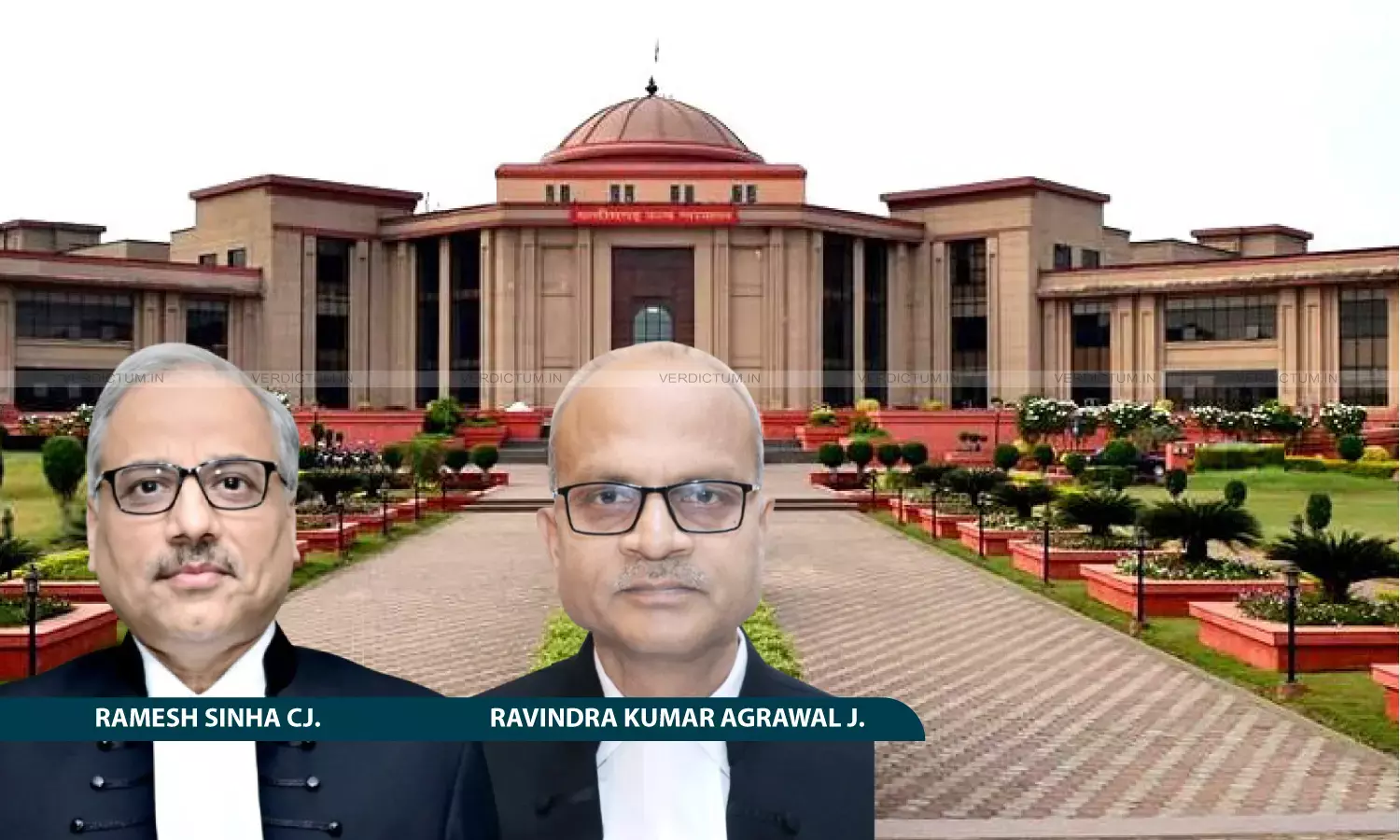
The Chhattisgarh High Court has upheld the conviction of a man for rape and house-trespass, holding that the statement of the deaf and mute victim, recorded through gestures with the aid of an interpreter, can form the sole basis of conviction if it inspires confidence. The Court noted that despite her inability to speak or hear, the victim was able to communicate the core facts of the incident in an intelligible and consistent manner.
To ensure clarity and eliminate any ambiguity, the trial court also adopted demonstrative techniques, including the use of a plastic doll, enabling the victim to effectively convey the nature of the assault.
Chief Justice Ramesh Sinha and Justice Ravindra Kumar Agrawal noted, “Upon careful consideration of the entire evidence available on record, this Court finds that the learned trial Court has rightly appreciated the testimony of the victim, who is admittedly hearing and speech impaired since birth. Before recording her evidence, the trial Court satisfied itself regarding her ability to understand the questions and communicate her responses. Her deposition was recorded in open Court with the assistance of a trained interpreter Padma Jagat (PW-08), who facilitated communication by interpreting the gestures and signs made by the victim. The trial Court also adopted demonstrative methods, including the use of a plastic doll, to ensure clarity regarding the nature of the occurrence and to remove any possibility of misunderstanding. From the observations recorded during her examination, it is evident that although the victim could not hear or speak, she was capable of conveying the essential facts relating to the incident in an intelligible manner”.
“…this Court finds no illegality or perversity in the manner in which the learned trial Court assessed the competency and credibility of the deaf and dumb victim. Her testimony inspires full confidence and constitutes reliable substantive evidence forming the foundation of the conviction recorded against the accused. Consequently, the findings of the learned trial Court on this aspect are affirmed. The present criminal appeal lacks merit and is accordingly dismissed”, it further noted.
Advocate Prasoon Agrawal appeared for the appellant and S.S. Baghel, Government Advocate appeared for the respondent.
In the matter, a deaf and mute woman alleged that the accused, a relative, entered her house when she was alone and committed forcible sexual intercourse. Upon her parents’ return, she disclosed the incident through gestures, leading to the registration of an FIR and subsequent investigation.
During trial, her testimony was recorded with the help of an interpreter and demonstrative methods, and was supported by medical and forensic evidence, including the detection of seminal stains on vaginal slides and the accused’s underwear.
The Division Bench, while dismissing the criminal appeal, observed that the trial court had exercised due caution and sensitivity in recording the victim’s evidence.
“The defence contention that the victim, being deaf and dumb, is not a competent witness is liable to be rejected. The law recognizes that a witness who is unable to speak may give evidence by signs or gestures in open Court, and such evidence is to be treated as substantive oral evidence. In the present case, the trial Court took adequate precautions by securing the presence of a trained interpreter and by recording its satisfaction regarding the victim’s capacity to understand and respond. There is no material on record to suggest that the victim was suffering from any mental incapacity that would render her testimony unreliable. On the contrary, her ability to identify the accused, to demonstrate the act complained of and to narrate the sequence of events through gestures clearly establishes her competency as a witness”, the Bench noted.
Affirming the approach, the Court held that there was no illegality or perversity in the appreciation of her testimony. It emphasised that evidence given through signs and gestures, when properly interpreted and recorded, constitutes substantive and reliable evidence under law.
The Bench also found strong corroboration from surrounding circumstances, considering that the victim had made an immediate disclosure to her parents upon their return, identifying the accused through gestures, prompting assurance to her version. Furthermore, it noted that the accused, in his statement under Section 313 CrPC, failed to offer any plausible explanation for these incriminating circumstances.
“The testimony of the victim also finds substantial corroboration from surrounding circumstances, including the evidence of her parents regarding her immediate disclosure, the scientific evidence in the form of the forensic report detecting seminal stains and human sperm on the vaginal slides and on the underwear of the accused (Exhibit P-26), and the absence of any plausible explanation from the accused in his statement under Section 313 of the Code of Criminal Procedure. The cumulative effect of this evidence leads to the inescapable conclusion that the prosecution has successfully proved that the accused had committed forcible sexual intercourse with the victim”.
Concluding that the trial court’s findings were well-reasoned and legally sound, the Court dismissed the appeal, directing the appellant to undergo the sentence as imposed.
“It is well settled that merely because a witness is deaf and dumb, her testimony cannot be discarded. Evidence given through gestures or signs with the assistance of a competent interpreter is admissible and can form the basis of conviction if it inspires confidence...”, the Bench noted in the judgment.
Cause Title: Neelam Kumar Deshmukh State Of Chhattisgarh [Neutral Citation: 2026:CGHC:12396-DB]
Appearances:
Appellant: Prasoon Agrawal, Advocate.
Respondent: S.S. Baghel, Government Advocate.