

Blacklisting Contractors Disproportionate Without Finding Of Fraud Or Mens Rea: Chhattisgarh HC In Jal Jeevan Mission Tender
Court says cancellation of contract was justified once eligibility certificate became doubtful, but three-year blacklisting cannot be imposed without a clear finding of intentional fraud or deliberate misrepresentation

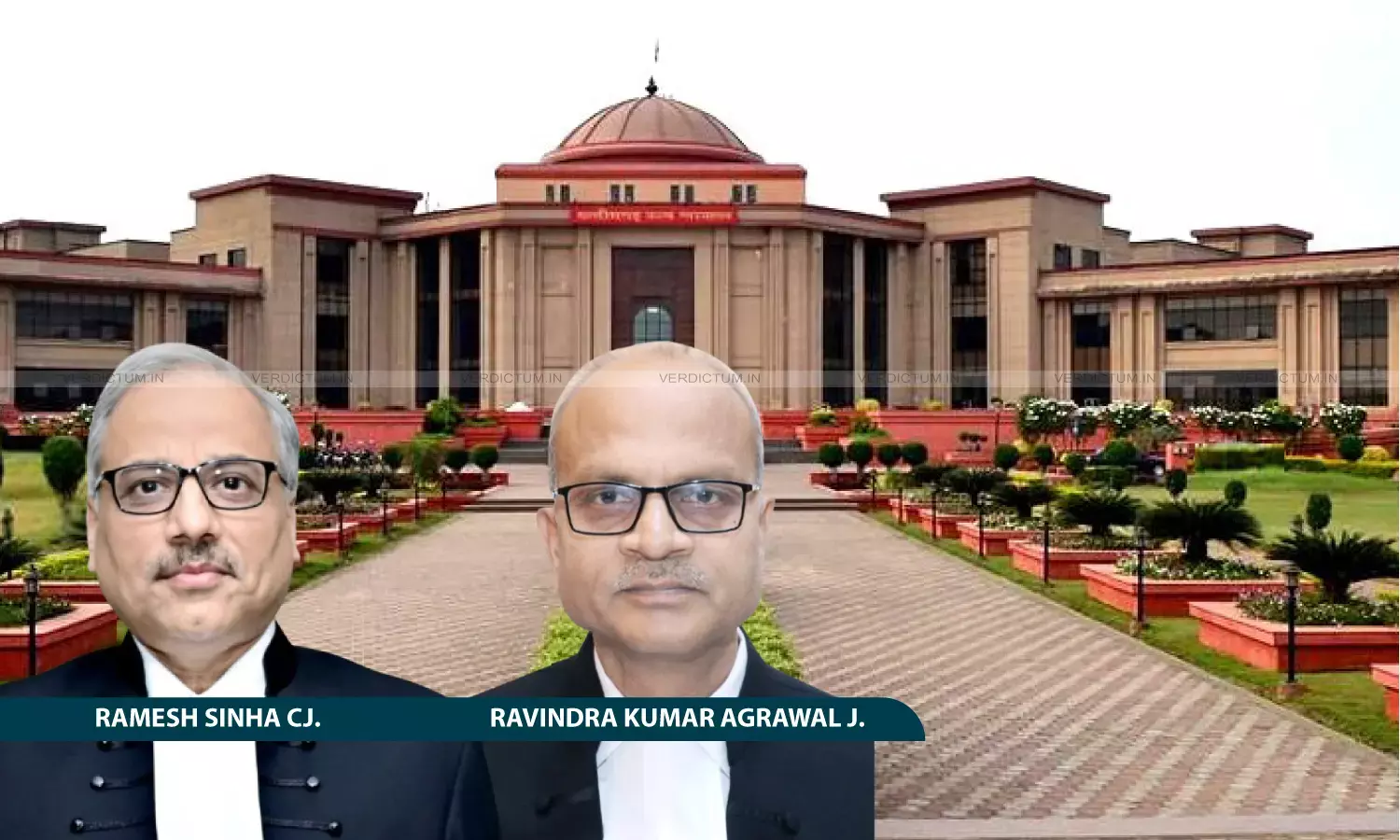
The Chhattisgarh High Court has set aside a decision of the State Water and Sanitation Mission authorities that sought to continue the effect of an earlier order against several contractors and blacklist them for three years in connection with works under the Jal Jeevan Mission.
The Bench noted that while government authorities were justified in cancelling a contract under the Jal Jeevan Mission after the eligibility certificate relied upon by the contractors came under doubt, the further step of blacklisting them for three years was disproportionate in the absence of a clear finding of fraud or deliberate misrepresentation. The Court observed that there is a significant distinction between a bidder who intentionally furnishes a forged certificate and one who relies on a document that is later found defective. In the present case, the impugned order proceeded largely on assumptions without establishing mens rea or intentional wrongdoing on the part of the petitioners.
Chief Justice Ramesh Sinha and Justice Ravindra Kumar Agrawal observed, “The distinction between a bidder who intentionally furnishes a forged certificate and one who relies upon a document later found defective is material for the purpose of determining the proportionality of blacklisting. The impugned order proceeds on assumption rather than a clear finding of mens rea or deliberate misrepresentation attributable to the petitioners. It is equally relevant that the respondents have themselves treated the issue as one involving disputed facts requiring criminal investigation. In such a situation, imposition of the extreme measure of blacklisting for three years, without a conclusive determination of intentional wrongdoing by the petitioners, cannot be said to satisfy the requirement of proportionality. Administrative action having stigmatic and exclusionary consequences must be founded on clear and established culpability. This Court is therefore of the view that while the respondents were justified in protecting the sanctity of the tender process by cancelling the contract once the eligibility document became doubtful, the further step of blacklisting the petitioners for three years travels beyond what was necessary in the circumstances of the case. Termination of the contract itself neutralized any advantage derived from the questioned certificate. In absence of a definitive finding of fraud or conscious misrepresentation by the petitioners, the penalty of blacklisting cannot be sustained”.
“While the respondents were within their authority to annul the contract and proceed with re-tendering after the eligibility document relied upon by the petitioners was found doubtful, the further direction debarring/blacklisting the petitioners for a period of three years cannot be sustained in law for want of a clear and conclusive finding of deliberate fraud or intentional misrepresentation attributable to the petitioners. The penalty of blacklisting imposed upon the petitioner(s), being disproportionate in the facts of the cases, therefore deserve to be and is accordingly set aside”, the Bench further observed.
Advocate B.P. Sharma appeared for the petitioner and Praveen Das, Additional Advocate General appeared for the respondent.
In the matter, the Bench was hearing a batch of writ petitions filed by multiple contractors, including M/s A.K. Construction and others, challenging a decision taken in a meeting dated 02-12-2025 by the State Water and Sanitation Mission authorities.
The decision, communicated through letters dated 02-01-2026 and 28-01-2026, had maintained an earlier order dated 20-12-2024 and effectively blacklisted the petitioners from participating in future works.
The petitioners contended that the impugned decision was arbitrary and illegal because the earlier order dated 20-12-2024, on the basis of which the authorities had proceeded had already been quashed by the High Court in earlier proceedings.
Despite this, the authorities continued to rely on the same order and proceeded to blacklist the contractors for three years and restrict them from participating in future works of the Public Health Engineering Department and district water and sanitation missions.
They further sought directions allowing them to continue and complete the contractual works under the agreements executed with the State authorities, arguing that the continued reliance on a quashed order amounted to an abuse of administrative power.
The Court after hearing the parties, examined the actions of the authorities in continuing the effect of an order that had already been set aside. The Bench observed that once the earlier order had been quashed by the Court, the authorities could not revive or rely upon it through subsequent administrative decisions.
“It is well settled that blacklisting has serious civil consequences, as it debars a contractor from participating in future government tenders and adversely affects its business reputation and livelihood. Therefore, 40 such action must satisfy the tests of fairness, proportionality and reasoned decision-making”, the judgment read.
However, the Court while partly allowing the petitions, held that for the other petitioners’ claims regarding continuation of the contract, completion of remaining work, payment of dues, and valuation of executed work arise from the contractual agreement between the parties. Such issues involve factual determinations and contractual obligations, which cannot be examined in writ jurisdiction under Article 226 of the Constitution of India.
The other petitioners, in the batch, were therefore granted liberty to pursue their remedies before the competent civil court or through the arbitration or dispute resolution mechanism provided in the contract, with all rights and contentions left open.
Cause Title: M/s A.K. Construction & Anr. v. State Of Chhattisgarh [Neutral Citation: 2026:CGHC:10481-DB]
Appearances:
Petitioner: B.P. Sharma, Raza Ali and Saurabh Choudhary, Advocates.
Respondent: Praveen Das, Additional Advocate General