

Service Records Of Judicial Officers Exempt From RTI Disclosure In Absence Of Public Interest: Chhattisgarh High Court
The SIC had ordered disclosure of service records information concerning three judicial officers in response to an RTI application filed by a private individual
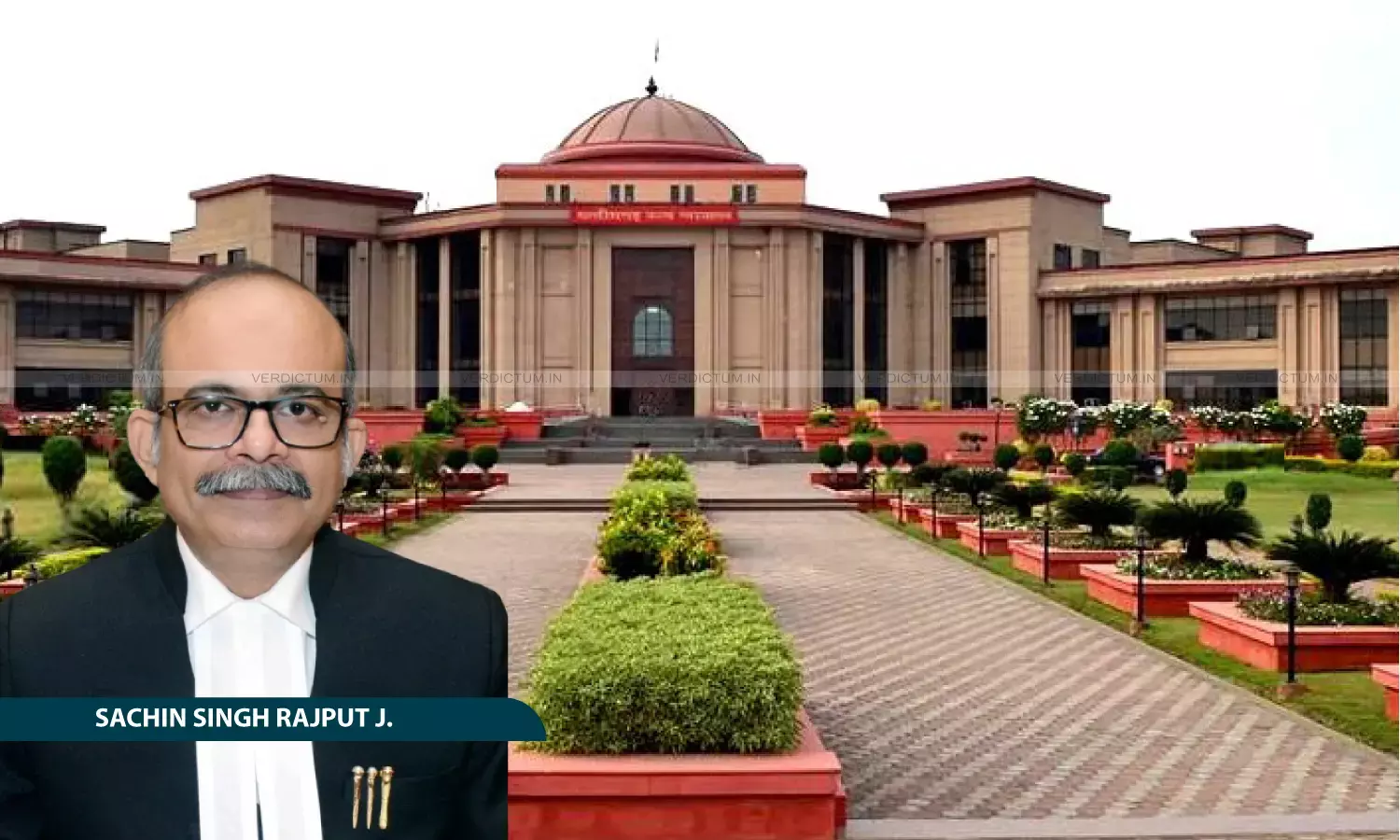
The Chhattisgarh High Court has ruled that information relating to the service records of judicial officers including their educational or job-related certificates, complaints made against them, and details of departmental or other inquiries is exempt from disclosure under the Right to Information Act, 2005.
The Chhattisgarh State Information Commission (SIC) had ordered disclosure of such information concerning three judicial officers in response to an RTI application filed by a private individual.
A Bench of Justice Sachin Singh Rajput held, “The information sought for is maintained by the petitioners being employer of the judicial officers can be treated as records pertaining to personal information of those judicial officers and publication of the same is prohibited under Section 8(1)(j) of the RTI Act, as this is the matter between the employer and the employee and are governed by the Service Rules, therefore, falls under the expression 'personal information' and disclosure of which has no relationship to any public activity or public interest."
The High Court further held, "The information sought pertains to judicial officers of the State of Chhattisgarh which have been kept safely and confidentially by their employer (High Court administration) and a bare perusal of the application made under Section 6 (1) of the RTI Act does not show that such information was required for any public purpose, rather it appears to have been sought for the personal use of the applicant."
Background
The RTI application was filed in 2017 seeking details of complaints lodged against three judicial officers, the inquiries conducted into those complaints, and the certificates they had submitted during their appointment process. In 2019, the State Information Commission directed the High Court administration to furnish the requested information.
Aggrieved by this direction, the High Court’s administrative side represented through the Registrar General and Public Information Officers approached the High Court by way of writ petitions. These petitions were allowed by a common order.
Finding
The High Court, however, rejected one of the preliminary objections raised by the petitioners. They had argued that the SIC’s order was invalid because it was passed by a single Information Commissioner, whereas the RTI Act envisages a multi-member commission. Disagreeing with this contention, the Court held that individual Information Commissioners are legally competent to hear and decide appeals independently. The RTI Act, the Court explained, permits internal allocation of work among commissioners, and a decision by a single commissioner cannot be treated as an overreach of jurisdiction.
The Court clarified, “each member of the State Information Commission and the Central Information Commission is equally competent to decide the issue involved on its own merits and there is no question of the Commissioner alone usurping the jurisdiction of the Commission and passing the order in his individual capacity, as argued by the counsel for the petitioners. ”
The Court also dismissed the argument that the SIC had ordered a “roving inquiry” into the conduct of judicial officers. It held that, "The State Information Commission has nowhere asked the petitioners in this case to create the information and then to provide the same to the applicant. Rather, being the repository of the record pertaining to the judicial officers, the information sought for can well be said to exist and accessible to the public authority as is provided under Section 6 of the RTI Act."
The High Court held that the requested material also falls within the protection of Section 8(1)(e) of the RTI Act, which exempts information held in a fiduciary relationship from disclosure.
The Court reasoned that documents such as complaints, certificates, and inquiry records are submitted by judicial officers to the High Court in confidence and are held by the Court in a fiduciary capacity. Such information, the Court held, cannot be disclosed unless the applicant clearly establishes an overriding public interest.
Finding that no such public interest had been demonstrated by the RTI applicant, the Court quashed the SIC’s directions .
Cause Title: High Court of Chhattisgarh & Others v. Rajkumar Mishra & Anr., [2026:CGHC:2344]
Appearance:
Petitioners: Advocates Amrito Das, Abhijeet Mishra, and Yashraj Verma
Respondent: Advocate Shyam Sunder Lal Tekchandani.
Click here to read/download Judgment
