

Minors Cannot Legally Consent To Sexual Acts: Calcutta High Court Upholds Life Term For POCSO Convict Who Pleaded Long-Term Love Affair
A 23-year-old man and a girl who was just 12 were allegedly involved romantically.
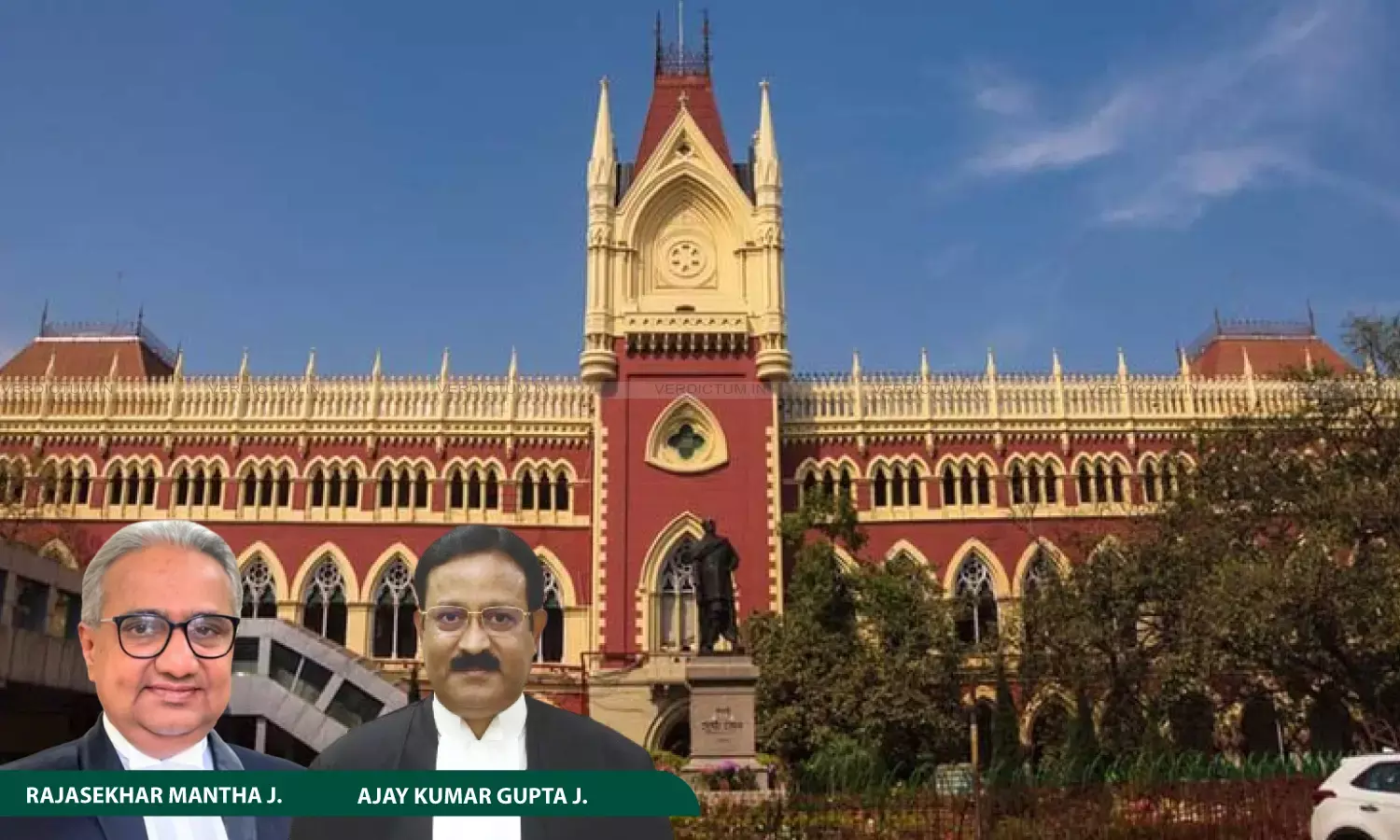
The Calcutta High Court has reiterated that a child lacks the maturity to comprehend the implications of sexual activity and is legally incapable of giving consent. The Court upheld the conviction of a man under the Protection of Children from Sexual Offences Act, 2012 (POCSO Act).
A 23-year-old man and a girl who was just 12 were allegedly involved romantically. According to the prosecution, sexual relations developed later and continued for years under the guise of a supposed “long-term love affair.”
A Division Bench of Justice Rajasekhar Mantha and Justice Ajay Kumar Gupta noted that the girl had openly admitted to having “loved” the accused, which had led to their relationship and eventual sexual contact. Nevertheless, the Bench stressed that, as a minor, she lacked the legal capacity to consent to any sexual activity.
The Court said, "The victim was a minor and incapable of giving valid and legally enforceable consent. She still however believed and relied upon the appellant that he would marry her. The complaint was lodged after the victim discovered that she was pregnant and the appellant ignored the victim after being informed as such."
Background
Despite the girl’s repeated reluctance to engage in sexual acts, the accused is said to have persistently persuaded her, promising marriage as a way to gain her compliance. The victim eventually became pregnant at the age of 15 in 2017. When the accused and his family refused to acknowledge responsibility for the pregnancy, the girl’s family filed a POCSO complaint.
The accused denied all allegations and argued that the complaint was unreliable because it had been filed more than two years after the sexual relationship allegedly began. However, the High Court dismissed this argument. It observed that the mental and emotional state of a minor particularly one involved in what she believed to be a romantic relationship can reasonably explain her initial silence.
Finding
The Court explained, “The delay in lodging the complaint was thus based on the love of the victim for the appellant, and further on the hope that the sexual relationship which started on the wrong and illegal side would be regularised by the passage of time and conduct of the appellant. A child may not know the consequences of sexual relation. The victim in this case discovered her pregnancy and only then confronted the appellant. Thus, it is inconsequential as to when the complaint was filed in view of the clear evidence of aggravated penetrative sexual assault by the appellant on the victim.”
Upholding the trial court’s verdict from Sealdah, the High Court confirmed the accused’s conviction and the sentence of life imprisonment along with a fine of ₹2 lakh. The Bench reasoned that the victim’s age placed her below the statutory threshold for consent, making the appellant’s acts fall under aggravated penetrative sexual assault as defined in Sections 5(j)(ii) and 5(l) of the POCSO Act, punishable under Section 6.
The Court noted that the victim’s birth certificate had been properly submitted on record during the trial and that the defence had never objected to its admissibility at the appropriate stage. Thus, her minor status was firmly established.
Regarding DNA evidence, the Court found that the defence’s interpretation was misleading. The Bench clarified that the phrase “cannot be excluded” did not weaken the prosecution’s case but instead strengthened it by indicating the appellant could indeed be the father.
The Court held, “The DNA report in the instant case, therefore, has not given a clean chit to the appellant. The expression 'cannot be excluded' clearly indicates that the appellant could very well be the father of the child of the victim. The said DNA report instead corroborates and enhances the reliability of the oral evidence on record.”
Together, the oral testimony and scientific evidence formed a complete chain of proof, leaving no scope for granting the accused the benefit of doubt.
The High Court also issued directions to ensure timely compensation for the victim. Recognizing the likelihood that the convict might fail to pay the fine, the Court instructed the State Legal Services Authority (SLSA) to disburse ₹1,80,000—representing 90% of the fine amount—within 15 days. If the accused later pays the fine, the same amount is to be reimbursed to the SLSA, with the remaining ₹20,000 going to the State. Additionally, the Court ordered the SLSA to pay the victim an extra ₹2 lakh from its own funds. The trial court has been tasked with ensuring compliance with these financial directions.
Cause Title: Santosh Srivastava v. The State of West Bengal & Anr., [2025:CHC-AS:2228-D]
Appearance:
Appellant: Advocates Sabir Ahmed, Ayan Chakraborty, Sohini Mukherjee, and Saikat Mallick.
Respondents: Advocates Rituparna Ghosh, Afreen Begum and Shounak Mondal
