

Caste Not Restricted To Biological Descent; Child’s Identity Not Anchored To Absent Father: Bombay High Court Directs Correction Of Name & Caste From School Records
Recognising that a child’s identity cannot be anchored to a father absent from her life, the High Court held that caste determination in exceptional circumstances must reflect lived social reality rather than mere biological lineage, and directed correction of official records to align with the minor’s true legal and social identity.
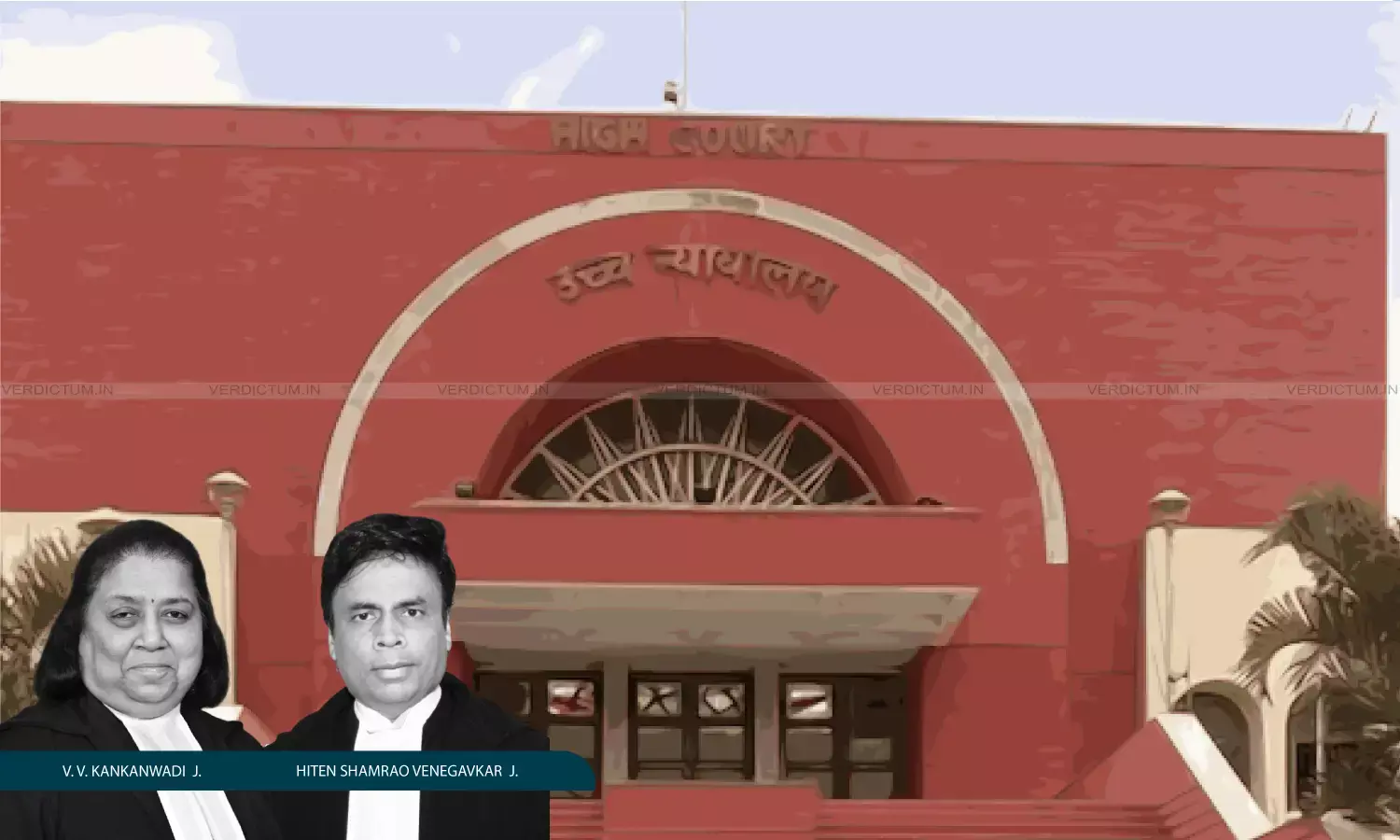
Justice Vibha Kankanwadi and Justice Hiten S. Venegavkar, Bombay High Court, Aurangabad Bench
The Bombay High Court held that where a child has been raised exclusively by the mother, her identity cannot be compulsorily tied to an absent father, and caste determination cannot be restricted solely to biological descent.
Observing that official records must reflect the child’s actual social and legal position rather than formalistic assumptions, the Court directed correction of school entries to remove paternal particulars and substitute them with details consistent with her real upbringing and lawful status.
The Court was hearing a writ petition seeking correction of a minor student’s name and caste in school records after authorities rejected the request, citing school code provisions.
A Division Bench of Justice Vibha Kankanwadi and Justice Hiten S. Venegavkar observed that “a society that claims to be developing cannot insist that a child’s public identity must be anchored to a father who is absent from the child’s life… The State’s formats must not become moral judgments; they must become accurate instruments of welfare.”
The Bench further held that “the determination of caste, particularly in atypical or exceptional factual settings, cannot be restricted to a matter of biological descent alone”.
Background
The petition concerned a minor girl studying in school under the guardianship of her mother, who had exclusive custody and responsibility for her upbringing. The father’s name had originally been entered in official records, including the birth certificate and school documents, at the time of birth and admission.
Subsequent developments materially altered the legal and factual position. Custody remained solely with the mother, and the father ceased to have any role in the child’s upbringing. The mother later issued a Gazette notification seeking correction of the child’s name and applied to the school authorities for corresponding changes in school records.
The request was rejected on the ground that the Secondary School Code did not permit such corrections, prompting the writ petition.
Court’s Observation
The Court began by examining the legal status of administrative records and held that registers maintained by authorities are meant to reflect factual reality for purposes of governance and welfare, not to fossilise outdated entries merely because they were once recorded. A refusal to consider correction based on a blanket assertion of lack of power was held unsustainable.
The Bench relied on the Full Bench decision in Janabai d/o Himmatrao Thakur v. State of Maharashtra (2019), which held that corrections in name, surname, or caste fall within the category of “obvious mistakes” capable of rectification when supported by proper documents. Authorities, therefore, cannot reject requests mechanically and must consider them on their merits.
The Court then addressed the constitutional dimension, emphasising that identity is an integral part of dignity protected under Article 21, and that compelling a child to carry an identity inconsistent with her lived reality violates constitutional guarantees. It observed that administrative insistence on paternal identity as the sole determinant reflects patriarchal assumptions inconsistent with equality under Article 14 and non-discrimination principles under Article 15.
On caste determination, the Court rejected the State’s contention that caste must invariably follow the father. Referring to the Supreme Court’s decision in Rameshbhai Dabhai Naika v. State of Gujarat, it reiterated that while there may be a presumption that a child takes the father’s caste, the presumption is not conclusive and must yield to factual examination of upbringing and social environment.
The Bench also relied on decisions recognising that children raised entirely by a single parent may claim that parent’s caste in appropriate circumstances, provided genuineness is established through documentary scrutiny rather than rigid lineage rules. It noted that courts have consistently adopted a fact-sensitive approach in such cases.
The Court stressed that school authorities are not caste-adjudicating bodies, and therefore their role is limited to entering the relevant details based on supporting documents, while the competent statutory authority must evaluate and issue caste certificates. This institutional separation must be maintained to prevent misuse while protecting legitimate claims.
The Bench underscored that the paramount consideration is the welfare and best interest of the child. Where continued recording of paternal identity does not reflect social reality and risks stigma or vulnerability, correction of records becomes necessary to protect dignity and prospects.
It was observed that entries that may have been correct initially can become factually and legally untenable due to subsequent undisputed developments, and such entries fall within the category of “obvious mistakes” warranting rectification.
Conclusion
Allowing the writ petition, the Court quashed the order rejecting the request for correction of the minor’s name and caste. It directed the school headmaster, upon verification of the Gazette notification and supporting documents, to forward a fresh proposal for correction of the child’s name in school records, and directed the education authority to effect the necessary changes by substituting the mother’s name in place of the father’s.
The Court further directed that the child’s caste be entered in school records based on the mother’s caste status and permitted the mother to apply for issuance of a caste certificate for the child on that basis. The competent authority was directed to consider such an application expeditiously in accordance with law and relevant precedents, without rigid insistence on paternal records where the facts demonstrate exclusive maternal upbringing.
The authorities were also instructed to ensure that the child is not subjected to stigma, harassment, or unnecessary disclosure while implementing the directions.
Cause Title: X.Y.Z. (Minor) & Anr. v. State of Maharashtra & Ors. (Neutral Citation: 2026:BHC-AUG:7179-DB)
Appearances
Petitioners: Sanghmitra Wadmare
Respondents: V.M. Kagne, AGP
