Bombay High Court Criticises SEC’s Late Postponement Of Maharashtra Local Body Polls; Orders Measures To Preserve Electoral Fairness
The High Court held that although the State Election Commission is constitutionally empowered to postpone elections in exceptional situations, the belated exercise of such authority and fragmented rescheduling risk adversely affecting voter neutrality.
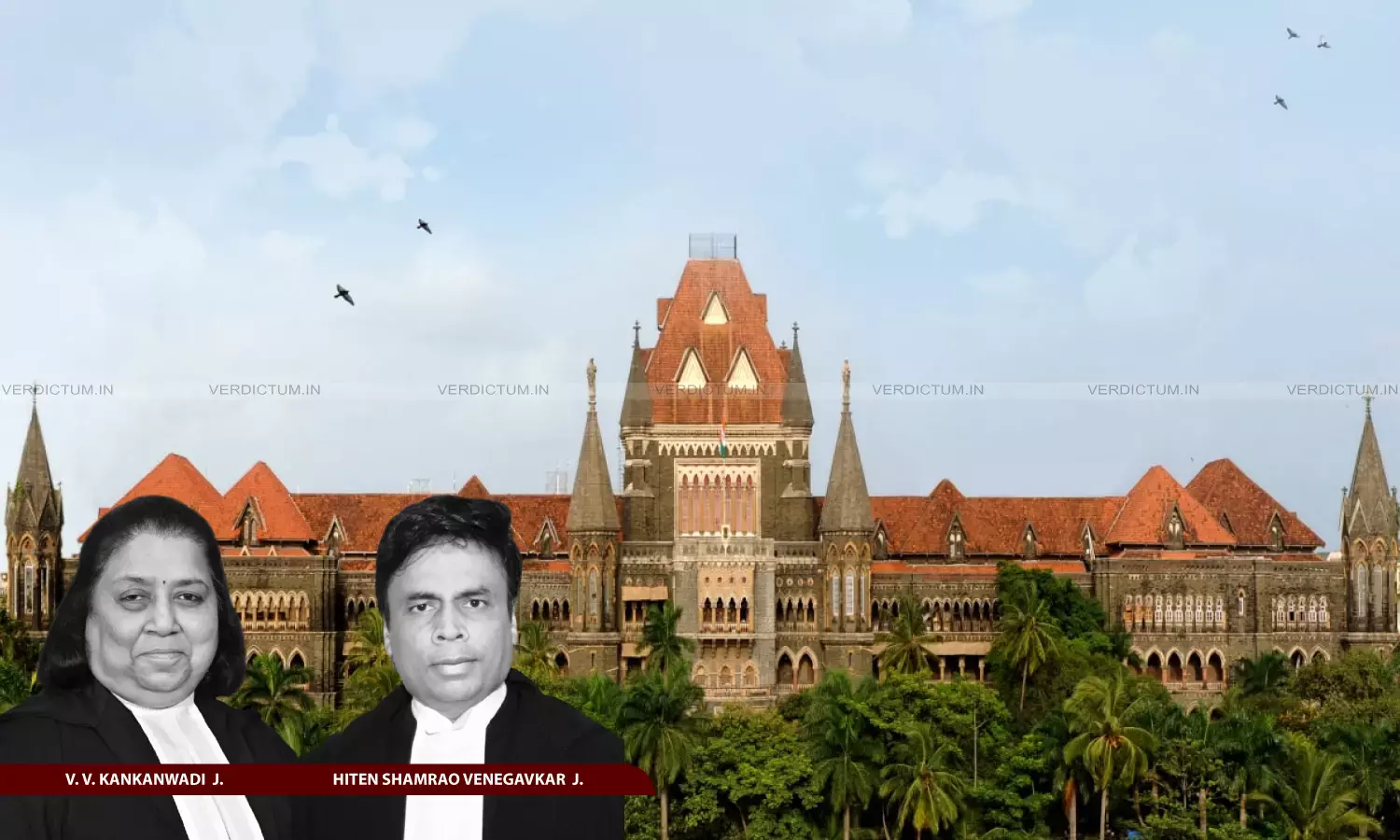
The Bombay High Court has criticised the last-minute postponement of elections to several Nagar Parishads and Nagar Panchayats in Maharashtra amidst the ongoing local body polls, emphasising that while postponement of elections is permissible under the Constitution, it must be carried out with foresight so as not to undermine electoral coherence
The Court was hearing a group of writ petitions filed under Article 226 of the Constitution, challenging decisions taken by the State Election Commission to defer polling in certain municipal bodies due to the pendency of statutory appeals arising from nomination disputes.
A Division Bench comprising Justice Vibha Kankanwandi and Justice Hiten S. Venegavkar, while adjudicating the matter, observed: “…the Commission's act of postponing elections at the last moment, after the entire machinery for polling has been mobilized, betrays an absence of foresight. The appellate process is a predictable part of the statutory scheme. It cannot be characterized as an unforeseen emergency. The Commission could have with administrative prudence devised the election program to avoid a clash between appellate timelines and withdrawal dates. Its failure to do so amounts to avoidable administrative impropriety. Moreover, the Commission's approach of postponing elections only in certain constituencies within a single ‘ward’ runs contrary to the logic of the election rules.”
Advocate Ram S. Shinde represented the petitioners, while Additional Government Pleader S.K. Tambe appeared on behalf of the respondents.
Background
The postponement orders were issued only seventy-two hours before polling, because decisions in appeals under the Maharashtra Municipal Councils and Nagar Panchayats Election Rules, 1966, were not finalised, and candidates whose appeals succeeded would otherwise lose their statutory right to withdraw candidature.
Petitioners submitted that this situation was neither unforeseen nor extraordinary and should have been anticipated at the planning stage of the election programme. They argued that invoking postponement at the last moment created uncertainty and logistical disruption across multiple districts.
Petitioners further submitted that the revised election schedule fixed polling for postponed local bodies on 20 December 2025, significantly later than the original date. They apprehended that if results in the majority of bodies under the original schedule were declared earlier, such outcomes would exert psychological influence over voters in postponed bodies, affecting the free agency of the voter and distorting the level playing field guaranteed under the Constitution.
It was also submitted that in some wards, only selected constituencies were postponed while other constituencies within the same ward were permitted to proceed under the original schedule, resulting in fragmentation of polling within a single electoral unit. This, according to petitioners, was inconsistent with the statutory structure governing municipal elections.
Court’s Observation
The Bombay High Court examined the constitutional scheme contained in Articles 243K and 243ZA and reaffirmed that the State Election Commission possesses the power to postpone polls, but emphasised that the power must be exercised in exceptional circumstances and with a degree of foresight consistent with constitutional discipline. The Bench held that the appellate process concerning nominations is a predictable stage in the statutory scheme, and the Commission’s failure to anticipate its timelines reflected a lack of administrative prudence.
The Court also examined the relevant provisions of the Maharashtra Municipal Councils and Nagar Panchayats Election Rules, including Rule 4(3), Rule 10, Rule 15 and Rule 17. It recorded that the Commission itself had framed the election programme, recognising that appeals may be filed and decided close to the withdrawal date, and therefore ought to have devised a schedule that avoided the need for drastic changes shortly before polling.
Placing reliance on judicial principles laid down by the Hon’ble Supreme Court, including in S. Subramaniam Balaji v. State of Tamil Nadu, Association for Democratic Reforms and PUCL v. Union of India, the Court reiterated that the purity of elections is fundamental, and that the free agency of the voter must remain protected from any direct or indirect influence, whether through premature election trends or psychological momentum. It was observed that early declaration of results would create a bandwagon effect capable of tilting voter behaviour in later polls, thereby impairing the neutrality of the democratic process
The Court further noted that the Commission’s approach of postponing elections only in certain constituencies within a ward was inconsistent with its own earlier stand that fragmentation of polling within a ward is undesirable. It was observed that voters cast multiple ballots within a ward and that coherence of the electoral exercise is essential. It held that fairness demands that if polling in one constituency of a ward is postponed, all constituencies within that ward must be aligned to ensure electoral integrity.
On the scope of judicial review, the Court held that intervention in the midst of an election must remain limited and that a balance must be struck between rectifying identified deficiencies and avoiding disruption of the democratic process. The Commission’s conduct warranted censure, but considering the advanced stage of the election, the Court refrained from invalidating the postponement orders.
Conclusion
Accordingly, the Bombay High Court directed that polling may proceed under both the original and revised schedules; however, no counting or declaration of results for any Nagar Parishad or Nagar Panchayat shall take place until polling and counting in all postponed local bodies are completed.
The Court directed that all results must be declared together on or after 21 December 2025. It also restrained the publication or broadcast of exit polls until the completion of voting in postponed areas.
The Commission was directed to frame guidelines within ten weeks to account for foreseeable appellate timelines, adopt uniform principles while postponing polls and ensure that such last-minute disruptions are avoided in future elections.
The writ petitions were disposed of without order as to costs.
Cause Title: Vinod Pundlikrao Chinchalkar v. The State of Maharashtra & Others and connected matters (Neutral Citation: 2025:BHC-AUG:33402-DB)
Appearances
Petitioners: Advocates Ram S. Shinde, V. D. Salunke, Ravindra B. Ade, N. P. Patil Jamalpurkar, Shubhangi D. More, Shrigopal G. Dodya and Sayyed Tausif Yaseen
Respondents: Advocates Sachindra Shetye with Sharau Dhantare and Akshay Pansare; S. K. Tambe, Additional Government Pleader