

Recovery Rights U/S 50 MRTU & PULP Act Are Person-Specific And Non-Transferable To Unions Absent Express Mandate: Bombay High Court
The Court held that trade unions lack inherent standing to seek financial execution in their own name without an individual worker consent.

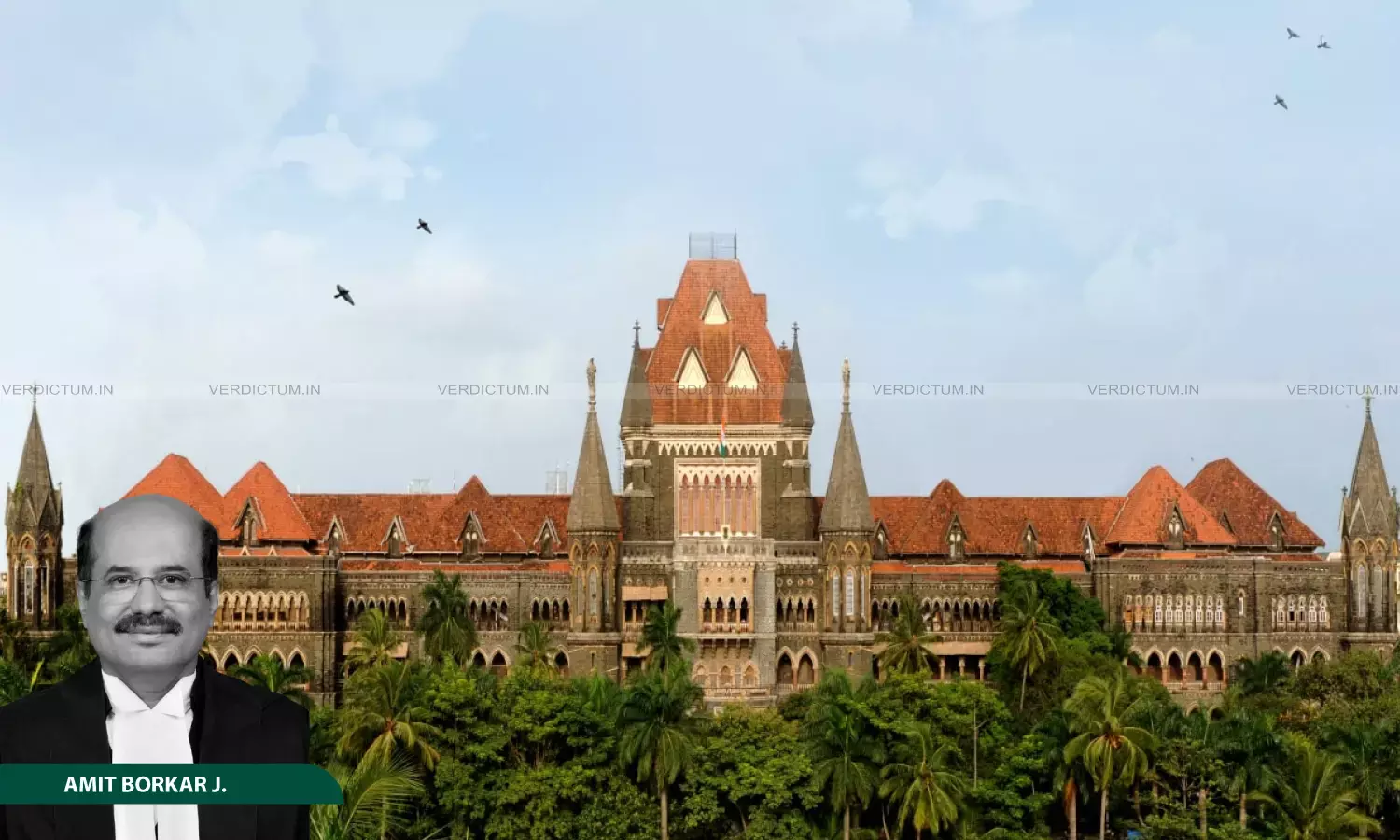
The Bombay High Court has held that the statutory machinery for the recovery of dues under Section 50 of the Maharashtra Recognition of Trade Unions and Prevention of Unfair Labour Practices (MRTU & PULP) Act, 1971, is reserved for an individual "employee". The Court clarified that a trade union cannot maintain a recovery application in its own capacity to claim funds under a settlement unless it is specifically armed with a written authorisation from the concerned workmen.
Adhering to a literal interpretation of the statute, the Court held that the legislative requirement for written authority acts as a mandatory safeguard that cannot be diluted by general claims of union representation or practical hardships.
Justice Amit Borkar while dismissing the writ petition, confirmed the Industrial Court’s order and observed, “…In my view, these documents are not enough for that purpose. A list showing money deducted is one thing. But written authorisation is something else. Law requires clear permission from each employee. Just because workers are members of Union or money was deducted earlier it cannot be assumed that they have allowed the Union to file legal recovery for them. There must be authorisation for this purpose”.
Advocate Avinash Jalisatgi appeared for the petitioner and Advocate Madhav Paranjape appeared for the respondent.
In the matter, a 2006 settlement between Vidyut Metallics Private Limited and its employees' union became a matter of dispute. Clause 12 of the agreement stipulated that the employer would deduct ₹320 per employee from ex gratia payments and remit these sums to the Union fund.
Although the employer performed the deductions, it failed to transfer the collected amounts to the petitioner. Following a December 30, 2013 Industrial Court order holding the employer guilty of unfair labour practices and directing payment, the Union initiated recovery proceedings under Section 50 of the Act.
Thereafter, the Industrial Court, Thane, rejected the Union’s recovery application on April 21, 2023. The petitioner subsequently challenged this rejection through the present writ petition, contending that an expansive definition of "employee" should be adopted to prevent the Union from being left remediless in a forum where civil court jurisdiction is barred.
Now, the Court observed that since the Act separately defines "employee" and "union", the legislature intended for them to be treated as distinct legal entities. The Bench further noted that documentary evidence of past membership or payroll deductions does not satisfy the specific legal requirement for a written mandate to initiate recovery like land revenue.
“It is also important to understand that action under Section 50 leads to recovery like land revenue. Because of this law requires strict compliance. Written authority is kept as safeguard. It makes sure that only proper person files case on behalf of employee. So looking at all this these documents do support that deductions were made and Union has some claim under settlement. But still one important condition is not satisfied. That is written authorisation. Without that the Union cannot be treated as properly authorised to file recovery. Therefore, this defect remains and cannot be ignored”, the Bench noted.
“The Union cannot assume that it automatically represents every employee for the purpose of recovery under Section 50. Representation in industrial matters and authority under a specific statutory provision are not always the same thing. The statute makes a clear distinction. For Section 50 written authority is necessary. Without it the Union cannot step into the position of the employee and seek recovery. If the interpretation suggested by the petitioner is accepted, it will also disturb the structure of the Act. The Act separately defines “employee” and “Union”. This shows that the legislature treats them as different entities…”, the Bench further held.
Cause Title: Vidyut Metallics Employees Union v. Vidyut Metallics Private Limited (Neutral Citation: 2026:BHC-AS:16846)
Appearances:
Petitioner: Avinash Jalisatgi with T.R. Yadav, Divya Wadekar, and Mulanshu Vora, Advocates.
Respondent: Madhav Paranjape with Amey Humane, Advocates.
Click here to read/download the Judgment