Failure To Summon Scientific Experts Before Relying On CA & DNA Reports Vitiates Trial: Bombay High Court Refuses To Confirm Death Sentence; Remands Case To Trial Court
The High Court held that where a trial court relies upon a chemical analyser and DNA reports without summoning the concerned scientific experts for examination, the failure amounts to a denial of fair opportunity to the accused and vitiates the trial.
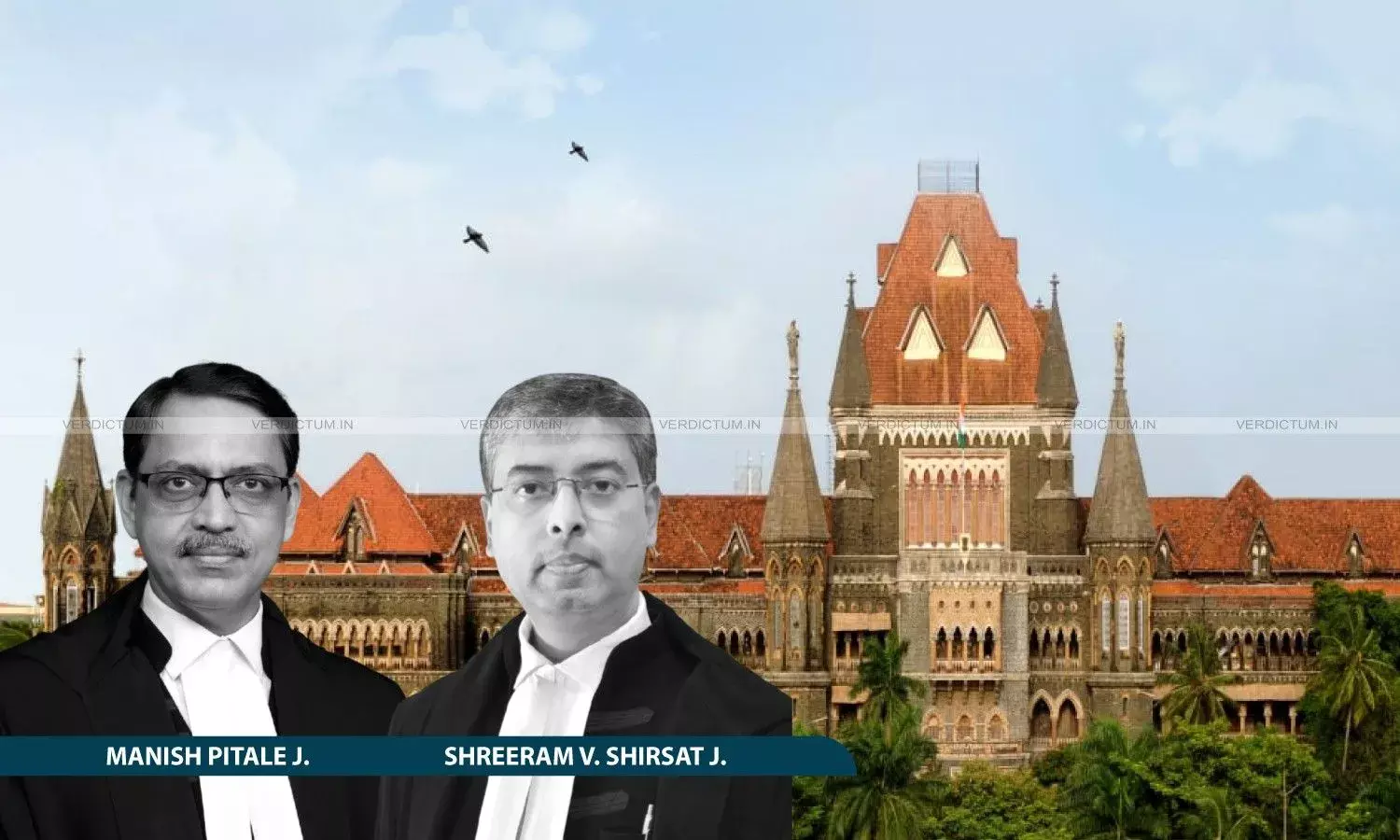
Justice Manish Pitale, Justice Shreeram V. Shirsat, Bombay High Court
The Bombay High Court held that failure of the trial court to summon and examine scientific experts whose reports form a crucial part of the prosecution evidence can lead to failure of justice and vitiate the trial.
The Court observed that when chemical analysis or DNA reports are relied upon to establish guilt, the authors of such reports must ordinarily be examined as witnesses so that the accused may have an opportunity to cross-examine them.
The Court was hearing a confirmation case and criminal appeals arising from a judgment of the Additional Sessions Judge, Pune, convicting the accused for offences under various provisions of the Indian Penal Code and the Protection of Children from Sexual Offences Act and imposing the death penalty on one of the accused.
A Division Bench comprising Justice Manish Pitale and Justice Shreeram V. Shirsat, while relying on the Supreme Court’s ruling in Irfan alias Bhayu Mevati Vs. State of Madhya Pradesh (2025), in which it was held that failure of the trial Court in summoning the scientific experts had led to failure of justice, thereby vitiating the trial, observed: “the reports of the chemical analysers at exhibit-166 (collectively) were being directly admitted in evidence without examining the chemical analysers, …such a course of action was clearly not open for the Sessions Court, for the reason that the Supreme Court has laid down that such witnesses ought to be court witnesses even if the prosecution fails in its duty to summon such crucial witnesses, if at all the CA reports / DNA reports are to be relied upon by the prosecution.”
Background
The case arose from a prosecution alleging that the principal accused had committed aggravated sexual assault upon a minor girl aged about six years and ten months, resulting in her death. The prosecution's case was largely based on circumstantial evidence, including the “last seen” theory and various forensic reports.
Upon completion of the investigation, a charge sheet was filed, and the Sessions Court framed charges under multiple provisions of the IPC and the POCSO Act. During the trial, the prosecution led evidence, including testimony of witnesses and documentary evidence such as chemical analysis reports and DNA profiling reports.
The Sessions Court eventually accepted the prosecution's case and convicted the principal accused for offences including murder and aggravated penetrative sexual assault, sentencing him to death for certain offences. The co-accused was convicted of offences relating to the destruction of evidence and sentenced to imprisonment.
The confirmation case and appeals were thereafter placed before the High Court.
Court’s Observation
The High Court examined the record and found that the Sessions Court had relied upon as many as twelve chemical analysis reports, collectively marked as Exhibit-166, while recording findings against the accused.
These reports were brought on record during the examination of the investigating officer and were admitted in evidence without the prosecution or the court summoning the assistant chemical analysts who had prepared the reports.
The Bench noted that the trial court had justified admission of the reports by observing that the accused had not made any request for examining the chemical analysers. The High Court held that such reasoning was legally erroneous.
Referring to precedents of the Supreme Court and earlier decisions of the High Court, the Bench observed that when scientific reports, such as DNA or chemical analysis reports, are relied upon as incriminating evidence, the concerned experts ought to be examined as court witnesses even if the prosecution fails to summon them.
The Court emphasised that reliance on such reports without examination of their authors deprives the accused of the opportunity to cross-examine crucial witnesses and thereby undermines the fairness of the trial.
The Bench also noted that the incriminating circumstances arising from these reports were not properly put to the accused during their examination under Section 313 of the Code of Criminal Procedure. Only the fact that such reports had been received was mentioned, without confronting the accused with the contents of the reports.
In addition, the Court found merit in the submission that the trial court had recorded the statements of the accused persons under Section 313 jointly, which was contrary to the requirement that each accused must be individually questioned regarding the incriminating material against them.
Taking note of the Supreme Court’s decision in Irfan alias Bhayu Mevati v. State of Madhya Pradesh, the Bench observed that failure of the trial court to ensure deposition of scientific experts while relying on forensic reports amounts to failure of justice and vitiates the trial.
The Court emphasised that the purpose of a criminal trial is to ascertain the truth and that courts must ensure that all material evidence is properly brought on record and tested through examination and cross-examination.
Conclusion
The Bombay High Court held that the Sessions Court’s reliance on a chemical analyser and DNA reports without summoning the concerned scientific experts had vitiated the trial to that extent.
Accordingly, the Court set aside the judgment and order of conviction and remanded the matter to the Sessions Court for the limited purpose of summoning and examining the concerned scientific experts and permitting cross-examination by the accused.
The Court further directed that after recording such additional evidence, the statements of the accused under Section 313 of the Code of Criminal Procedure be recorded afresh and the matter be reconsidered by the Sessions Court.
Cause Title: Tejas @ Dada Mahipati Dalvi v. State of Maharashtra (Neutral Citation: 2026:BHC-AS:11660-DB)
Appearances
State: Shrikant V. Gavand, APP.
Accused: Advocates Rebecca Gonsalvez, Sahana Manjesh.