

Potential Denial Of Relief By MACT Cannot Preclude Claim Under Employees’ Compensation Act: Bombay High Court
The High Court held that the possibility of failure before the Motor Accident Claims Tribunal cannot bar dependents from invoking the Employees’ Compensation Act, and further ruled that even a short-term hiring of a driver establishes an employer–employee relationship under the welfare statute.
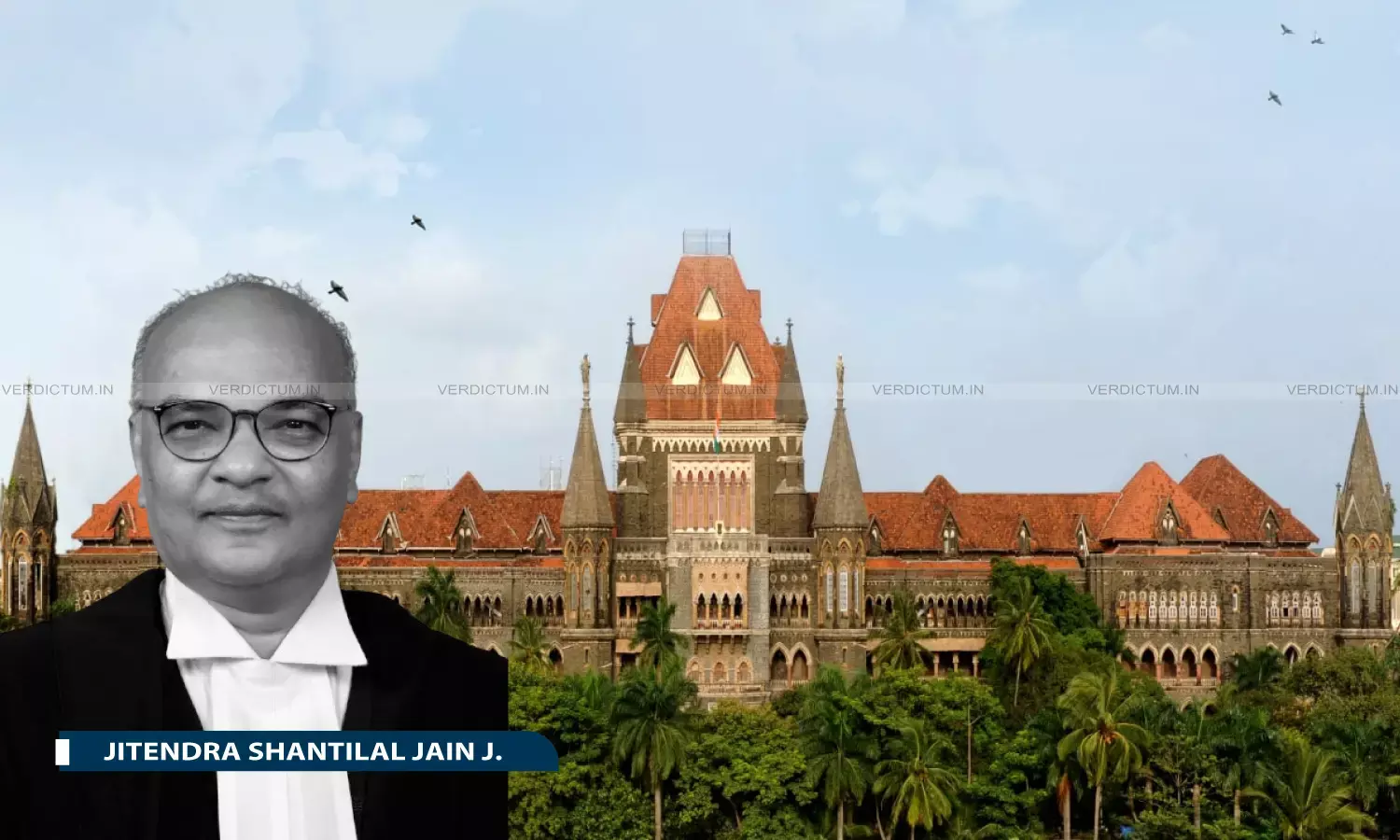
Justice Jitendra Jain, Bombay High Court
The Bombay High Court has held that a claimant cannot be denied compensation under the Employees’ Compensation Act, 1923, merely because the insurer believes that the Motor Accident Claims Tribunal (MACT) would not have granted relief.
The Court clarified that when multiple statutory remedies are available, a litigant is entitled to elect one in the absence of any express bar.
The Court was hearing a First Appeal under Section 30 of the Employees’ Compensation Act, challenging an order passed by the Labour Commissioner, who had rejected the claim on the ground that the employer-employee relationship between the deceased driver and the vehicle owner was not established.
A Bench of Justice Jitendra Jain, while allowing the appeal, observed: “The submission of the opponent that the applicant could not have got relief before the MACT and, therefore, he made an application under the present Act cannot be accepted to reject the appeal, …there is no bar in litigant electing one forum when more than one forum is available, …it is not a case of forum shopping nor any bar is brought to my notice, …merely because the opponent thinks that the MACT would have not given any relief cannot preclude the applicants to make application under the Employees' Compensation Act”.
Background
The deceased lost his life in a motor vehicle accident on 29 March 2009 while driving a vehicle owned by the Opponent. It was not in dispute that the deceased was driving the vehicle at the time of the accident and that the owner and other family members were travelling in it.
The dependents issued a legal notice seeking compensation, which went unanswered. They thereafter filed an application under the Employees’ Compensation Act. The Labour Commissioner rejected the claim, holding that the applicants had failed to establish the employer-employee relationship.
Before the High Court, the appellants relied heavily on the First Information Report lodged by the vehicle owner immediately after the accident. In that statement, the owner had described the deceased as a “driver” engaged to drive the vehicle to Rajasthan to attend a funeral. The FIR also recorded the names and relationships of other passengers but did not describe the deceased as a relative.
The insurer contended that the accident occurred due to the negligence of the deceased and that the applicants could not have obtained relief before the MACT. It was argued that the present proceedings were instituted only because the claimants anticipated failure before the MACT and that there was no documentary evidence of employment.
Court’s Observation
The High Court undertook a detailed analysis of the Employees’ Compensation Act, particularly Sections 2(dd) and 2(e), and Schedule II. It noted that the definition of “employee” expressly includes a person recruited or employed as a driver in connection with a motor vehicle and that the statute recognises oral or implied contracts of employment.
The Court observed that in cases where an individual hires a driver for an urgent or short-term purpose, it would be unrealistic to expect a written agreement. The absence of documentary proof could not, therefore, be decisive.
Examining the FIR, the Court held that the statement made at the earliest point in time was significant. The owner had referred to the deceased as a driver and had clearly mentioned the relationships of other passengers, which indicated that the deceased was not a relative or friend. The Court found that this contemporaneous admission, coupled with the owner’s failure to reply to the legal notice and subsequent denial in reply to the claim, established the employer–employee relationship.
The Court further emphasised that the expression “recruited as driver” and “employed as driver” under the Act emphasise the nature of work and not the duration of employment. Even a short-term or casual engagement would fall within the scope of the statute.
On the objection relating to forum selection, the Court rejected the insurer’s argument. It held that the possibility of denial of relief before the MACT cannot preclude a claimant from invoking the Employees’ Compensation Act. There was no statutory bar preventing such an election, nor did the case amount to forum shopping. The Court clarified that only where a civil suit is filed would Section 3(5) of the Act bar a compensation claim, and no such bar applied in the present case.
The Court also observed that the Labour Commissioner, while administering welfare legislation, ought to have exercised powers under Section 23 of the Act to summon the vehicle owner and ascertain the truth instead of rejecting the claim solely on technical grounds. Welfare legislation, the Court noted, must be interpreted in furtherance of its objective.
Relying on precedents of various High Courts, which held that even casual or short-duration employment as a driver would attract the provisions of the Act, the Court concluded that the relationship of employer and employee stood established in the present case.
Conclusion
The Bombay High Court set aside the order and allowed the appeal.
Considering that the appeal was decided nearly sixteen years later, the Court requested the Labour Commissioner to calculate the compensation within eight weeks from the date of application, enclosing the order so that the dependents could receive their dues without further delay.
Cause Title: Shakuntala Tilakdhari Gupta & Ors. v. Jawaharlal R. Gupta & Anr. (Neutral Citation: 2026:BHC-AS:8700)
Appearances
Appellants: Advocates Varsha Nichani, Roshil Nichani
Respondents: Advocate Sanjay Krishnan
