

Section 319 CrPC | Summoning Additional Accused Requires Evidence Capable Of Leading To Conviction Absent Rebuttal: Bombay High Court
The High Court held that the power to summon additional accused under Section 319 CrPC can be exercised only where the evidence on record is such that, if unrebutted, it would reasonably lead to conviction, and not merely based on a prima facie case.
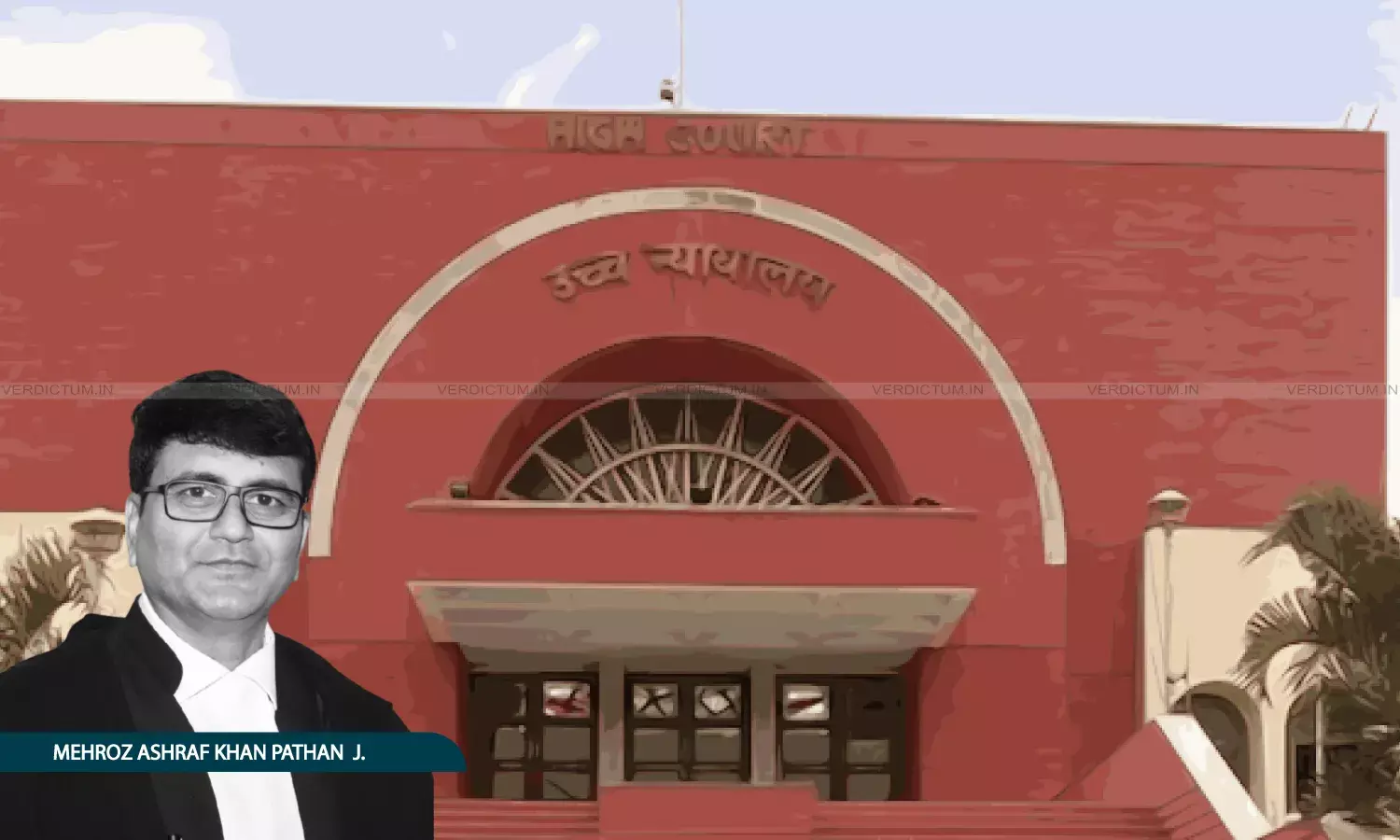
The Bombay High Court has held that summoning additional accused during trial requires a higher evidentiary threshold than that applicable at the stage of framing of charge, and that courts must be satisfied that the evidence is capable of leading to conviction if left unrebutted.
The Court further held that this jurisdiction is extraordinary and discretionary and must be exercised sparingly, only when strong and cogent evidence appears against a proposed accused from the material before the court.
The Court was hearing petitions challenging an order of a Sessions Court partly allowing an application under Section 319 of the Code of Criminal Procedure to summon certain persons as additional accused while declining to summon others.
A Bench of Justice Mehroz K. Pathan, while relying on the Apex Court’s ruling in Hardeep Singh Vs. State of Punjab and Others, (2014), and Hetram @ Babli Vs. State of Rajasthan (2024) reiterated that “the standard required to be applied while dealing with an application under Section 319 of the Code of Criminal Procedure is higher than the mere existence of a prima facie case, as is required at the stage of framing of charge”.
The test to be applied, the Court explained, “is whether the evidence on record, if left unrebutted, would be sufficient to lead to the conviction of the proposed accused”, while further underscoring that the Court is therefore “required to record its satisfaction in those terms, and if such satisfaction cannot be arrived at on the basis of the material on record, the Court ought to refrain from exercising powers under Section 319 of the Code of Criminal Procedure”.
Background
The Trial Court had allowed an application seeking the addition of certain persons as accused during trial and directed that they be tried along with the charge-sheeted accused. The same order rejected the request to summon two other persons as conspirators.
Those summoned challenged the order, contending that they were neither named in the FIR nor in eyewitness statements recorded during the investigation, and that their implication surfaced only later in a subsequent statement of the complainant.
The complainant, on the other hand, filed a separate petition seeking the summoning of the two persons whom the Trial Court had declined to add, relying upon later statements and testimony given during trial.
Both petitions were heard together.
Court’s Observation
The Court first examined the governing principles laid down by the Constitution Bench and subsequent precedent on the scope of Section 319 CrPC. It reiterated that the power is extraordinary and must be exercised sparingly, only where strong and cogent evidence appears against a person from the evidence before the court.
It emphasised that the evidentiary standard required for summoning an additional accused is higher than that required for framing of charge and that courts must record satisfaction that the evidence, if unrebutted, would reasonably lead to conviction. If such satisfaction cannot be reached, the power should not be exercised.
The Court clarified that although the stage of cross-examination is not decisive for deciding a Section 319 application, the court must still evaluate the intrinsic worth, consistency, and credibility of the evidence relied upon.
Applying these principles to the case, the Court noted that the persons summoned were not named in the FIR or in the initial statements of injured eyewitnesses and that their names surfaced only in a later statement of the complainant.
It held that such omissions were material, particularly because statements of injured eyewitnesses ordinarily carry significant evidentiary value. The Court further found that the Trial Court relied primarily on the examination-in-chief testimony of the complainant without adequately analysing inconsistencies between that deposition and earlier statements.
The Bench observed that the deposition attributed specific overt acts to the proposed accused, which did not appear in earlier witness statements, thereby affecting reliability. It held that courts must avoid summoning additional accused based on conjectural or improbable versions.
Upon independent reassessment of the record, the High Court concluded that the evidence did not disclose strong and cogent material sufficient to justify the exercise of power under Section 319 against the summoned persons, though it found no error in the Trial Court’s refusal to summon the others.
Conclusion
The High Court held that the Trial Court had not applied the correct evidentiary standard while summoning additional accused and therefore quashed the summoning order to that extent. It dismissed the complainant’s petition seeking the addition of other persons and clarified that its observations were prima facie and would not affect the trial against the existing accused.
Cause Title: Rukminibai Vishnu Karad & Ors. v. State of Maharashtra & Anr. (Neutral Citation: 2026:BHC-AUG:7609)
Appearances
Petitioners: Dr R. R. Deshpande, Advocate
Respondents: A. S. Shinde, APP, Advocate H. D. Deshmukh
