

Life Imprisonment Means Natural Life; Convict Cannot Be Made To Serve Additional Consecutive Sentence After Life Term: Bombay High Court
Court sets aside direction requiring a life convict to undergo a further 10-year sentence for gang rape after completion of life imprisonment.

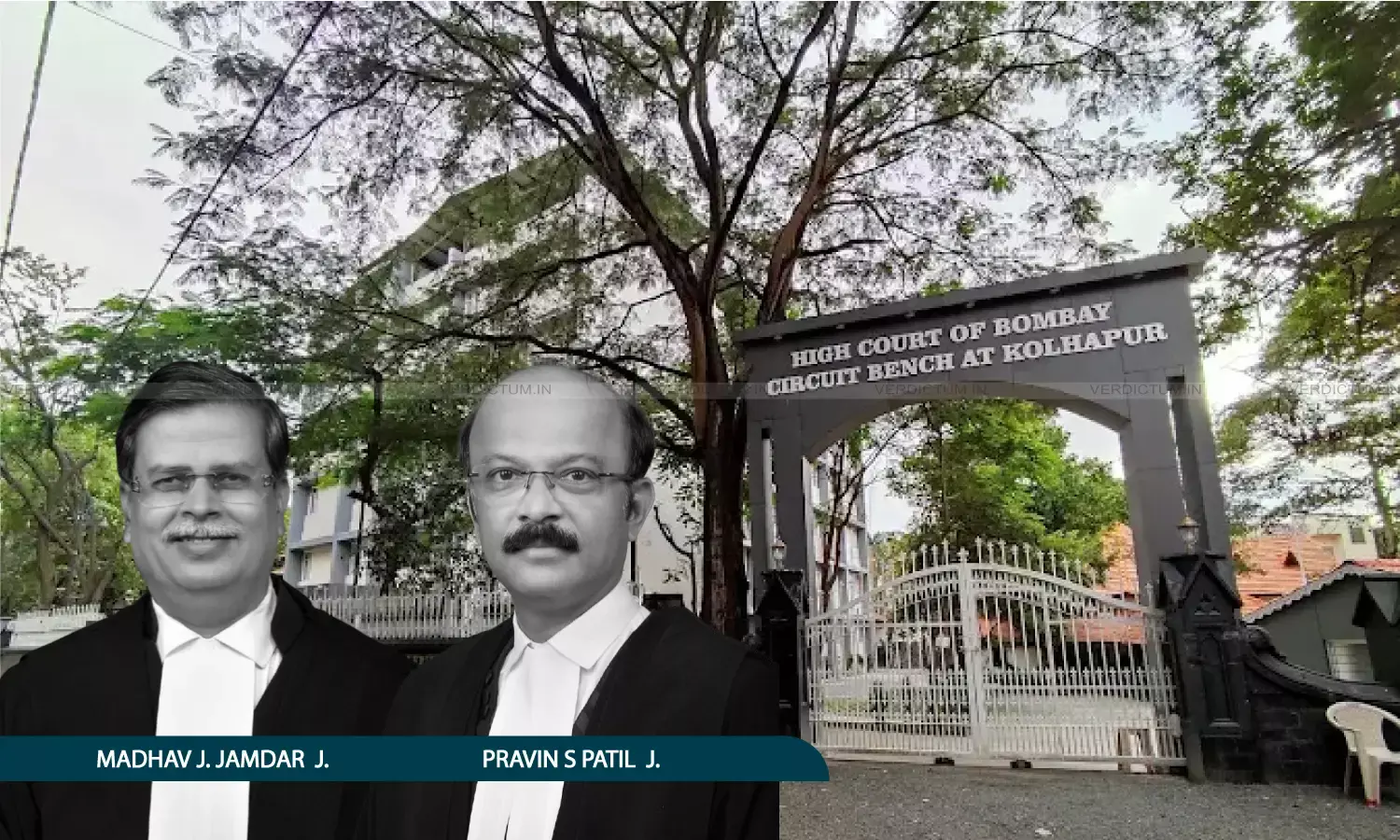
The Bombay High Court, Kolhapur Bench has held that a life convict cannot be compelled to undergo an additional consecutive sentence after completion of life imprisonment, setting aside a Maharashtra Government order that required the petitioner to serve a further 10-year term under Section 376(2)(g) IPC after completing his life sentence.
The State had relied on earlier directions of the Supreme Court in Ronny v. State of Maharashtra (1998) 3 SCC 625, where while commuting the death sentence to life imprisonment, the Court had directed that the sentence under Section 376(2)(g) IPC would run consecutively after the sentences for the other offences.
However, the Division Bench noted that the Constitution Bench of the Supreme Court in Muthuramalingam & Ors. v. State represented by Inspector of Police, (2016) 8 SCC 313 clarified that imprisonment for life means imprisonment for the remainder of the convict’s natural life unless remitted by the appropriate government and that life sentences cannot be directed to run consecutively.
Justice Madhav J. Jamdar and Justice Pravin S Patil observed that the Constitution Bench had specifically considered decisions such as Ronny and held that to the extent they suggested that life sentences could run consecutively, they do not lay down the correct law.
The Bench specifically noted, “…it is clear that the Constitution Bench of the Supreme Court has specifically overruled that part of the judgment in the case of the petitioner by which it has been in effect directed that sentence under Section 376(2)(g) of IPC shall run consecutively after completion of life imprisonment. Therefore, although the order of the State Government directing that the petitioner shall be released after completion of 30 years of imprisonment including remission does not warrant interference, the further direction that the petitioner shall undergo 10 years of imprisonment under Section 376(2)(g) of the IPC cannot be sustained in law, as the same is based on the directions contained in the earlier judgment of the Supreme Court in the Petitioner’s case which stand overruled by the subsequent Constitution Bench judgment in Muthuramalingam…”.
Advocate Rupesh A. Jaiswal appeared for the petitioner and Shrikant Yadav, APP appeared for the respondent.
The Division Bench was hearing a writ petition filed by a 65-year-old convict, Ronald James Alvares challenging a Maharashtra government order issued under Section 433A of the Code of Criminal Procedure (CrPC).
The order had directed that the petitioner be released after completing 30 years of imprisonment including remission but also required him to undergo an additional 10-year sentence for gang rape under Section 376(2)(g) IPC.
The petitioner argued that the additional sentence was based on an earlier Supreme Court judgment in his case which directed that the rape sentence would run consecutively after completion of life imprisonment.
The petitioner then relied on Muthuramalingam, which clarified that life imprisonment cannot run consecutively with other life sentences and that imprisonment for life means imprisonment for the convict’s entire natural life unless remitted by the appropriate government.
The State, opposing the plea, submitted that the petitioner had absconded for 1150 days while undergoing imprisonment, attracting Category 6(a) of the State’s 1992 Guidelines on premature release of life convicts. It was further pointed out that under the Government Resolution dated 10 January, 2006 relating to prisoners who have attained the age of 65 years, the State Government was required to consider the case through a committee mechanism.
The Court referring to Section 55 IPC and Sections 433 and 433A of the CrPC, noted that only the appropriate government has the power to commute or remit a life sentence, and a convict cannot be released unless at least 14 years of actual imprisonment has been served.
The Court further explained that the expression “imprisonment for life” legally means imprisonment for the whole of the remaining natural life of the convict, unless the government exercises its statutory power to grant remission or commutation. It also emphasised that there is no provision under the IPC or the CrPC by which a life sentence can automatically be treated as a fixed term such as 14 or 20 years.
While upholding the State’s decision that the petitioner would be eligible for release only after completing 30 years of imprisonment including remission, the Court quashed the further direction requiring him to serve the additional 10-year sentence.
The writ petition was accordingly partly allowed and the government order was modified to that extent.
Cause Title: Ronald James Alvares v. The State Of Maharashtra And Others [Neutral Citation: 2026:BHC-KOL:1753-DB]
Appearances:
Petitioner: Rupesh A. Jaiswal a/w Ramnik Pawar, Advocates.
Respondents: Shrikant Yadav, APP, M. M. More and S. H. Kumbhar, Liaison Officers.