

Accused Not Entitled To Re-Trial Or Remand Merely Due To Error In Framing Of Charge: Bombay High Court Upholds Conviction In POCSO Case
The Trial Court convicted the appellant under one provision while sentenced under another.

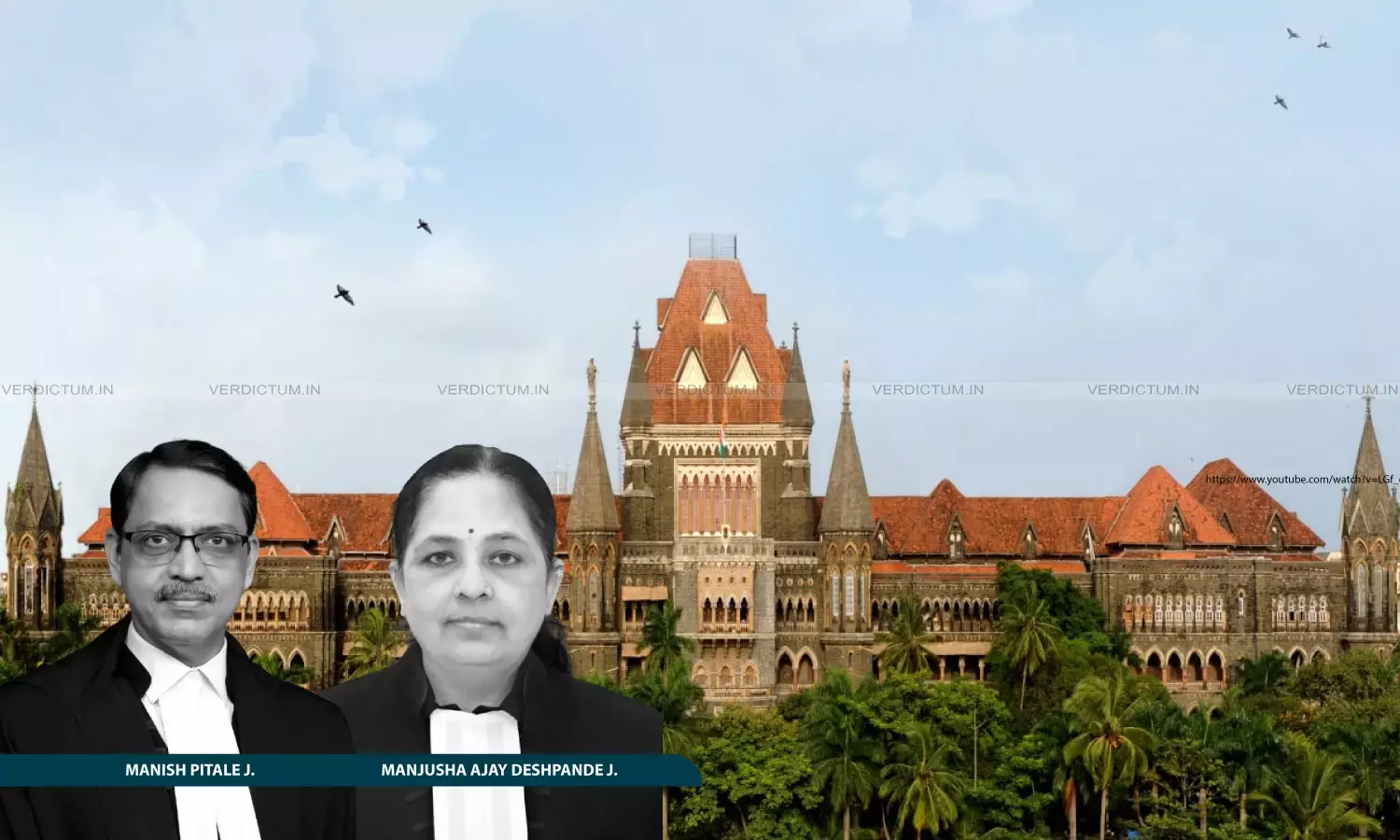
The Bombay High Court held that a convict cannot seek a retrial or remand solely due to an error in the framing of charges, observing that the appellate court can correct such errors by altering the conviction to Section 376(3) in place of the deleted Section 376(2)(i) of the erstwhile Indian Penal Code (hereinafter “the Code”).
For background, the Trial Court convicted the appellant under one provision while sentenced under another. The charge was framed under a provision that did not exist, as the date of incident was 29-10-2018, while the charge included Section 376(2)(i) of the Code, which was deleted in April 2018.
The accused assailed the impugned judgment on two grounds: errors on merits and fundamental procedural lapses from the stage of framing of charges to the final conviction, allegedly resulting in grave prejudice and failure of justice.
However, a bench of Justice Manish Pitale and Justice Manjusha Deshpande while dismissing the appeal categorically opined, “We are unable to understand as to what prejudice the appellant suffered, for the reason that when the Trial Court gave hearing on sentencing to the appellant for offences with which he was charged, including reference to the erroneous provision of Section 376(2)(i) of the IPC, he had an opportunity to argue as to why he should be given minimum sentence of 10 years rigorous imprisonment. If he was given hearing on the basis of Section 376(3) of the IPC, he could have argued only for a minimum sentence of 20 years of rigorous imprisonment”.
As per thee prosecution case, a 13-year old victim was confined inside a bed-box and was repeatedly assaulted by the appellant (her neighbour) during the night. Next day when she returned home early in the morning, the victim confided in her mother, and the same day an FIR was registered. Based upon the cogent medical evidence, statements of the victim and the witnesses, the Trial Court convicted the appellant and sentenced him to life imprisonment (imprisonment for remainder of life) under Section 376(3) of the Code.
Considering the relevant evidences, the High Court was of the opinion that that altering the conviction to Section 376(3) IPC would not amount to convicting the appellant of a graver offence, as both the now-deleted Section 376(2)(i) and Section 376(3) of the Code prescribe the same maximum punishment, imprisonment for life and contain identical ingredients.
The Bench further noted that the Trial Court convicted the appellant for all charged offences, including the deleted Section 376(2)(i), and made no reference to Section 376(3) of the Code. However, at the stage of sentencing, it invoked Section 42 of the POCSO Act and imposed punishment under Section 376(3) IPC, awarding the maximum sentence of life imprisonment with fine, which the provision prescribes as punishment greater in degree than other IPC and POCSO offences.
On prejudice to the appellant, the Bench observed, “…the rights of the accused as well as the victim should be balanced because the enquiry in a criminal trial and also, while considering an appeal against order of conviction, is to cut to the truth of the matter to examine as to whether the guilt of the accused has been proved beyond reasonable doubt. So long as no prejudice is caused to the accused and there is no failure of justice, even if there is an error in framing of charge, the appellant cannot claim re-trial and remand of proceedings to the Trial Court. Instead, the appellate Court can correct the error”.
Consequentially, the conviction of the appellant under Sections 342, 363, 376(2) (n) and 506 of the Code, were sustained, while conviction under Section 376(2)(i) was altered to that under Section 376(3) of the Code.
Further, the conviction under Section 5(l) read with Section 6 of the POCSO Act was upheld, while affirming the trial court’s application of Section 42 of the POCSO Act and the sentence of life imprisonment under Section 376(3) of the Code, along with a fine of ₹50,000 and default imprisonment.
Cause Title: Ramesh Dada Kalel vs. The State of Maharashtra & Anr. 2026:BHC-AS:2309-DB
Appearances:
Appellant: Advocates Tapan Thatte a/w. Vivek Arote and Akshay Dingale, i/b. Dayanand Mane
Respondents: APP Dr. Dhanalakshmi S. Krishnaiyer and P. S. Potdar (appointed through legal aid)
Click here to read/download Judgment