

Resolution Of Such Issues In Harmony Is Need Of Hour: Bombay High Court Directs Special Cells To Consider Grievance Of Slum Dwellers
The Bombay High Court clarified that the constitution of Special Cells is not intended to create any independent adjudicatory mechanism, but rather to provide a forum where issues are considered and addressed in a cordial and constructive manner.
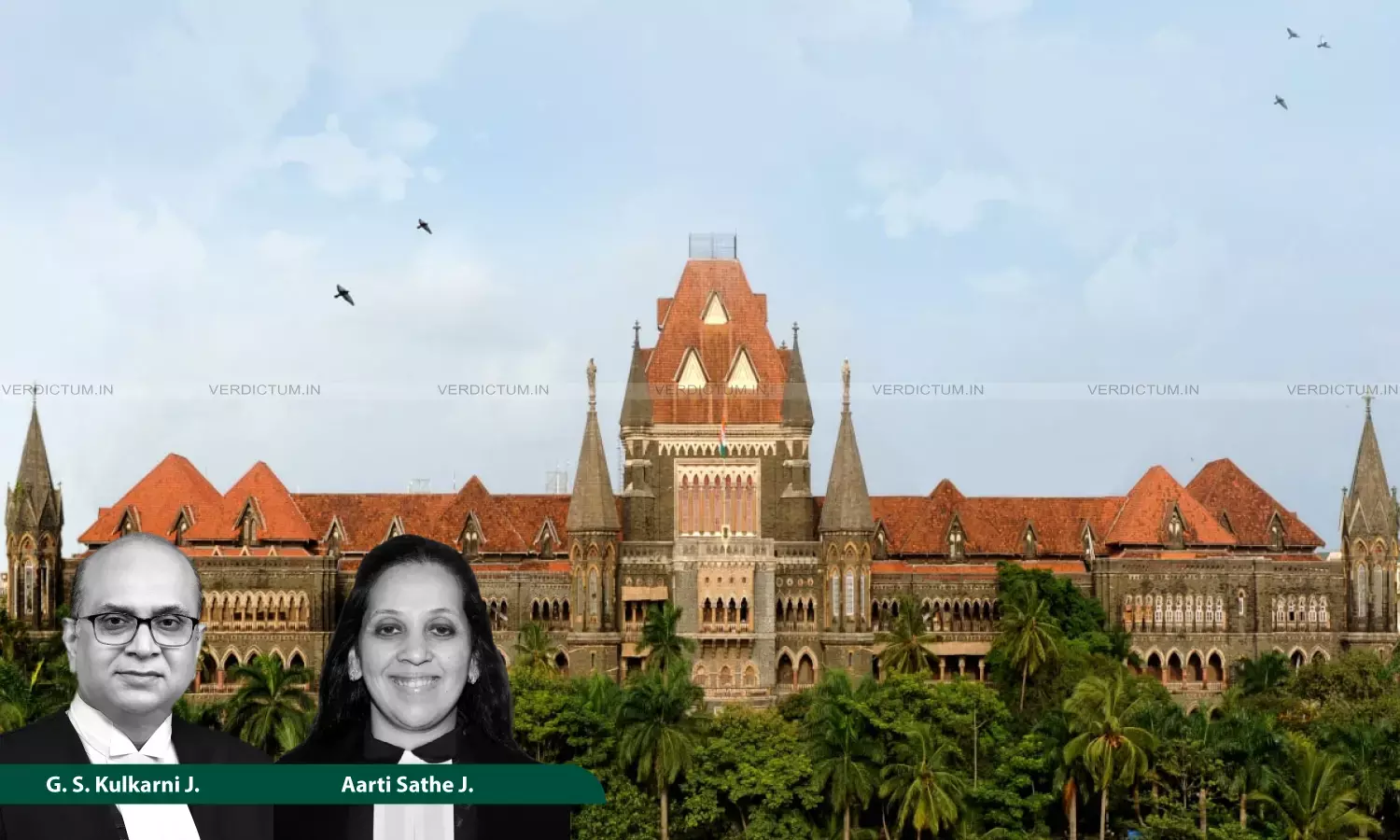
Justice G. S. Kulkarni, Justice Aarti Sathe, Bombay High Court
The Bombay High Court has directed the Special Cells constituted by the Slum Rehabilitation Authority (SRA) to consider the grievance of Slum Dwellers, saying that resolution of such issues in harmony is need of the hour.
The Court was deciding a batch of numerous Writ Petitions involving grievances regarding non-payment of transit rent by the developers.
A Division Bench comprising Justice G.S. Kulkarni and Justice Aarti Sathe remarked, “In this view of the matter, the grievances /complaints need to be considered at the first instance in an amicable manner, without any stakeholder perceiving such consideration as adversarial. The reason being that it is not in any interest of the slum dwellers that they be involved in any litigation. Hence, an approach of resolution of these issues in harmony is the need of the hour, rather than adjudication. Such, indeed needs to be the very purpose and endeavor behind the constitution of these special cells failing an amicable resolution, necessarily an order would be required to be passed.”
The Bench clarified that the constitution of Special Cells is not intended to create any independent adjudicatory mechanism, but rather to provide a forum where issues are considered and addressed in a cordial and constructive manner, albeit culminating in an order.
“Once such order is passed, it shall be an order passed by the officials of the SRA as normally being done in exercising such powers as conferred under the Slums Act”, it added.
Senior Advocate Birendra Saraf represented the Writ Petitioners.
Brief Facts
The issues in this case were primarily related to the grievances of the Petitioners regarding non-payment of transit rent by the developers in respect of the Slum Rehabilitation Scheme(s) with which they are concerned. The second issue revolved around failure to handover possession of the permanent alternate accommodation in a completed Slum Scheme coupled with non-payment of transit rent, and/or a combination of these issues in some cases.
Court’s Observations & Directions
The High Court in view of the above issue, observed, “… we are of the clear opinion that, in the spirit with which the aforesaid circulars have been issued by the CEO, SRA constituting the special cell(s), the issues relating to transit rent as raised in these Petitions as also the grievances regarding non-handing over of permanent alternate tenements or a combination of both these issues are now required to be effectively considered by the special cells constituted by the Slum Rehabilitation Authority (SRA). The methodology in this regard has already been set out in the circulars.”
The Court said that the expectation would be that the special cell addresses the grievances expeditiously and in accordance with law that is, upon due consideration of the facts of each case, and not in a mechanical manner.
“The officers manning the special cells must be alive to the genuine grievances of the stakeholders and how best the issues can be resolved, this more particularly, on issues which directly affect the slum dwellers like when grievances are raised by the slum dwellers like non-payment of transit rent, which itself involves the assertion of the right to shelter, being a facet of Article 21 of the Constitution of India. A similar position would prevail where a legitimate entitlement to a permanent alternate tenement is denied”, it added.
The Court noted that once a factual determination by the cell is available on record as fairly stated on behalf of the SRA, it shall be open to the parties to avail of appropriate remedies as statutorily prescribed under the provisions of law by approaching the competent statutory forums, wherein further adjudication of such grievances may be undertaken.
“We also sound a note of caution that the endeavor of the special cells, ought not to be, to generate further litigation, but rather to amicably resolve disputes, even by taking recourse to appropriate mediation practices. In this regard, the Chief Executive Officer may consider calling upon the members of the special cells to undergo training in mediation practices, which is the need of the hour, more particularly in light of the promulgation of the Mediation Act, 2023. In our opinion, this is a crucial exercise, as the overarching endeavor must be to curb litigation and bring about a win-win situation for all stakeholders”, it cautioned.
The Court further permitted the Petitioners to make their respective applications, subject matter of the present proceedings, before the appropriate special cells created for such purpose.
“Upon receipt of such applications, they shall be taken forward for consideration and for passing appropriate orders consensually or otherwise in accordance with law”, it also clarified.
The Court, therefore, kept open all issues to be considered by the special cells appointed by the Slum Rehabilitation Authority (SRA) which shall examine such grievances and after hearing the Petitioners and the opponents, decide such applications which may be received by the Special Cells.
Accordingly, the High Court disposed of the case and issued necessary directions.
Cause Title- Om Shri Sai Sra Co-operative Housing Society v. State Of Maharashtra and 2 Ors. (Neutral Citation: 2025:BHC-AS:57974-DB)
