

Can’t Reject Claim Under Employees’ Compensation Act On Ground That Disability Certificate Was Issued By Doctor Who Didn’t Treat Injured: Bombay High Court
The Bombay High Court was considering an appeal filed against the order of the Commissioner for Workmen’s Compensation under the Employees’ Compensation Act, 1923.

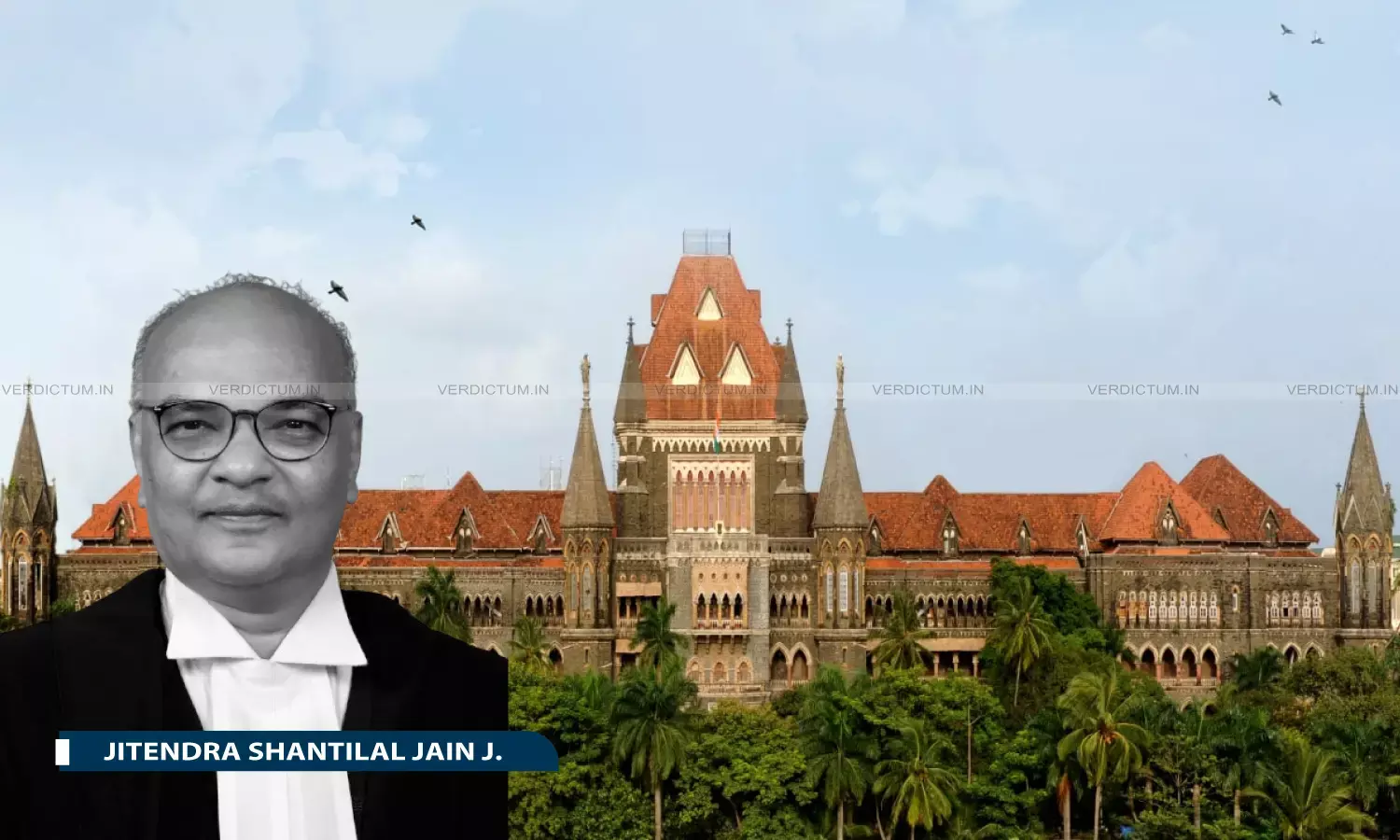
Justice Jitendra Jain, Bombay High Court
While setting aside an order of the Commissioner for Workmen’s Compensation under the Employees’ Compensation Act, the Bombay High Court has held that merely because the doctor who gave the medical certificate did not attend to the injured and yet entered the witness box after one year, it cannot be a ground for discarding and rejecting the whole claim of the employee.
The High Court was considering an appeal filed against the order of the Commissioner for Workmen’s Compensation under the Employees’ Compensation Act, 1923. The Commissioner had rejected the application for compensation on the sole ground that the disability certificate was issued by a doctor who did not attend to the injured applicant.
The Single Bench of Justice Jitendra Jain held, “In the instant case, merely because the doctor gave a medical certificate who did not attend the injured but entered the witness box after one year cannot be a ground for discarding and rejecting the whole claim. The Commissioner should have considered the evidence of the doctor and could have arrived at independently the percentage of loss of earning capacity. Therefore, in my view, the approach of the Commissioner in rejecting the application was erroneous and the Commissioner ought to have considered the certificate issued by a doctor who did not treat the injured applicant, but was subjected to cross-examination and after considering the same should have arrived at the disability percentage.”
Advocate Varsha Nichani represented the appellant, while Advocate Vijay Sardal represented the Respondent.
Factual Background
The original applicant was employed by the first opponent for doing work at a construction site in Thane. While carrying out work at the construction site, the applicant fell and suffered back injuries. The injured person was taken to Lok Hospital, Thane, for treatment. The applicant made an application to the Commissioner claiming compensation of Rs 5,95,584 from the employer and the Insurance Company jointly and severally. The Commissioner dismissed the application on the sole ground that the disability certificate was issued by a doctor who did not attend to the injured applicant, though the said doctor entered the witness box and gave evidence. The Commissioner decided all the issues against the applicant. Aggrieved thereby, the applicant approached the High Court.
Reasoning
The Bench was of the view that the Commissioner was not justified in answering the issues against the applicant, which did not have any relation to the disability certificate which was issued by the doctor. “For example, whether employer-employee relationship has been established or whether the accident occurred in the course of employment etc. are issues which ought to have been decided independently and same does not have any relation whatsoever with respect to the disability certificate for the purpose of calculating compensation. However, since all the issues are decided against the applicant solely on the ground of disability certificate, for the reasons stated hereinafter, the said reasoning is erroneous”, it added.
The Bench explained that Section 4(1)(c)(ii) and Explanation-II thereto of the Employees’ Compensation Act, 1923 provides for disability certificate to be issued by a “qualified medical practitioner” for ascertaining loss of earning capacity in relation to injuries specified in the Schedule. Reference was also made to Section 2(1)(i) of the Employees’ Compensation Act, 1923 which defines “qualified medical practitioner” to mean any person registered under any Central Act, Provincial Act or an Act of the Legislature of a State providing for the maintenance of a register of medical practitioners, or, in any area where no such last-mentioned Act is in force, any person declared by the State Government, by notification in the Official Gazette, to be a qualified medical practitioner.
“I have not been shown any provision in the Act nor any provision has been referred to in the judgment which states that the disability certificate has to be issued only by the doctor who attended the injured. There is no dispute that the doctor who issued the disability certificate in the present case is a qualified medical practitioner. The object of obtaining a medical disability certificate from a medical expert is to arrive at the percentage of disability by taking the help of an expert in the field. Therefore, in the absence of any specific provision in the Act requiring disability certificate to be issued only by the doctor who has treated the injured reasoning of the Commissioner to reject application is not correct”, it held.
The Bench set aside the impugned order and remanded the matter back to the Commissioner for the limited purpose of considering the evidence on record and giving a finding on loss of earning capacity.
As per the Bench, the appellant’s reliance on the judgment of the Karnataka High Court in Mukesh Kumar vs. Kulhari Tours and Travels Prof. Mahipal Singh & Anr. (2025) was justified. It was observed therein that there is no provision in the Act mandating assessment of loss of earning capacity only by a doctor who has treated the workman, and there is no bar for consideration of deposition of any qualified medical practitioner who examined the claimant and substantiated the disability.
Thus, allowing the appeal, the Bench set aside the impugned order and directed the Commissioner to consider the evidence on record of the doctor who issued the certificate. The Bench further ordered the Commissioner to arrive at a disability percentage and calculate the compensation. “It is made clear that other than this issue, no other issue will be examined by the Commissioner”, it concluded.
Cause Title: Mahendra Sabharu Majhi v. M/s. Mahlaxmi Enterprises (Neutral Citation: 2026:BHC-AS:9667)