

Employee Cannot Be Denied Higher Pension Due To Employer’s Missing Records: Bombay High Court Sets Aside EPFO Order
Court noted that Pension is an earned benefit flowing from long service and cannot be denied due to administrative lapses beyond the employee’s control.

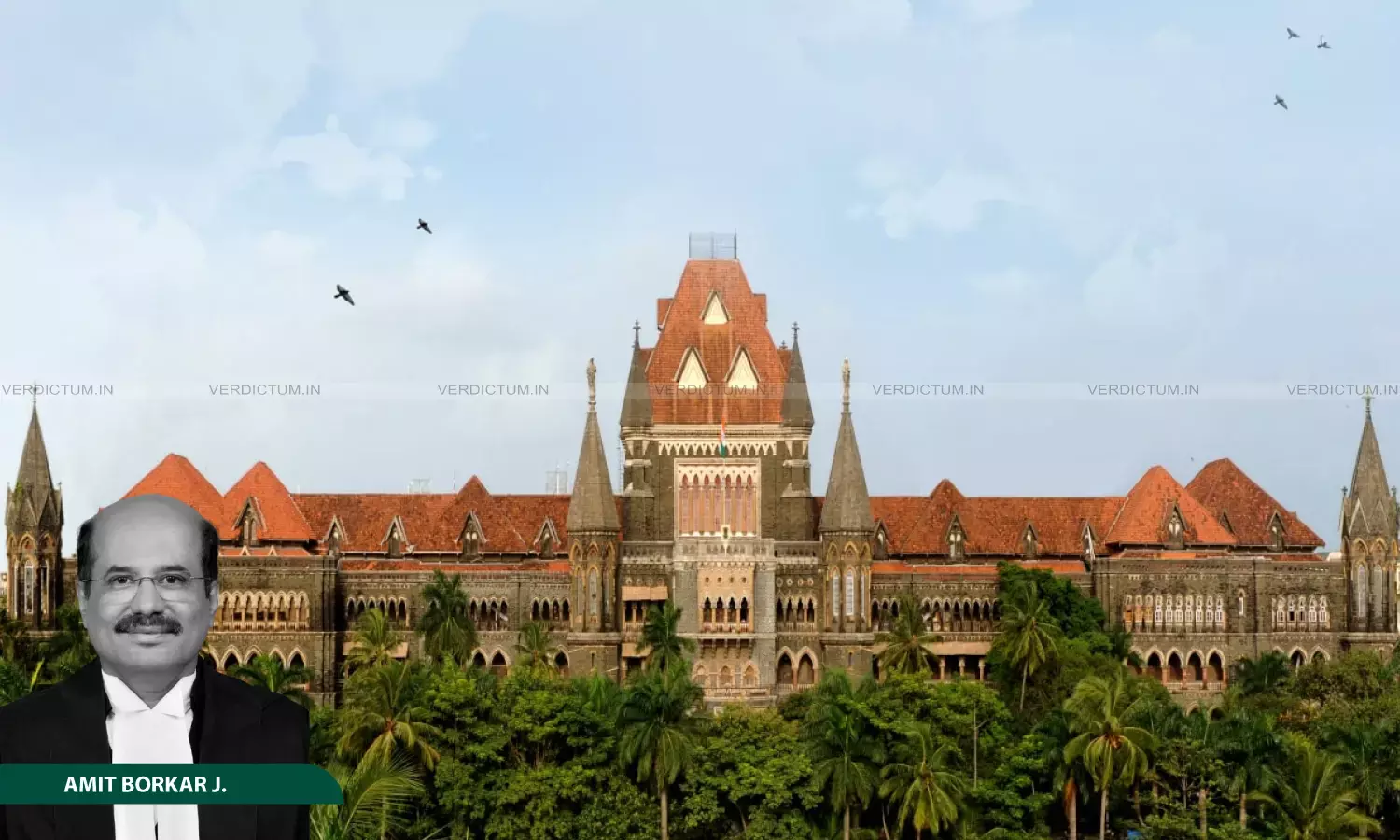
The Bombay High Court has held that an employee cannot be deprived of pension benefits merely because the employer failed to maintain or produce statutory records required for verification. The Bench allowed a writ petition filed by a retired pharmacist challenging rejection of his claim for pension on higher wages under the Employees’ Pension Scheme, 1995.
The Court held that technical lapses in records cannot defeat genuine pension claims, as pension is a welfare measure meant to ensure post-retirement security and must be interpreted to advance its purpose and that an employee has a very limited role.
Justice Amit Borkar observed, “The employee’s role is limited. He works, earns wages, and contribution is deducted. He does not maintain statutory returns. That responsibility lies with the employer. If the employer has failed in maintaining records or producing them, then the consequence cannot be shifted upon the employee. Otherwise, it would result in denial of benefit to a person who has no control over such records. Such an approach would be unjust. Pension is not a matter of favour. It is a benefit earned through long years of service…They recognise that technical deficiencies on the part of the employer or record-keeping authority should not defeat a legitimate claim of an employee. Pension schemes are welfare measures. They are intended to provide financial support after retirement. Therefore, they must be applied in a manner that advances the object and not defeats it. A person who has worked for several decades and contributed regularly cannot be denied benefit because of gaps in official records”.
“…this Court is satisfied that the impugned order suffers from a serious error in approach. It proceeds on the assumption that absence of certain employer-side records is fatal. It overlooks the material placed by the petitioner and the admissions made by the employer. The petitioner has done whatever was possible for him to do. The remaining gap is on the side of the employer and the authority. That gap cannot extinguish the petitioner’s entitlement”.
Advocate Satyam Surana appeared for the petitioner and Advocate Payoja Gandhi appeared for the respondent.
The petitioner, who served for nearly 37 years with Haffkine Bio-Pharmaceutical Corporation Limited, retired in January 31, 2024 after continuous service. Following the Supreme Court’s directions permitting eligible employees to opt for pension on actual wages, he applied for higher pension through the Employees’ Provident Fund Organisation (EPFO).
His application, however, was rejected by the EPFO in March 28, 2025 on the ground that Form 6A and certain monthly challans were not available, making verification of higher wage contributions impossible.
The employee approached the High Court contending that maintenance of such statutory records was the employer’s responsibility and that he could not be penalised for their absence.
The High Court found the EPFO’s approach to be unduly rigid and legally unsustainable, observing that Form 6A is a statutory record maintained by the employer and an employee ordinarily has no access or control over such documents.
Noting the factual background, the Bench noted, “The petitioner has served respondent No.2 for about 37 years. It is not in dispute that he was a regular employee, that provident fund contributions were deducted from his wages during service, and that he applied for pension on higher wages after the directions of the Supreme Court in the case of Employees’ Provident Fund Organisation and Others v. Sunil Kumar B. and Others. The rejection is founded mainly on non-production of Form 6A and monthly challans. Therefore, the real question is not whether the petitioner served long enough or whether he made the joint option application. The real question is whether his claim can be defeated only because some employer side records were not produced in the form demanded by respondent No.1”.
“This Court finds itself unable to accept the stand taken by respondent No.1 in the inflexible manner in which it has been adopted. The approach appears to proceed on a narrow reading of record requirements without considering the practical position of the employee. Form 6A is a statutory record which is required to be maintained and submitted by the employer. It remains within the control and custody of the establishment. An employee has neither access to such record in ordinary course nor any authority to maintain or preserve it. Therefore, expecting the petitioner to produce such document is not in consonance with the scheme of the statute. It must be seen that the petitioner has placed on record that he was continuously in service, that deductions towards provident fund were made from his wages, and that his membership with the EPF Organisation was active throughout. He has also exercised the joint option within time and submitted the available documents. Once these foundational facts are shown, the authority was required to consider the claim in a reasonable and practical manner. The law relating to pension is not meant to create hurdles. It is intended to secure a post-retirement benefit. If the interpretation of the scheme results in denial to a genuine employee only because of missing employer records, then such interpretation cannot be accepted”, the Bench noted further.
The Court noted that the petitioner had placed sufficient material on record, including EPF account statements, Form 3A contribution details, certified joint option forms, and evidence of continuous service and deductions.
Cause Title: Kiran Rajaram Jadhav v. The Employees Provident Fund Organisation (EPFO) & Anr. [Neutral Citation: 2026:BHC-AS:14389]
Appearances:
Petitioner: Satyam Surana, Advocate.
Respondent: Payoja Gandhi, N.R. Patankar, Prabhakar M. Jadhav, Tanaya Patankar, Advocates.