Child Custody Disputes Must Be Decided On Welfare Of Minor Not Parental Rights: Bombay High Court
Emphasising that the paramount consideration in child custody disputes is the welfare of the minor, the High Court held that custody issues must be decided on what best serves the child’s interests rather than on the competing legal rights of the parents.
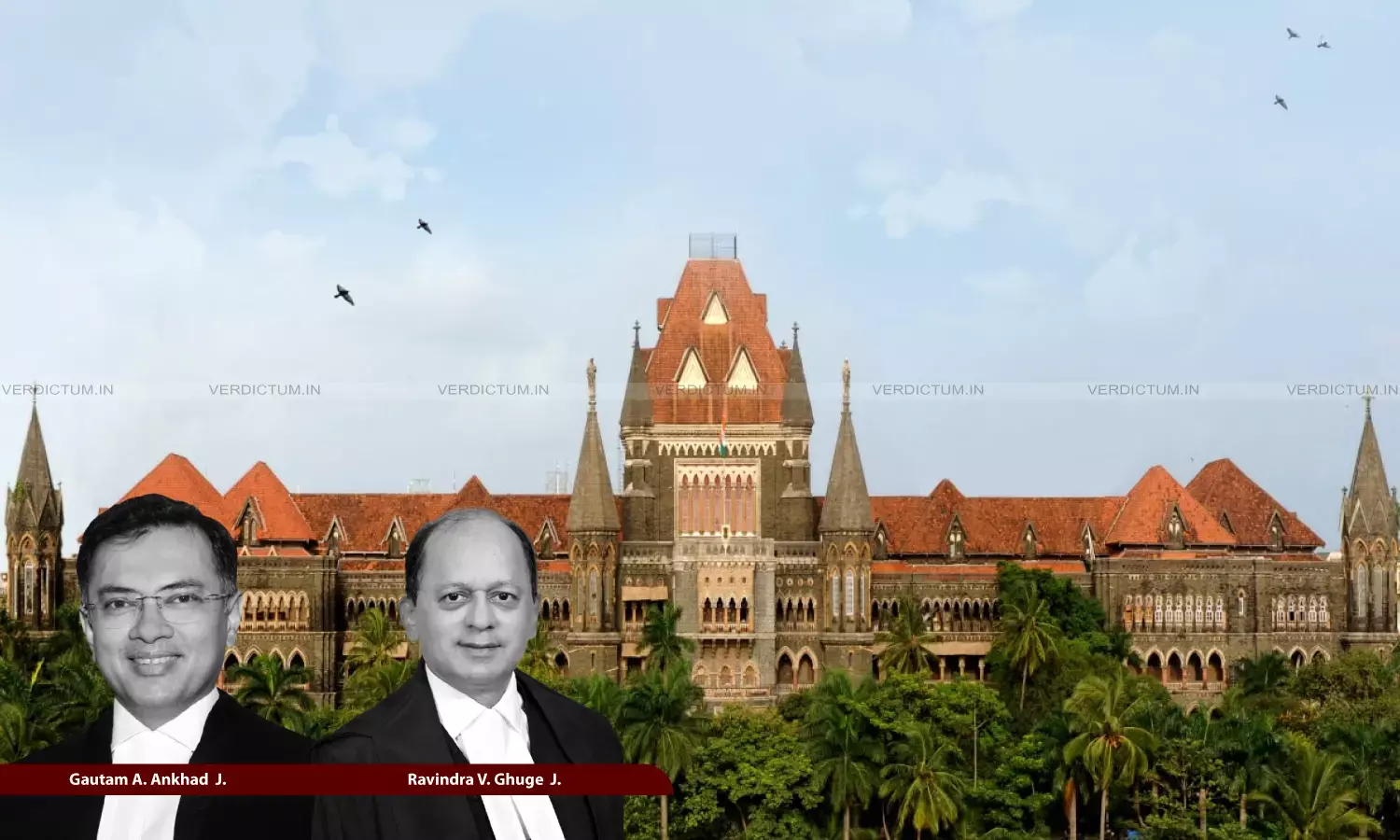
Justice Gautam A. Ankhad, Justice Ravindra V. Ghuge, Bombay High Court
The Bombay High Court, while upholding the custody of a minor with his mother, residing in Germany, reiterated that child custody matters must be decided not based on the legal rights of the parents but on the predominant consideration of what would best serve the welfare and interests of the minor.
The High Court reiterated that even in proceedings seeking a writ of habeas corpus, the Court’s focus must remain on the well-being of the child and not on restoring custody based on competing claims of parental entitlement.
The Court was hearing a writ petition seeking issuance of a writ of habeas corpus for the production and custody of a minor child who was residing in Germany with his mother, against whom the father alleged unlawful removal and retention of the child outside India.
A Division Bench of Justice Ravindra V. Ghuge and Justice Gautam A. Ankhad, while relying on the Supreme Court’s decision in Nitya Anand Raghavan v. State of NCT of Delhi, reiterated that the “matter must be decided not by reference to the legal rights of the parties, but on the sole and predominant criterion of what would serve the best interests and welfare of the minor”.
Senior Advocate Aman Hingorani appeared for the petitioner-father, while the Respondent was represented by Vikramaditya Deshmukh, Advocate.
Background
The petitioner and the respondent were married in 2017, and a son was born to them in 2019. Respondent No.2, a German citizen, travelled to Germany with the minor in January 2020, where the child continued to reside with her. Over the years, the minor remained in Germany, barring a brief visit to India.
Disputes arose between the parties regarding custody of the child, following which the respondent then initiated custody proceedings before the District Court at Würzburg, Germany. Interim and final orders were passed by the German Court, granting sole custody of the minor to the mother.
The petitioner approached the Bombay High Court under Article 226 of the Constitution seeking production of the minor and restoration of custody, alleging that the child had been unlawfully removed from India and that the German Court lacked jurisdiction.
Court’s Observation
The Bombay High Court examined the scope of habeas corpus jurisdiction in child custody matters and reiterated that such jurisdiction is extraordinary and discretionary. The Court noted that even if a technical illegality is alleged, the writ need not be issued if disturbing the existing custody would not serve the welfare of the child.
Relying on settled principles laid down by the Supreme Court, the Court observed that in custody disputes, the legal rights of the parents are subordinate to the welfare of the child. The Court emphasised that the paramount consideration is the child’s physical, emotional, psychological, and social well-being.
The Bench noted that the minor had been residing continuously in Germany with his mother since early childhood and that Germany had become his natural and settled environment. The Court also took note of the custody orders passed by the Würzburg Court, the interaction of that Court with the minor, and the absence of any material indicating neglect or incapacity on the part of the mother.
Stating that a writ of habeas corpus was not maintainable in light of facts of the present case, the Bench highlighted that “the custody of the minor is with the mother, who is also the natural guardian… the Würzburg Court also permits it and hence the custody cannot be characterized as illegal, …the main criteria is the welfare of the minor, he is already admitted in a playschool at Rottendorf Germany, …this is now his natural habitable environment …his best interest would be served in his existing environment at Germany where he has been since January 2020”.
The High Court further observed that the petitioner had not availed remedies under the Guardians and Wards Act or the Hindu Minority and Guardianship Act in India, and had also not effectively challenged the foreign custody orders. In such circumstances, the Court held that the custody of the minor with the mother could not be characterised as illegal.
Applying the principle that the welfare of the child must override all other considerations, the Court held that it would not be in the best interests of the minor to disturb the existing arrangement.
Conclusion
The Bombay High Court dismissed the writ petition seeking habeas corpus and restoration of custody. The Court, however, directed that the mother shall continue to facilitate video interaction between the minor and the petitioner.
Cause Title: Jyotirmayasinhji Upendrasinhji Jadeja v. State of Maharashtra & Ors. (Neutral Citation: 2025:BHC-AS:56040-DB)
Appearances
Petitioner: Senior Advocate Aman Hingorani, with Advocates Sushmita Sherigar and Krishna Barot
Respondents: Vikramaditya Deshmukh, Advocate, with Priya Chaubey, i/b Sapana Rachurem