

Discovery Of Weapon U/S 27 Evidence Act Cannot Be Discarded Merely For Lack Of A Detailed Disclosure Statement: Bombay High Court
The High Court held that the admissibility of discovery under Section 27 of the Indian Evidence Act does not depend on the detailed description of the place of concealment in the disclosure statement, clarifying what is material is whether the accused voluntarily provided information that led to the discovery of a relevant fact.
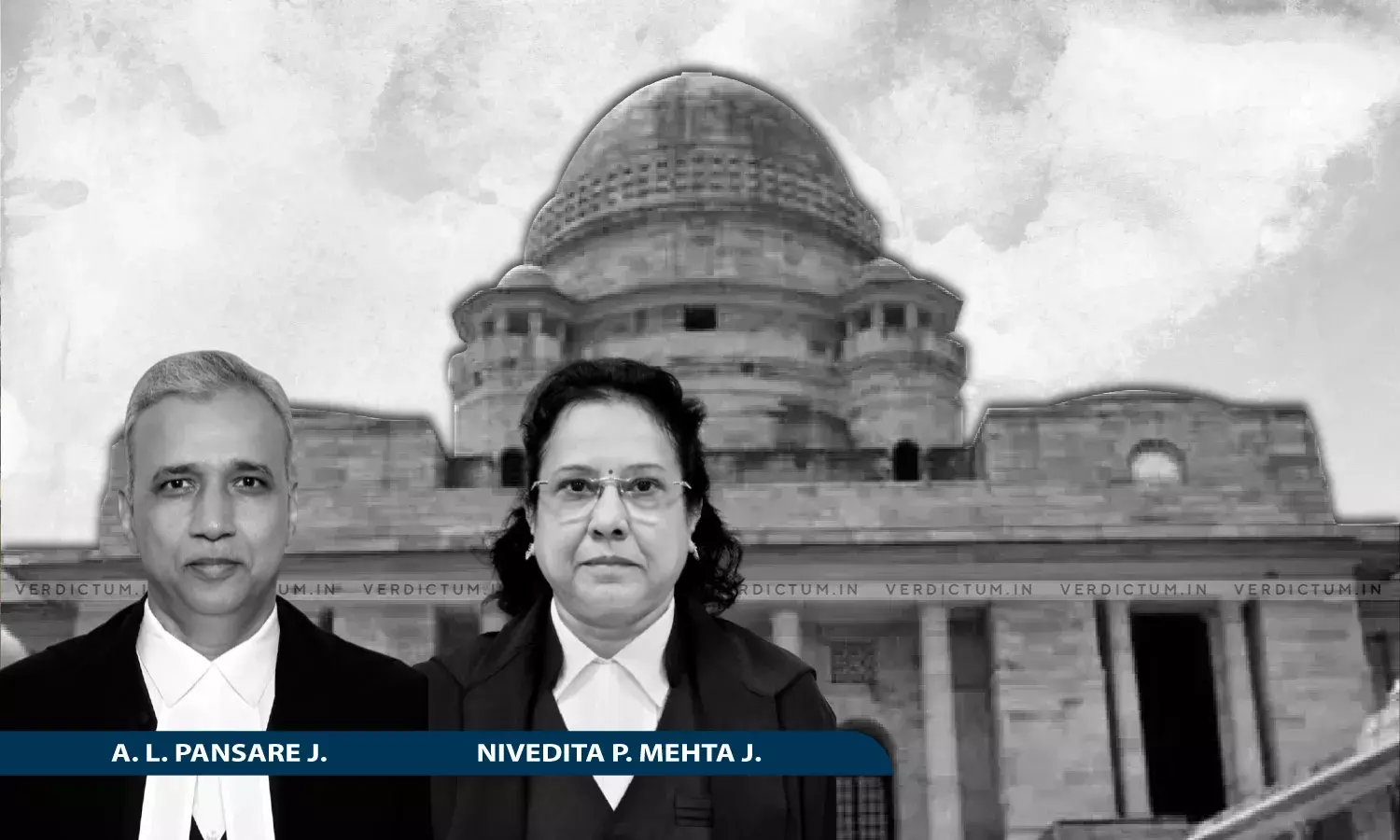
The Bombay High Court held that the discovery of a weapon at the instance of an accused cannot be disregarded merely because the disclosure memorandum does not contain elaborate details of the place where the weapon was concealed.
The Court observed that the essence of Section 27 of the Indian Evidence Act lies in the discovery of a fact based on information supplied by the accused while in custody.
The Court was hearing a criminal appeal filed by the appellant challenging his conviction for offences under Sections 302 read with Section 34 and Section 120-B of the Indian Penal Code in connection with the murder of a real estate mediator.
A Division Bench of Justice Anil L. Pansare and Justice Nivedita P. Mehta dismissed the appeal and upheld the conviction and sentence imposed by the Sessions Court, holding: “It is true that the memorandum does not describe the precise location in detail. However, the evidence clearly shows that the discovery of the weapon was a direct consequence of the information supplied by the appellant. The requirement of Section 27 of the Indian Evidence Act is that the information must relate distinctly to the fact discovered, which includes not merely the object but also the knowledge of the accused as to the place of concealment. When the accused himself leads the police to the spot and produces the weapon, the requirement of discovery stands satisfied even if the memorandum does not contain elaborate particulars”.
Senior Advocate AS Mardikar appeared on behalf of the appellants, while Avinash Gupta, Special Public Prosecutor, represented the respondents.
Background
The prosecution's case arose from the murder of a businessman engaged in real estate dealings. According to the prosecution, the deceased had been involved in disputes relating to a mall project and had mediated between builders associated with the development.
On the day of the incident, the deceased was called to the mall, where discussions were held regarding the inauguration of the project. Later, he left the premises in a Tata Safari vehicle with one of the accused to inspect agricultural land at Somthana Shivar. When he did not return, his associates attempted to contact him. Subsequently, information was received that a dead body had been found in the Somthana area. The body was identified as that of the deceased.
Following the registration of the crime, the police conducted an investigation and seized blood-stained soil, a mobile phone and other articles from the scene. A vehicle allegedly used in the offence was later recovered along with firearms and live cartridges. During the investigation, the appellant was arrested, and a Kukari knife, along with certain clothes, were recovered at his instance pursuant to a memorandum statement recorded by the police.
After the completion of the investigation, a charge sheet was filed, and the trial court convicted the appellant of murder and criminal conspiracy.
Court’s Observation
The Court first examined whether the prosecution had established that the death of the victim was homicidal. The post-mortem report revealed multiple severe injuries, including deep incised wounds on the neck and a firearm injury to the chest. The medical evidence showed that the gunshot wound had damaged vital organs such as the lung and heart and was sufficient to cause death.
The Court observed that the nature and location of the injuries ruled out any possibility of accidental or self-inflicted harm. It was therefore concluded that the prosecution had successfully established that the death was homicidal.
The prosecution relied on the testimony of two witnesses who claimed to have witnessed the incident on a rural road near Somthana. The defence argued that these witnesses were “chance witnesses” whose presence at the scene was doubtful.
Rejecting this contention, the Court observed that murders committed on public roads are often witnessed by passers-by and their testimony cannot be rejected merely because they happened to be present at the spot. The Court noted that both witnesses had provided consistent accounts describing how the appellant assaulted the victim with a sharp weapon, and another accused fired a gunshot.
Their testimony was found to be consistent with the medical evidence showing both sharp-weapon injuries and firearm injuries. The Court also noted that the delay in the witnesses' approaching the police did not render their testimony unreliable, particularly when their statements remained consistent on material aspects.
Apart from the eye-witness account, the Court noted several surrounding circumstances that supported the prosecution's case. Evidence showed that the deceased had last been seen leaving the mall with one of the accused in a Tata Safari vehicle shortly before the incident. The same vehicle was later recovered from the accused’s farmhouse and contained firearms and blood stains.
Ballistic evidence further indicated that the empty cartridge recovered from the scene had been fired from one of the seized pistols. These circumstances were considered corroborative of the prosecution's version.
A major challenge raised by the appellant related to the recovery of the Kukari knife at his instance. The defence argued that the disclosure memorandum did not contain a detailed description of the place where the weapon was concealed and therefore the recovery was inadmissible under Section 27 of the Evidence Act.
Rejecting this argument, the Court observed that the essential requirement under Section 27 is that the information supplied by the accused must relate distinctly to the fact discovered. The Court held that discovery includes not only the object recovered but also the accused’s knowledge of the place where it was concealed.
"When the accused himself leads the police to the spot and produces the weapon, the requirement of discovery stands satisfied even if the memorandum does not contain elaborate particulars.", the Court said.
The Court emphasised that the law does not require a particular format for disclosure statements. The critical factor is whether the statement was made voluntarily and whether it resulted in the discovery of a relevant fact. Accordingly, the Court held that the recovery of the Kukari pursuant to the appellant’s statement constituted a relevant incriminating circumstance.
The Court further considered whether the appellant acted in furtherance of a common intention with the co-accused. It was observed that the evidence showed coordinated action: the appellant first attacked the victim with a sharp weapon, and immediately thereafter, the co-accused fired a gunshot.
The Court held that such sequential and complementary actions demonstrated a shared intention and preparation. The subsequent conduct of the accused, including their absence after the incident and the removal of the vehicle used in the offence, was also treated as a relevant circumstance.
Taken together, the Court concluded that the evidence established the appellant’s participation in the crime and supported the finding of criminal conspiracy.
Conclusion
The Court held that the prosecution had proved beyond a reasonable doubt that the appellant participated in the murder of the victim in furtherance of a common intention and pursuant to a criminal conspiracy.
Finding no infirmity in the appreciation of evidence by the Sessions Court, the High Court dismissed the appeal and confirmed the conviction and sentence imposed on the appellant under Sections 302, read with Section 34 and Section 120-B of the Indian Penal Code.
Cause Title: Jaswantsingh Udaysingh Chavan v. State of Maharashtra (Neutral Citation: 2026:BHC-NAG:4309-DB)
Appearances
Appellant: A.S. Mardikar, Senior Advocate, with Advocate P.V. Navlani
Respondents: Avinash Gupta, Special Public Prosecutor, A.B. Badar, Additional Public Prosecutor
