

CBI Investigation Cannot Continue On Hope That IO May Someday Find Real Culprits And File Chargesheet: Bombay HC Quashes FIR Against GTL Infrastructure
Court holds criminal proceedings cannot continue on vague allegations where CBI failed to identify accused or establish fraudulent intent in bank loan restructuring case

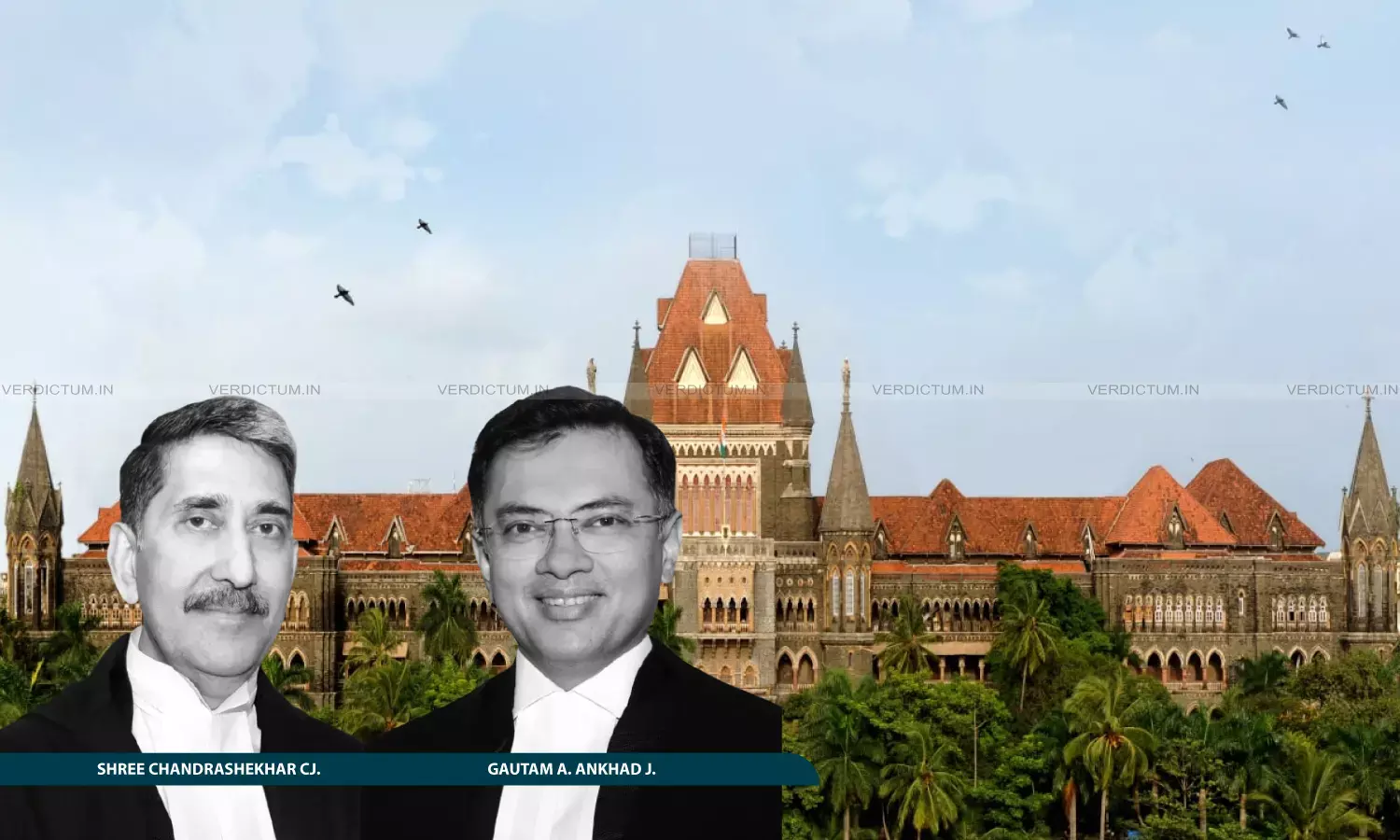
The Bombay High Court has quashed an FIR registered by the CBI against GTL Infrastructure Limited in connection with alleged irregularities in bank loans worth over ₹11,000 crore. The Court observed that criminal proceedings cannot be sustained merely on speculative allegations or in the hope that the investigation officer might find the real culprit and then file a chargesheet.
The Bench held that the continuation of the investigation was unjustified, noting that the CBI had failed to identify any specific accused or disclose any material showing fraudulent intent even after conducting a preliminary enquiry. The bench emphasised that the criminal justice system cannot be invoked merely to conduct a “roving inquiry”, noting that there was no evidence indicating deception or fraudulent intent on the part of the company at the inception of the transaction, which is an essential ingredient for the offence of cheating.
The matter pertained to an FIR registered by the CBI on 16-08-2023 alleging offences under Sections 120B and 420 IPC and provisions of the Prevention of Corruption Act, 1988. The agency claimed that GTL Infrastructure, in connivance with unknown public servants and bank officials, had caused wrongful loss to a consortium of banks by allegedly diverting loan funds obtained for telecom infrastructure expansion.
Chief Justice Shree Chandrashekhar and Justice Gautam A. Ankhad while placing reliance on Hridaya Ranjan Prasad Verma & Ors. v. State of Bihar & Anr. (2000) 4 SCC 168 observed, “…There was no deception at the inception or subsequently by the GTLIL. The alleged loss of public exchequer does not fall within the meaning of wrongful loss in absence of any evidence, intent and fraudulent act on the part of the GTLIL or omission by unknown bank officials. There is no allegation of any favor extended to the GTLIL which was all the time insisting on a resolution plan for its revival. The CBI could not detect any illegal act or deceit played by any of the directors of the GTLIL in the entire transaction. There seems to be an inseparable obstacle in the stand of the CBI that unknown persons were involved in the crime. In our opinion, the machinery of criminal justice system cannot be put in motion for making a roving inquiry. The CBI cannot be permitted to continue with the investigation in this matter in a hope that some day it may identify the offender where no offence is disclosed”.
“The CBI has taken a specific stand that the matter is still under investigation and it has right in law to investigate the case which prima facie discloses commission of cognizable offence. However, the sphere of investigation is well demarcated and the case set up by the CBI in the First Information Report can be examined in the light of unimpeachable documents produced by the GTLIL. The registration of an FIR after the Preliminary Enquiry against unknown bank officials and unknown directors of the GTLIL indicates the fluid state of affairs. The scope of Preliminary Enquiry and investigation in a cognizable offence after an FIR is lodged are different. But then, it is difficult to accept the proposition that the CBI is still searching for the accused. The continuance of criminal proceedings against the GTLIL cannot be permitted on the ground that the Investigating Officer may some day find the real culprits and form an opinion to file a chargesheet”, the bench further observed.
Senior Advocate D. P. Singh appeared for the petitioner and Advocate Kuldeep Patil appeared for the respondent.
Pertinently, according to the CBI, the company had availed credit facilities from a consortium of 19 banks and financial institutions and later underwent debt restructuring after facing financial stress. The agency alleged that funds were routed through vendor entities without actual supply of goods, resulting in financial losses to lenders.
However, GTL Infrastructure challenged the FIR before the Court, contending that the allegations were baseless and that forensic audits conducted by independent auditors had not found any evidence of fraud or diversion of funds.
The company argued that its financial difficulties arose due to developments in the telecom sector, including the cancellation of telecom licences following the 2G spectrum judgment, insolvency of major telecom operators such as Aircel, and broader market downturns.
After examining the record, the Court found that the preliminary enquiry conducted by the CBI did not identify any specific public servant or individual allegedly involved in wrongdoing. The Court noted that even at the stage of registering the FIR, the agency had failed to name any accused person responsible for the alleged conspiracy.
The Court further observed that the decisions taken by the consortium of banks regarding restructuring and assignment of debt were essentially commercial decisions made in light of prevailing market conditions and regulatory frameworks. Such decisions, the bench held, cannot be treated as criminal conduct in the absence of clear evidence of fraud or collusion.
The Court, therefore, rejecting the CBI’s contention that the investigation should be allowed to continue held that it could not accept a situation where the agency was “still searching for the accused” after registering an FIR.
Cause Title: GTL Infrastructure Limited v. Central Bureau of Investigation & Anr. [Neutral Citation: 2026:BHC-AS:10317-DB]
Appearances:
Petitioner: D. P. Singh, Senior Advocate, Sajal Yadav, Sonam Gupta, Apoorva Agrawal, Prasad Lotlikar, Essaji Vahanvati, Aparna Kulkarni, Suyash Gadre, Abhishek Thote, Harsh Ghangurde, Advocates.
Respondents: Kuldeep Patil, Sumitkumar Nimbalkar, Sanika Joshi, Anay S. Joshi and Saili Dhuru, M. M. Deshmukh, In-Charge Public Prosecutor, S. V. Gavand, APP, Advocates.