

Irregular Procedure By Mamlatdars, Revenue Authorities In Passing Orders And Issuing Certified Copies: Bombay High Court Issues Directions
Court notes irregular practices by revenue authorities in issuing orders and certified copies; directs uniform procedure to ensure transparency and proper computation of limitation periods

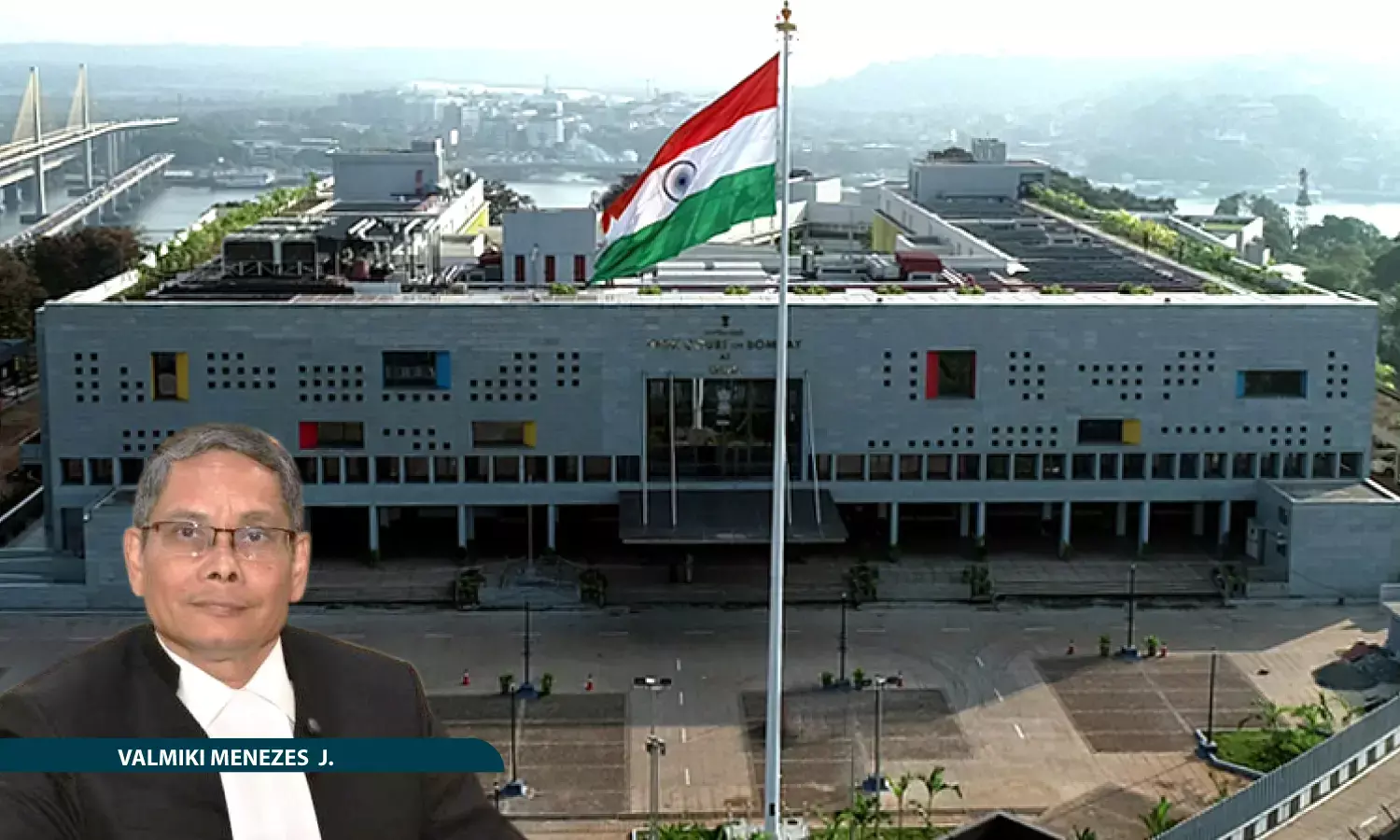
Justice Valmiki Menezes, Bombay High Court, Goa
The Bombay High Court, Goa Bench has issued a set of detailed directions to streamline the manner in which quasi-judicial authorities pronounce orders and issue certified copies, after noting serious procedural irregularities in a case involving a Deputy Collector’s order under the Goa Daman and Diu Mundkars (Protection from Eviction) Act 1975.
To address the issue, the Court directed that all quasi-judicial authorities must pronounce orders in open court and ensure that the signed judgment is placed on record immediately with proper pagination. Certified copies must always include the full reasoned order rather than only the operative portion from the proceeding sheet, the Bench said.
The Bench was hearing a writ petition filed by a 71-year-old widow, challenging orders of the Deputy Collector, Pernem, who had granted leave to appeal and stayed a Mamlatdar’s order permitting her to purchase a dwelling house under Section 16 of the Goa, Daman and Diu Mundkars (Protection from Eviction) Act, 1975.
Justice Valmiki Menezes observed, “The allegations made in this petition, that the impugned orders were placed on the file of the Deputy Collector much later, are not an isolated incident, but judicial notice has to be taken of several petitions that have come up alleging the irregular procedure being followed by Authorities such as the Collector, Deputy Collector, Mamlatdars and Revenue Authorities in passing of orders and judgments and issuing of certified copies of such quasi-judicial orders. Often enough, such orders record that they were pronounced in open court, when there is no record that they were actually pronounced before the parties or that the orders purportedly pronounced were actually available for perusal of the parties in the concerned file”.
“…Similarly, there appears to be no defined procedure for receiving Applications for Certified Copies of records or orders of such Authorities, nor is there such defined procedure being followed by recording the date when such an Application was made, the date when the party applied is required to collect the certified copy, the date when such certified copy is actually ready and the date when it was actually delivered. This assumes great relevance, since there should be no ambiguity in the computations of the period of limitation provided under a statute, whilst preferring proceedings before a higher forum, the limitation being reckoned after consideration of the time to be deducted for obtaining Certified Copies”, the Bench further observed.
Advocate Nicole Mayekar appeared for the petitioner and Sulekha Kamat, AGA appeared for the respondent.
In the matter, the petitioner contended that the operative order dated 16-12-2023 was initially recorded only in the proceeding sheet without reasons. According to her, a detailed reasoned order bearing the same date was furnished much later on 06-01-2024, after she had already challenged the proceeding-sheet order before the Administrative Tribunal.
The Court during the proceedings, directed an inquiry into the circumstances under which the reasoned order was supplied later. The inquiry report by the Collector acknowledged procedural lapses in the issuance of certified copies but stated that there was insufficient evidence to conclusively establish manipulation of records. Subsequently, the concerned Deputy Collector was issued a formal “censure” for failing to adhere to procedural requirements.
The Court observed that similar complaints regarding irregular procedures by revenue authorities, including Collectors, Deputy Collectors and Mamlatdars have repeatedly surfaced. It noted that orders are sometimes recorded in the roznama (proceeding sheet) without the detailed judgment being available on file, and certified copies are issued without clear endorsements showing when they were applied for, prepared or delivered.
The Bench noted that such practices create serious problems for litigants because limitation periods for appeals and revisions often depend on the time taken to obtain certified copies. Without clear records of dates relating to the application, preparation and delivery of copies, higher forums cannot properly compute limitation or exclude time under the Limitation Act, 1963, it further noted.
The Court further mandated that every certified copy must carry specific endorsements, including: the date of application, date of processing, date when the copy is ready, the notified collection date, and the date on which the copy is actually collected. Authorities must also issue receipts informing parties when they can collect the certified copy.
While declining to directly quash the impugned orders, the Court permitted the petitioner to amend her pending revision applications before the Goa Administrative Tribunal to challenge the detailed orders as well. The Bench further directed the Tribunal to dispose of the revisions preferably within three months.
The Court also asked the Chief Secretary and the Law Department of Goa to circulate the directions to all authorities exercising quasi-judicial powers so that uniform procedures are followed across departments.
Cause Title: Gopiki Soma Lingudkar v. The Deputy Collector & S.D.O. & Ors. [Neutral Citation: 2026:BHC-GOA:415]
Appearances:
Petitioner: Nicole Mayekar, Advocate.
Respondent: Sulekha Kamat, AGA, Deepak Gaonkar, Advocate.