

Domestic Enquiry Conducted In Cases Prior To Enactment Of POSH Act On Statutory Standing Order Not Illegal: Bombay High Court
The Bench held that the focus must be on compliance with natural justice and whether the employee was given a fair opportunity to defend.

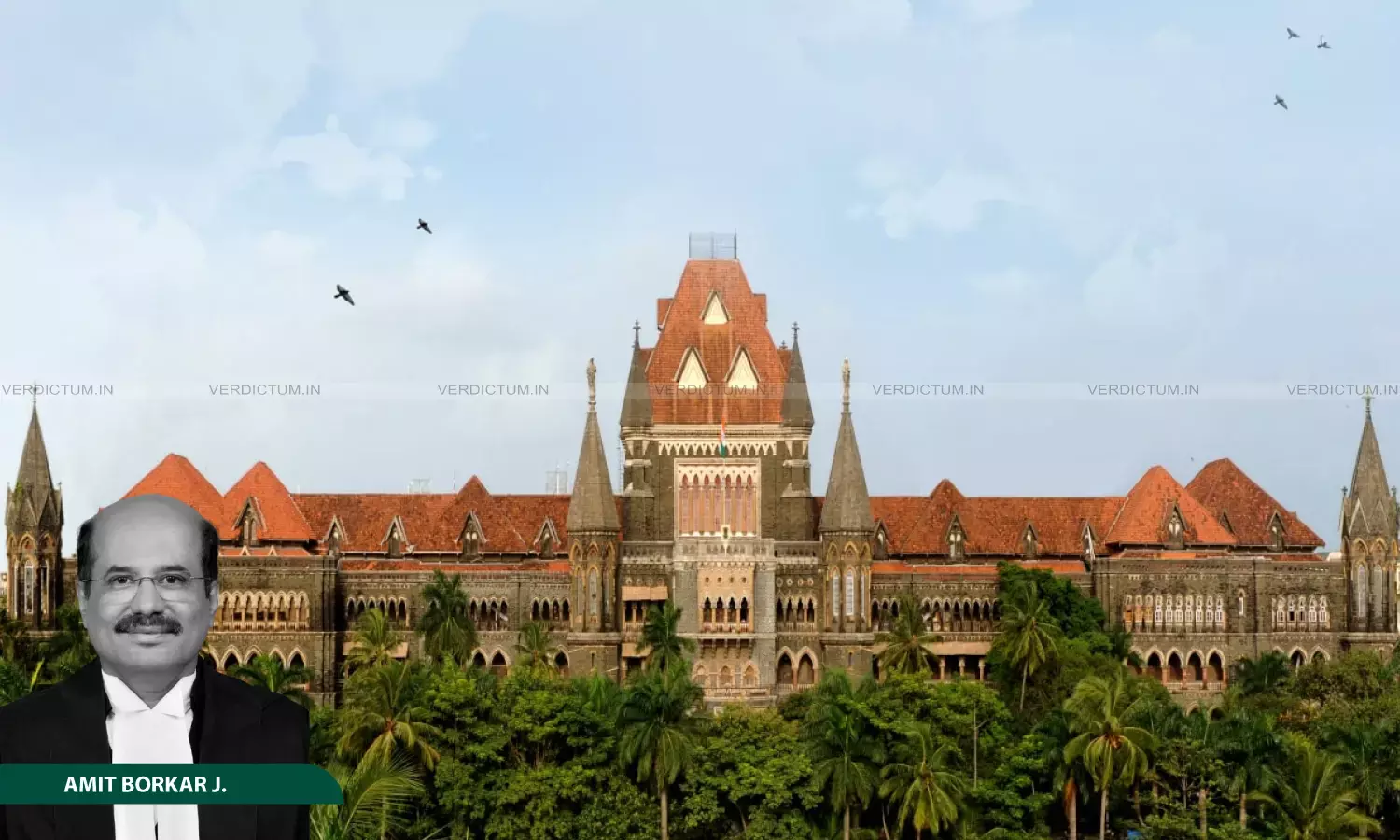
The Bombay High Court has held that a domestic enquiry into allegations of sexual harassment in cases before enactment of POSH Act cannot be declared illegal or vitiated solely because the employer failed to constitute a Complaints Committee in the exact format prescribed by the Sexual Harassment of Women at Workplace (Prevention, Prohibition and Redressal) Act, 2013 and by the Supreme Court in Vishaka v. State of Rajasthan (1997) 6 SCC 241.
The Court noted that when an enquiry is conducted under statutory Model Standing Orders, the Bombay Industrial Employment (Standing Orders) Rules, 1959 in the present case, that have the force of law, the primary judicial focus must remain on whether the principles of natural justice were followed and whether the delinquent employee was afforded a fair opportunity to defend themselves against the charges.
Justice Amit Borkar observed, “It is true that the POSH Act is a complete legislation… But before this Act came the situation was different. The legislation existed through judicial directions and through existing service models like standing orders. Therefore, while dealing with cases from that earlier period, the Court cannot apply present standards in a mechanical way. Therefore, the reliance on the POSH Act helps to understand the present legal position but for deciding the present dispute what is important is whether at the relevant time the employer followed a procedure within the model available to it. If that is satisfied then absence of a committee as required by statute cannot make the enquiry invalid”.
Senior Advocate Kiran Bapat appeared for the petitioner and Advocate K.W. Thakare appeared for the respondent.
In the matter, when GlaxoSmithKline Pharmaceuticals Limited terminated the services of respondent Suhas Shankar Pagare, a production department employee and Union Vice President, that became a matter of dispute. The respondent was accused of sexually harassing and physically assaulting a female colleague in February 07, 2011.
Following a preliminary investigation and a domestic enquiry conducted by an appointed Enquiry Officer under the Model Standing Orders, the respondent was found guilty and subsequently dismissed in December 07, 2012.
Thereafter, the respondent challenged his termination before the Industrial Tribunal at Nashik. In a Part I Award dated December 9, 2025, the Tribunal held the enquiry to be unfair and illegal, citing non-compliance with the Vishaka mandate for a specific Complaints Committee.
It further labelled the Enquiry Officer’s findings as perverse and granted the company liberty to lead fresh evidence to prove misconduct. The petitioner company approached the High Court seeking to quash this preliminary award.
In its reasoning, the High Court noted that Standing Orders, once certified, acquire statutory character and operate as law within an establishment. Justice Borkar observed that the Tribunal committed a patent error by stopping at the form of the inquiring authority without assessing if the workman was supplied with the complaint, allowed representation, and given a chance to cross-examine witnesses.
“If the substance of fairness is present then minor variations in procedure cannot make the enquiry bad. A disciplinary proceeding must be a fair process. If the workman knew the case against him, had access to the material and was given a fair chance to explain, then the enquiry cannot be rejected only on the ground that the format of a Committee was not followed. Therefore, the Tribunal was required to go deeper and examine whether any injustice was caused. If no prejudice is shown and if the process satisfied the principles of natural justice, then the enquiry could not have been set aside on such a ground. The failure to undertake this examination makes the judgment of the Tribunal legally unsustainable…”, the Bench noted.
“…If the workman has been denied opportunity or if material has been withheld or if the process was biased or one-sided, then certainly the enquiry would fail. But if no such prejudice is shown and the workman had full opportunity to defend, then mere absence of a designated Committee cannot be treated as fatal…“…the Tribunal’s approach, to the extent it holds the enquiry not legal merely on the ground that it was not conducted in the exact manner of Vishaka, is not sustainable. The correct course was to examine the actual fairness of the process, the material disclosed, the opportunity given, and the prejudice, if any, caused to the workman. If that exercise is not shown in the Award, then the finding that the enquiry was illegal and the findings of the Enquiry Officer were perverse cannot be allowed to stand”, the Bench further noted.
Accordingly, the Bench quashing the Part I Award and remanded the matter to the Industrial Tribunal for fresh consideration. The Tribunal is directed to specifically examine the validity of the enquiry based on natural justice and the evidence on record, rather than the absence of a Vishaka committee. The reference is requested to be disposed of expeditiously within six months.
Cause Title: GlaxoSmithKline Pharmaceuticals Limited v. Suhas Shankar Pagare & Anr (Neutral Citation: 2026:BHC-AS:16848)
Appearances:
Petitioner: Kiran Bapat, Senior Advocate, P.N. Salgaonkar and Pratik Salgaonkar i/by Salgaonkar & Co., Advocates.
Respondents: K.W. Thakare, G.R. Naik, Uresh U. Sawant, and Rutika Naik i/by M/s. G.R. Naik & Co. Advocates.
Click here to read/download the Judgment