

Human Rights Commission Cannot Be Used To Resolve Property Disputes Between Real Estate Parties: Bombay HC Quashes MSHRC Order
Maharashtra State Human Rights Commission (MSHRC) order had directed police to register FIR and municipal authorities to reconsider land approvals, holding dispute arose from competing title claims

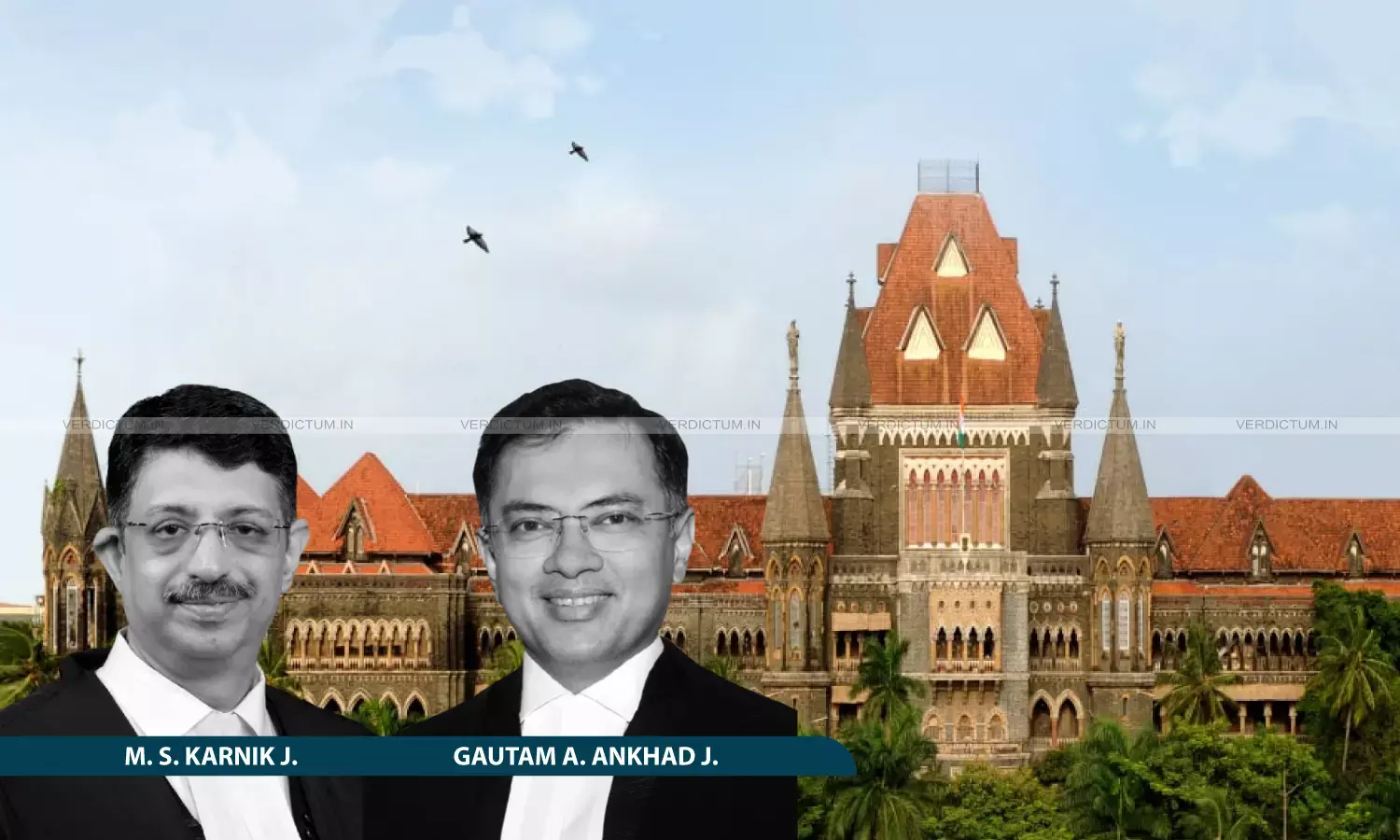
The Bombay High Court has set aside an order of the MSHRC which had directed the police authorities to register an FIR, and a municipal corporation to take action in connection with a property dispute, holding that the Human Rights Commission cannot be used as a forum to resolve private property disputes between real estate parties.
The Court observed that the complaint essentially involved a civil dispute over property and did not disclose even a prima facie violation of human rights within the statutory framework.
Justice M. S. Karnik and Justice Gautam A. Ankhad observed, “The present is a case where having regard to the civil and criminal disputes between the parties who are into real estate business, remedies under the appropriate provisions of law can be invoked and therefore the complaint filed itself is misconceived. We have no hesitation in observing that the complainant does not even meet the threshold of a prima facie case indicating violation of human rights within the statutory framework. Long and short of the complainant’s grievance is that though the police registered a criminal complaint at the behest of the petitioner, the police failed to take any action on the complaint made by the complainant. In a property dispute between the parties who are in the real estate business, having already resorted to a series of civil and criminal litigations relating to a property dispute, we fail to notice even a prima facie violation of human rights as alleged by the complainant. If the police fails to register a complaint at the behest of the complainant, there are adequate remedies under the criminal law which he can invoke”.
Reiterating Regulation 8 of the Maharashtra State Human Rights Commission (Procedure) Regulations, 2011, the Bench further noted, “A bare perusal of Regulation 8 makes it abundantly clear that the jurisdiction of the State Human Rights Commission is circumscribed by specific statutory limitations. The Commission is not intended to function as a parallel forum for adjudicating civil disputes, service matters, or issues already pending before competent courts or tribunals. Nor is it empowered to entertain vague or frivolous allegations lacking specificity or substantive content. The regulatory framework thus ensures that the Commission remains focused on its core mandate: the protection of human rights as defined under the Act”.
While allowing the writ petition filed to challenge the Commission’s order dated 31-05-2023, the Court observed that the dispute between the parties arose from competing claims over a parcel of land and involved questions of title and possession, which are matters to be adjudicated by civil courts.
Advocate Ajay Basutkar appeared for the petitioner and Himanshu Takke, AGP appeared for the respondent.
According to the facts, the respondent had approached the Human Rights Commission alleging that the petitioner had illegally taken possession of land using forged documents and that the police had failed to register his complaint, while instead registering a criminal case against him and others. It also alleged that municipal authorities had wrongly approved plans related to the property despite his objections.
The Court took note of the fact that the parties were already involved in multiple civil and criminal proceedings relating to the same property and that the complainant, being a real estate businessman, had adequate remedies available under ordinary civil and criminal law. In such circumstances, the Human Rights Commission could not be used as a parallel forum to pursue private property disputes, the Bench held.
Rejecting the Commission’s reliance on the Supreme Court’s ruling in Lalita Kumari v. Government of UP & Ors [2013] 14 S.C.R. 713 regarding mandatory registration of FIRs, the Court held that the principle had been misapplied in the context of a human rights complaint. It noted that if the police failed to register an FIR, the complainant could avail remedies available under the criminal procedure framework rather than invoking the jurisdiction of the Human Rights Commission.
The Court on finding that the complaint neither disclosed a violation of human rights nor met the statutory threshold for the Commission’s jurisdiction, quashed and set aside the impugned order. It clarified that the parties remain free to pursue appropriate remedies available under law before competent forums.
Cause Title: Dilip Lalchand Porwal v. State of Maharashtra & Ors. [Neutral Citation: 2026:BHC-OS:5808-DB]
Appearances:
Petitioner: Ajay Basutkar a/w Shruti Bedekar, Shikha Shah, Advocates.
Respondents: Himanshu Takke, AGP, Vishal Kanade i/b. Rahul Shirgavkar, Ram U. Singh a/w Shanbaugh, Annkur Jain, Kajal Soni, Sagar Patil, Advocates.