

Women Striving For Economic Independence Does Not Have To Compromise Role As Caregiver: Bombay High Court On Giving Maternity Benefits For Contractual Doctor
Statutory protections under 1961 Act supersede private agreements; Court rules motherhood dignity and financial security are non-negotiable facets of Article 21

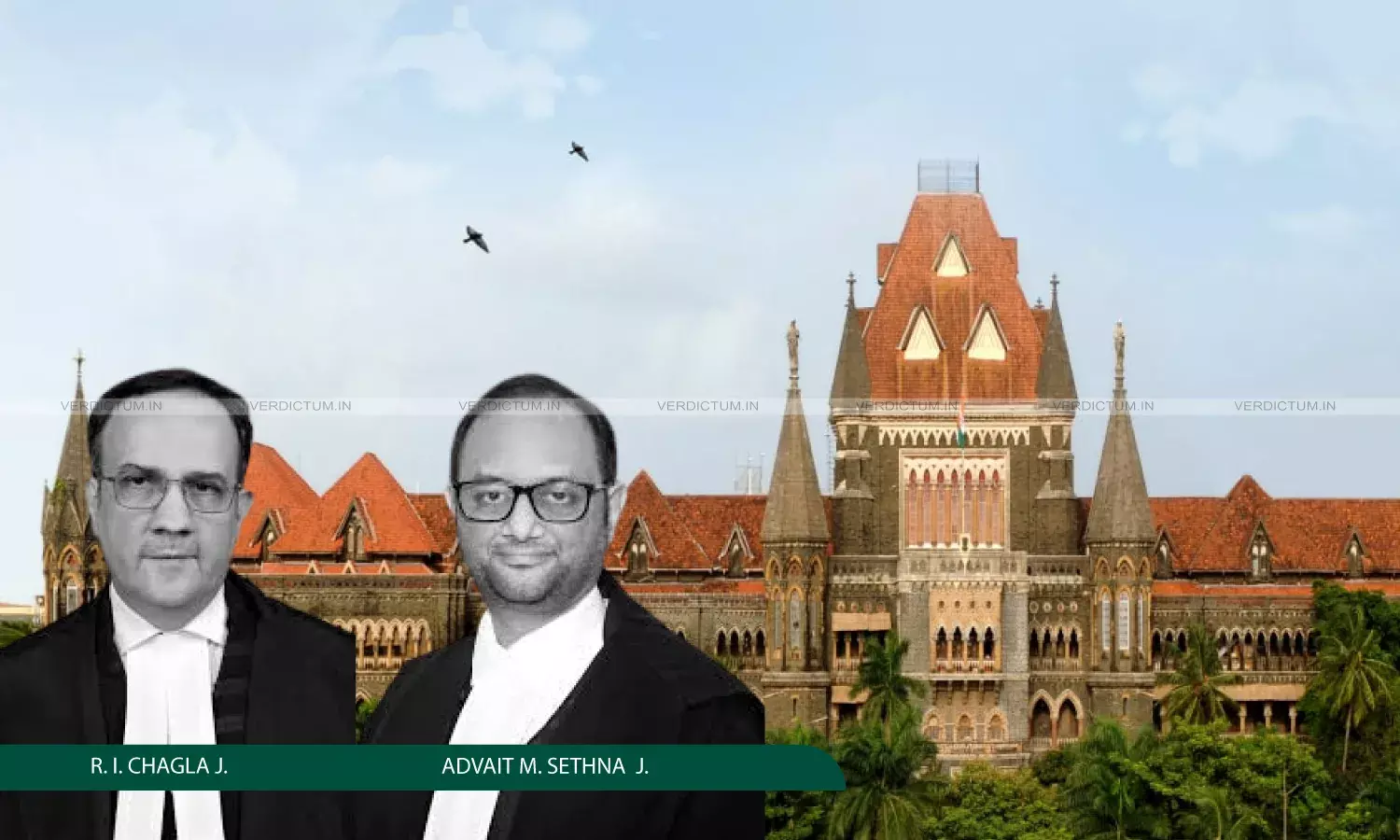
The Bombay High Court has affirmed that a woman’s pursuit of self-sufficiency and economic independence must not force a compromise on her role as a caregiver to her child. In a significant judgment, the Court held that the Maternity Benefit Act, 1961, is an emancipatory legislation designed to protect the dignity of motherhood, irrespective of whether an employee is permanent or contractual.
The Bench noted that the constitutional imperative under Article 21 of the Constitution of India to treat reproductive dignity and financial security as integral facets of the right to life. The Court observed that internal policies or "stop-gap" appointment letters cannot be used by public authorities to bypass the mandate of Section 27 of the Act, which explicitly states that the Act's provisions shall have effect notwithstanding anything inconsistent contained in any contract of service.
Furthermore, the Bench emphasised that the State must adopt a sensitive approach towards women in the workforce, ensuring they are not forced to litigate for basic statutory entitlements.
The Division Bench comprising Justice R. I. Chagla and Justice Advait M. Sethna observed, “…we find it pertinent to observe that the object of maternity benefit is to protect the dignity of motherhood and to provide financial support/security to a woman and her child for the period she is not working. In today’s day and age, more and more women are joining the workforce. In this scenario, it is important to ensure that a woman striving for self-sufficiency and economic independence does not have to compromise on her role as a care giver to her child. The State is therefore expected to be more sensitive to deserving persons such as the Petitioner. She ought not to be made to seek orders from this Court in cases like the present, where the Respondents had, in principle agreed and accepted to process payment of her maternity benefits. We expect the Respondents not to adopt such an unreasonable approach, going forward, as the one in the given case. We conclude with this earnest and solemn hope”.
“Pertinent it is to note that Section 6(6) of the said Act in fact provides that the failure to give notice thereunder, shall not disentitle a woman to maternity benefit or any other amount if she is so otherwise entitled. Moreover, the said Act does not contemplate any such disclosures and/or that the Agreement/contract shall override such statutory provisions. The Respondents have demonstrated nothing to the contrary so as to appeal to our conscience for us to subscribe, much less agree to the contentions advanced”, the bench further observed.
By quashing a communication dated 21-11-2024, that denied the benefits to a specialist doctor, the Court reinforced the principle that beneficial statutes carry a non-obstante clause that overrides any inconsistent terms found in individual service agreements or restrictive municipal regulations.
Advocate Subit Chakrabarti appeared for the petitioner and Advocate Chaitanya Chavan appeared for the respondent.
In the matter, the Petitioner-an anaesthesiologist, was engaged as an Assistant Professor on contractual basis at Seth G.S. Medical College and K.E.M. Hospital, operating under the Municipal Corporation of Greater Mumbai (MCGM).
Since her initial appointment on her contract was renewed periodically through 30-06-2025, on 20-08-2024, the Petitioner applied for maternity leave, having completed the statutory requirement of working for at least 80 days in the preceding 12 months.
However, the Respondents refused the grant of benefits, stating that such provisions were not available to contractual employees under the Brihanmumbai Municipal Corporation Service Rules.
The procedural history in the matter indicates that the Court had previously recorded a statement from the Respondents on 23-06-2025, where they agreed "in principle" to grant the benefits.
Despite multiple adjournments granted to process the payment, the Respondents ultimately failed to comply, leading the Court to examine the merits of the denial. The Respondents argued that the Petitioner had "concealed" her pregnancy at the time of her last contract renewal in 12-08-2024 and was bound by the specific exclusionary clauses in her employment agreement.
In its reasoning, the Court dismissed the allegations of suppression, noting that the Petitioner had diligently issued multiple notices and proof of pregnancy under Section 6 of the Act. The Bench held that Section 27 of the Act does not distinguish between permanent and contractual employees, making the "stop-gap" nature of the appointment irrelevant to statutory eligibility.
Placing reliance on Supreme Court precedents, the Court noted that maternity benefits are "inbuilt" in the legislation and survive even the cessation of employment. It further observed that BMC's own Service Rule 170(2) supports eligibility for non-permanent employees with one year of continuous service.
Cause Title: Dhanashri Ramesh Karkhanis v. Municipal Corporation of Greater Mumbai & Ors. [Neutral Citation: 2026:BHC-OS:5400-DB]
Appearances:
Petitioner: Subit Chakrabarti, Chaitrika Patki, Khushnumah Banerjee and Aashka Vora i/b. Vidhii Partners, Advocates.
Respondent: Chaitanya Chavan, Rupali Adhate, Komal Punjabi, Advocates.