Body Building Is A Species Of Gymnastics Eligible For 5% Sports Quota Under Maharashtra Sports Reservation Policy: Bombay High Court
Declaring Body Building a species of gymnastics, the Court directed the State Government to include the sport within the list of eligible disciplines for 5% reservation in Government and semi-Government Class ‘A’ to ‘D’ posts.
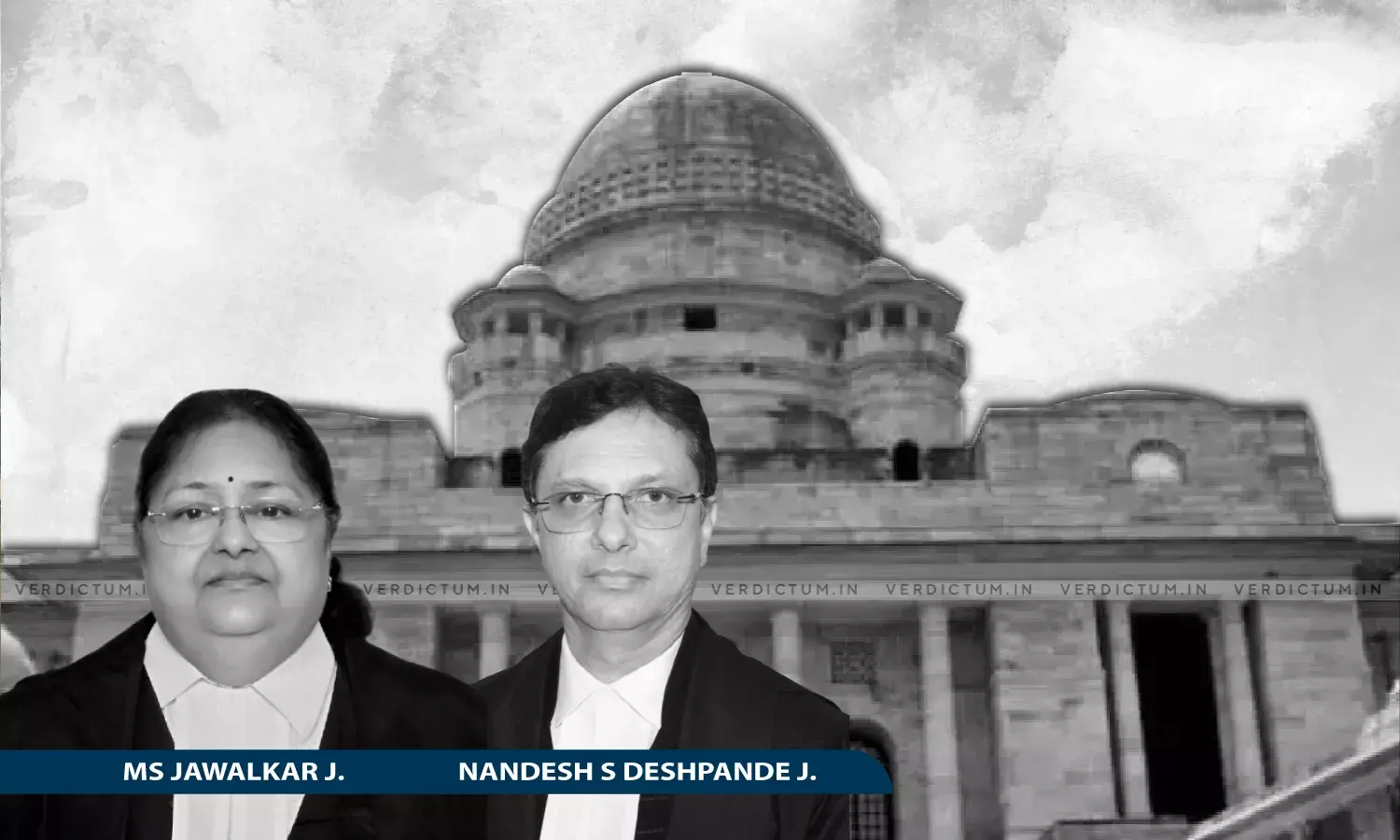
The Bombay High Court held that Body Building is a species of gymnastics and is therefore eligible for 5% reservation under the sports quota in Government and semi-Government Class ‘A’ to ‘D’ posts in Maharashtra.
The Court observed that the exclusion of Body Building from the list of recognised sports in the State’s policy was arbitrary and lacked any rational basis.
The Court was hearing a writ petition challenging the Government Resolution governing reservation for sportspersons in public employment and the subsequent communications denying recognition to Body Building for reservation benefits.
A Division Bench of Justice M.S. Jawalkar and Justice Nandesh S. Deshpande, “held and declared that the “Body Building” is a species of Gymnastics and is eligible for 5% reservation in Government and semi-Government Class ‘A’ to ‘D’ posts.”
The petitioner appeared in person, while N.R. Patil, Assistant Government Pleader, represented the respondents.
Background
The petitioner, who appeared in person before the Court, had participated in bodybuilding competitions while pursuing higher education and had secured third position in an All India University Best Physique tournament organised by the Association of Indian Universities.
Earlier Government policies of the State had recognized Body Building as one of the sports eligible for the 5% reservation provided to sportspersons in Government and semi-Government posts. However, a subsequent Government Resolution revised the eligibility criteria and restricted the benefit to sports included in the Olympic, Asian Games and Commonwealth Games, along with certain specified games.
As a result, bodybuilding was effectively excluded from the list of recognised sports for reservation benefits.
The petitioner challenged the Government Resolution as well as subsequent communications issued by the authorities denying him the benefit of a reservation under the sports quota.
Court’s Observation
The Court examined the policy framework governing reservation for sportspersons and noted that the original policy was intended to encourage students to participate in sports by providing employment opportunities to those who excel in sporting competitions.
The Court observed that the policy recognised the practical difficulty faced by sportspersons in balancing academic pursuits with intensive training and competitions. To compensate for the academic disadvantages faced by such individuals, the Government had introduced reservations in public employment.
While examining the revised Government Resolution, the Court found that the State had limited the benefit of reservation primarily to sports played in the Olympic, Asian Games and Commonwealth Games. However, certain other games, such as Chess, Kabaddi, Kho-Kho and Mallakhamb, had been included in the list despite not being part of these international events.
The Bench noted that the State had not provided any rational explanation for including these games while excluding Body Building, even though Body Building had earlier been recognised under the sports quota policy.
The Court further observed that the Central Government had recognised Body Building as a legitimate sport, as evidenced by the conferment of Arjuna Awards on athletes in that discipline. According to the Court, once the sport had received recognition at the national level, the State authorities could not arbitrarily deny similar recognition without providing a cogent justification.
The Court held that the classification adopted by the State lacked an intelligible differentia and had no nexus with the objective of promoting sports among students.
It also observed that many other States had recognised Body Building as a sport and that exclusion of the discipline from the State policy would unfairly disadvantage athletes who had pursued the sport in reliance on the earlier policy framework.
"The petitioner had a legitimate expectation that he would secure job if he is qualified as per the said policy and has dedicated his precious years of life in it. Thus, there was a legitimate expectation and as stated supra the action of the State in limiting the games but at the same time adding some games without any rationale or logic behind it has led to arbitrariness resulting in violation of Article 14 of the Constitution of India", the Court said.
The Court concluded that the State’s action amounted to arbitrary discrimination and violated Article 14 of the Constitution.
The Bench also held that the petitioner had a legitimate expectation that he would be eligible for employment benefits under the sports quota since Body Building had been recognised under earlier Government policies and he had dedicated years to pursuing the sport based on that policy.
Conclusion
Allowing the writ petition, the High Court directed the State Government to include Body Building in the Government Resolution governing sports reservation within four weeks. The Court declared that Body Building is a species of gymnastics and is eligible for the 5% reservation in Government and semi-Government Class ‘A’ to ‘D’ posts.
The Court also quashed the communications issued by the authorities denying recognition to Body Building and directed the respondents to process the petitioner’s case in accordance with the revised policy after inclusion of the sport.
Cause Title: Deepak Asaram Pawar v. State of Maharashtra & Ors (Neutral Citation: 2026:BHC-NAG:4318-DB)
Appearances
Petitioner: Petitioner in-person
Respondents: N.R. Patil, Assistant Government Pleader, V.V. Dahat h/f J.B. Kasat, Advocate