

SARFAESI Act| Extinguishment Of Right Of Redemption Will Not Affect Ownership Rights In Secured Asset: Bombay High Court
The Bombay High Court said that once the interim-moratorium under Section 96 of the SARFAESI Act is in force, a secured creditor cannot receive balance payment from the successful purchaser.
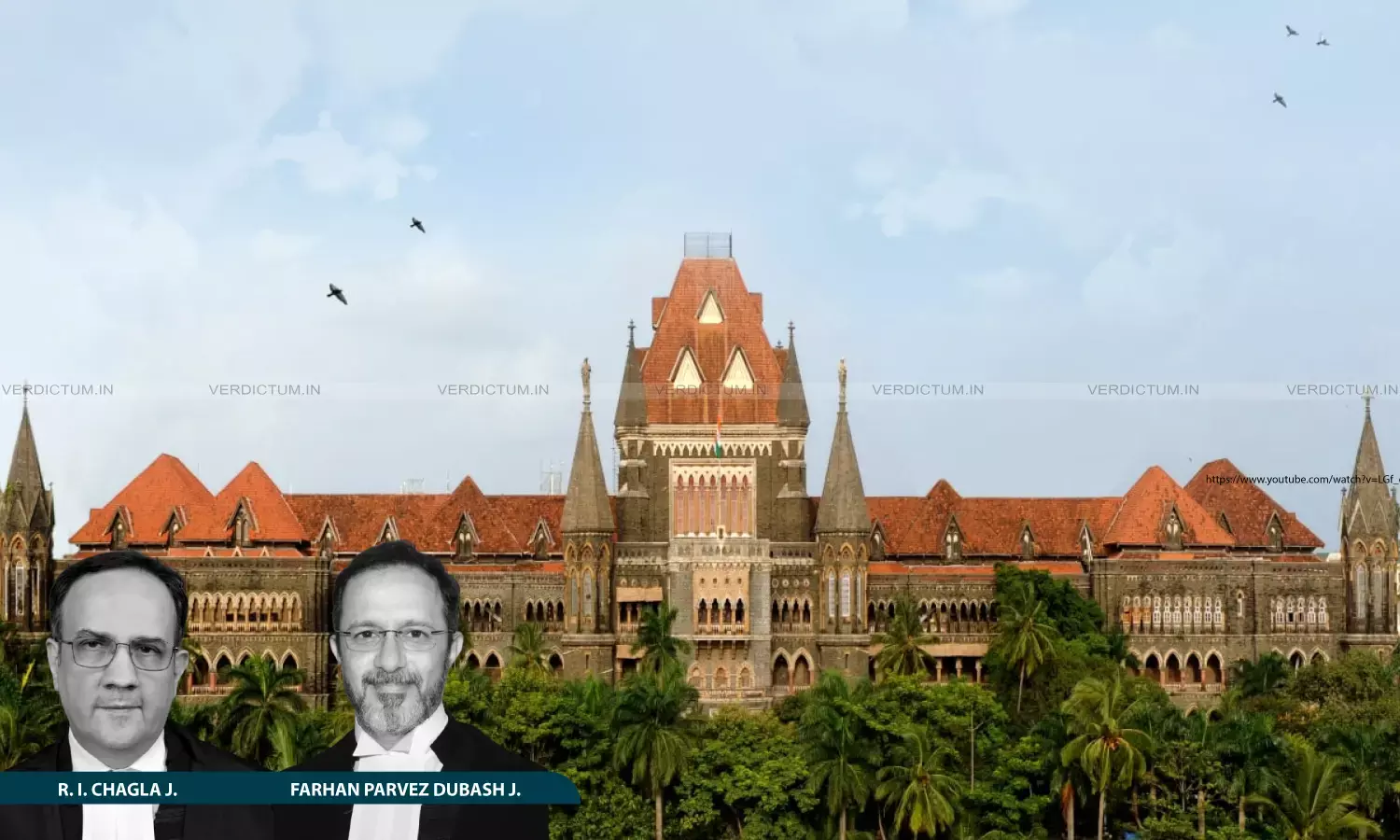
Justice R.I. Chagla, Justice Farhan P. Dubash, Bombay High Court
The Bombay High Court held that the extinguishment of the right of redemption will not affect ownership rights in the secured asset under the Securitisation and Reconstruction of Financial Assets and Enforcement of Security Interest Act, 2002 (SARFAESI Act).
The Court held thus in a Writ Petition filed by a successful auction purchaser, seeking a writ directing the Bank to handover physical possession of a residential flat.
A Division Bench comprising Justice R.I. Chagla and Justice Farhan P. Dubash observed, “The transfer of ownership of the secured asset in case of a statutory sale under SARFAESI takes place upon the issuance of the sale certificate. The amendment to Section 13(8) does not alter this position. It merely advances the date of extinguishment of the right of redemption available to a borrower. … The loss of the right of redemption does not tantamount to the loss of ownership rights. In other words, the extinguishment of the right of redemption will not affect ownership rights in the secured asset.”
The Bench said that once the interim-moratorium under Section 96 of the SARFAESI Act is in force, a secured creditor cannot receive balance payment from the successful purchaser.
Senior Advocate G.S. Hegde appeared on behalf of the Petitioner, while Advocates Mable Soans, Shrirang Katneshwarkar, and Gajendra Rajput appeared on behalf of the Respondents. Senior Advocate Naushad Engineer was appointed as the Amicus Curiae.
Brief Facts
The issue before the Court was related to an interplay between the SARFAESI Act and the Insolvency and Bankruptcy Code, 2016 (IBC). On the one hand, the bank and successful auction purchaser sought possession of the secured asset in furtherance of the sale certificate issued under the SARFAESI Rules, whilst, on the other, the Borrower contended that due to the prior imposition of interim moratorium under Section 96 of the IBC, possession cannot be handed over to them. In this background, the question that needed to be determined was whether post amendment to Section 13(8) of the SARFAESI Act, the Borrowers’ ownership right in the secured asset, also stands extinguished, upon issuance of the sale notice under Rule 8(6) of the SARFAESI Rules.
The Writ Petition filed by a successful auction purchaser, sought a writ directing the Bank to handover physical possession of a residential flat to it notwithstanding the lodging of an application for personal insolvency under Section 94 of the IBC by its erstwhile owners, alleging that their rights stood extinguished on the date of publication of the auction notice by the Bank. The successful auction purchaser (Petitioner) and the Bank (Respondent) were the original parties to the Writ Petition. The interests of both parties were aligned inasmuch as, they sought implementation of the measures taken under the SARFAESI Act, to the exclusion of the provisions of the IBC. The Petitioner was aggrieved with the inaction on the part of the Bank in handing over possession of the secured asset, despite the issuance of the sale certificate in its favour.
Reasoning
The High Court in view of the above facts, reiterated, “It is well settled that in case of a sale governed by Section 13(8) of the SARFAESI Act and Rules 8 and 9 of the SARFAESI Rules, the transfer of ownership of the secured asset is complete, only upon the issuance of the sale certificate and not at any time prior to that.”
The Court clarified that the position of law, even post the 2016 Amendment to Section 13(8) of the SARFAESI Act continues to be that the transfer of ownership in the secured asset takes effect only upon the issuance of sale certificate and not at any time, prior thereto.
“Moreover, as per the statutory framework of the SARFAESI Act, only if the terms of payment have been complied with, can the secured creditor proceed to issue a sale certificate in favour of the successful purchaser. Therefore, in the event of there being any legal embargo which prevents the secured creditor from accepting the payment from the successful purchaser, then, what follows is that, the sale certificate cannot be issued by the secured creditor. Consequently, the sale does not stand completed in favour of the successful purchaser”, it added.
The Court noted that only if the entire payment is made to the secured creditor, can the sale certificate be issued and if the sale certificate is not issued, prior to the coming into force of the moratorium, the sale is not complete.
“… if the interim moratorium kicks in post confirmation of the sale but before the balance payment is made, the only outcome is that there is no transfer of ownership of the secured asset in favour of the successful purchaser. That being the case, if there is any legal embargo in completing the sale, the successful purchaser cannot claim any ownership rights. Moreover, the interim-moratorium under Section 96 of the SARFAESI Act is much wider than that under Section 14 thereof, which position is also borne out from the aforesaid decisions”, it observed.
The Court also said that the vested right invested in the successful purchaser upon confirmation of sale is that he has a right to become the owner, upon making full payment of the sale price and the vested right of the successful purchaser is to insulate him from any claims from the world at large.
“The sale conducted under the provisions of the SARFAESI Act in the present case does not stand completed since, during the intervening period viz. from the date of confirmation of sale on 30th May 2025 till the issuance of sale certificate on 20th June 2025, the interim-moratorium imposed under Section 96 of the IBC on 9th June 2025, stayed all proceedings in respect of any debt of the borrowers”, it further noted.
Conclusion
The Court was of the view that the payments of the balance six tranches could not have been accepted by Respondent/Bank from the Petitioner and resultantly, the Petitioner is not the owner of the secured asset and therefore, not entitled to possession of the same.
“We are unable to take any countenance of the without prejudice submissions made by Mr. Hegde seeking refund of the entire auction bid/amount from Respondent No.1/Bank since no reliefs to that effect have been sought in the present Writ Petition. We leave this issue open, to be agitated and considered in appropriate proceedings, that his clients are free to initiate, if they so desire”, it concluded.
Accordingly, the High Court dismissed the Writ Petition.
Cause Title- Arrow Business Development Consultants Pvt. Ltd. v. Union Bank of India & Ors. (Neutral Citation: 2025:BHC-AS:54045-DB)
Appearance:
Petitioner: Senior Advocate G.S. Hegde, Advocates P.M. Bhansali, Arafat Siddique, and Juhi Pandey.
Respondents: Advocates Mable Soans, Shrirang Katneshwarkar, Gajendra Rajput, and Shubham Kahite.
Amicus Curiae: Senior Advocate Naushad Engineer, Advocates Sharad Bansal, and Yohann Limathwalla.
