Arbitral Award Based On Irrelevant Material Or Ignoring Relevant Evidence Violates Fundamental Principles Of Justice: Bombay High Court
The High Court held that an arbitral award rendered beyond the pleadings and evidence led by the parties, or one that ignores relevant material and relies on irrelevant considerations, would violate the fundamental principles of justice and may be set aside under Section 34 of the Arbitration and Conciliation Act.
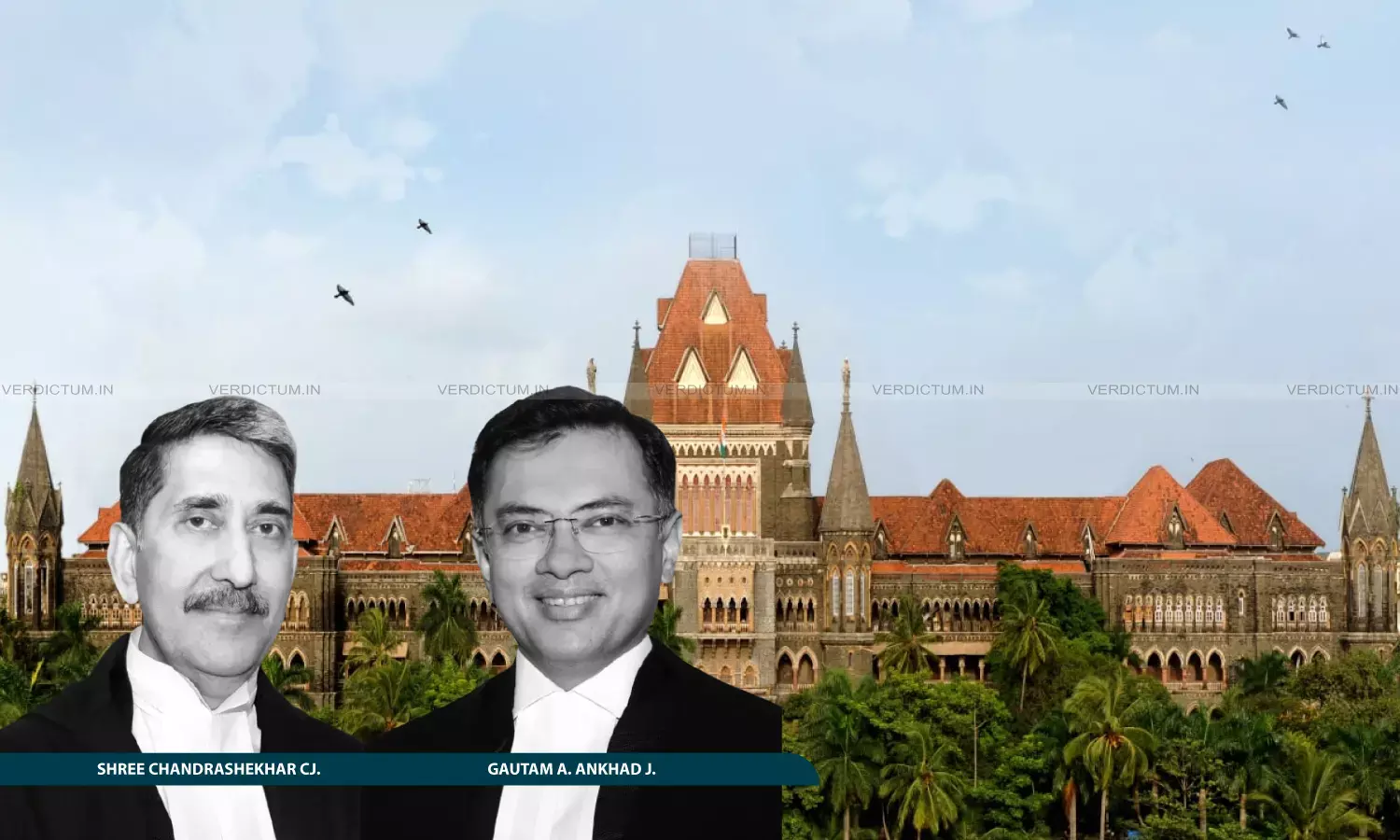
The Bombay High Court has held that an arbitral award which is rendered beyond the pleadings and evidence on record, or which ignores relevant material while relying on irrelevant considerations, would amount to a breach of the fundamental principles of justice.
The Court clarified that such a decision would fall within the scope of judicial interference under Section 34 of the Arbitration and Conciliation Act.
The Court was hearing a commercial arbitration appeal challenging the judgment of a Single Judge who had set aside an arbitral award dated 2 December 2019, passed in favour of the claimant company in a dispute concerning the supply of packaging materials.
A Division Bench comprising Chief Justice Shree Chandrashekhar and Justice Gautam A. Ankhad observed that “a fundamental principle of law and justice would be breached by a decision which is rendered beyond the pleadings and evidence led by the parties. A decision which is based on irrelevant material or excludes relevant material and thus is rendered perverse on the face of record shall be in breach of the fundamental principles of justice.”
Background
The dispute arose from a commercial arrangement between a foreign company engaged in manufacturing biscuits and sweets in Zimbabwe and an Indian partnership firm for the supply of packaging materials.
The claimant company alleged that packaging materials supplied under certain invoices were defective and emitted an odour, rendering them unsuitable for packaging edible products. It also claimed a refund of an advance payment made towards a fifth consignment that was never supplied.
Testing of the packaging materials was carried out through laboratory reports, including reports issued by SGS India and SGS Germany. The claimant relied upon these and other expert analyses to contend that the materials were defective.
Following the failure of negotiations, arbitration proceedings were initiated. The sole arbitrator framed several issues and ultimately held that the packaging materials supplied were defective and substandard. The arbitrator allowed the claimant’s refund claims along with certain costs and interest, while rejecting the counterclaims of the respondent firm.
The respondent firm challenged the arbitral award under Section 34 of the Arbitration and Conciliation Act. The Single Judge allowed the challenge and set aside the award, holding that the arbitrator had ignored relevant evidence and relied upon inadmissible and hearsay material. The claimant company thereafter filed the present appeal.
Court’s Observation
The High Court examined the scope of interference with arbitral awards under Sections 34 and 37 of the Arbitration and Conciliation Act.
The Court noted that although arbitral awards are ordinarily immune from extensive judicial scrutiny, interference is permissible where the award violates the fundamental policy of Indian law or the basic notions of justice.
The Bench observed that the claimant, being the party seeking refund and damages, bore the burden of proving that the packaging materials were defective and emitted a strong foul odour. However, the evidence relied upon before the arbitrator consisted largely of hearsay testimony.
The Court found that the managing director of the claimant company, examined as a witness, did not personally testify that he had detected any odour when the goods were received. Instead, he claimed that complaints had been received from customers. The Court noted that no customer or employee who allegedly inspected the materials was produced as a witness.
Similarly, the expert witness relied upon by the claimant had not personally conducted the tests forming the basis of his report and had admitted in cross-examination that the samples were tested by other laboratories. The Court therefore held that his testimony lacked probative value.
The Bench further observed that the arbitrator had disregarded the laboratory reports issued by SGS India, which had tested the samples contemporaneously and had found that the materials complied with permissible safety limits. At the same time, the arbitrator placed reliance on hearsay evidence and expert testimony that lacked a direct factual foundation.
The Court held that this approach reversed the burden of proof and violated fundamental principles governing civil adjudication. In a civil dispute, the claimant must establish the existence of the facts relied upon based on the preponderance of probability. The burden does not shift merely because the respondent fails to prove its defence.
According to the Court, the arbitrator’s decision to reject relevant documentary evidence while relying on unreliable testimony amounted to a breach of fundamental legal principles. The Bench held that such an award would shock the conscience of the Court and could therefore be set aside as being contrary to the public policy of India.
However, the Court also noted that the claimant’s separate claim for refund of USD 43,500.25 towards a fifth invoice stood on a different footing. The payment for that invoice was admitted, and there was no dispute that the corresponding goods had never been supplied.
Applying the doctrine of severability recognised in arbitration jurisprudence, the Court concluded: “The judgment rendered by the learned Single Judge is not beyond the scope of section 34(2) of the Arbitration and Conciliation Act. It is manifest on the face of the record that the Award dated December 2019 contravenes the fundamental policy of Indian law, it suffers from patent illegality, and the invalid portion thereof is liable to be set aside”.
Conclusion
The Bombay High Court partly allowed the appeal and upheld the Single Judge’s decision setting aside the arbitral award dated 2 December 2019, holding that the award suffered from patent illegality and violated the fundamental policy of Indian law.
However, the Court restored the portion of the award directing a refund of USD 43,500.25 paid by the claimant company towards the fifth invoice for which no goods had been supplied. All other findings of the arbitral award were quashed.
Cause Title: Arenel Private Limited v. Aakash Packaging (Neutral Citation: 2026:BHC-OS:6126-DB)
Appearances
Appellant: Rahul Narichania, Senior Advocate with Advocates Shrinivas Deshmukh, Sunilkumar Neelambaran, Aaron Fernandes, instructed by Mulla & Mulla & Craigie Blunt & Caroe.
Respondent: Mustafa Doctor, Senior Advocate with Advocates Spenta Kapadia and Aashdin Chivalwala, instructed by Wadia Ghandy & Co.