

Single Assault To Deter Love Relationship Opposed By Family Does Not Breach "Public Order": Bombay HC Quashes Detention Order Under MPDA
Preventive detention cannot be used as a tool to keep a person behind bars in the absence of genuine threats to public order

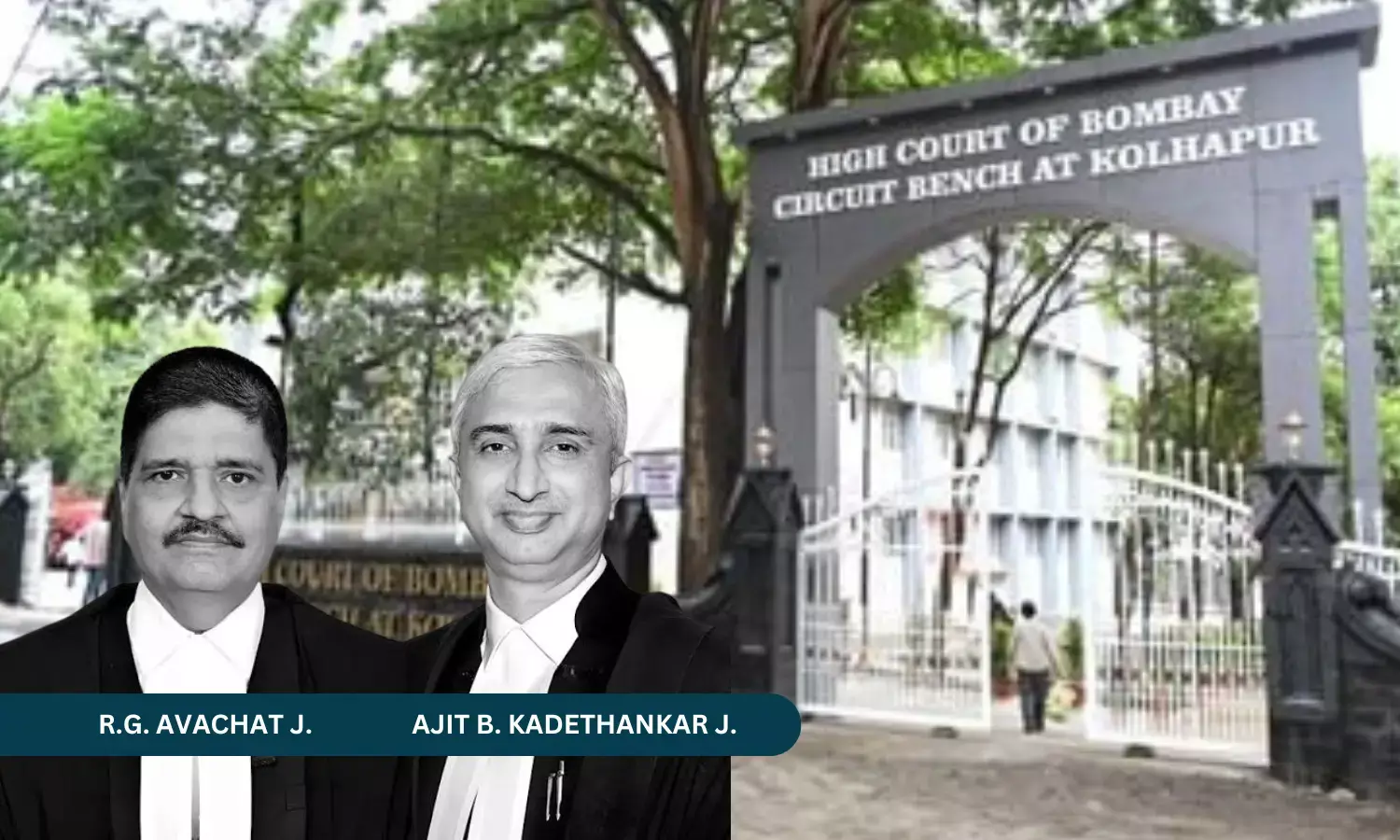
The Bombay High Court has held that a single, individualistic incident of assault to deter a youth from a love relationship, opposed by the family members, cannot brand him ‘dangerous’ and the act cannot be elevated to a disturbance of “public order” so as to justify preventive detention under Section 3(2) of the Maharashtra Prevention of Dangerous Activities of Slumlord's, Bootleggers, Drug-offenders, Dangerous persons and video pirates Act, 1981 (MPDA).
On the constitutional safeguards under Article 21 of the Constitution of India, the Court held that preventive detention cannot be used as a tool to keep a person behind bars in the absence of genuine threats to public order.
The Court noted that following the petitioner’s earlier release from detention in 06-07-2024, only one offence had been registered against him. This singular incident, the Court held, was insufficient to invoke the drastic powers of preventive detention. It further found that the in-camera statements relied upon by the authorities lacked credibility and appeared to have been recorded while the petitioner was already in custody, raising serious doubts about their evidentiary value.
Justice R. G. Avachat and Justice Ajit B. Kadethankar thus observed, “It is trite law that the provision u/s 3(2) of the Act can not be used as a tool to keep a person consistently behind bar. Such action even under the garb of so called acts against public order deprives the constitutional right of liberty of the persons like the Petitioner. The power u/s 3(2) of the Act must be used in exceptional circumstances and to protect and preserve Public Order. A singular incidence of private assault or individualistic offence could not be used as ground to hold a person ‘dangerous person’ within the meaning of the Act and to initiate an action u/s 3(2) of the Act”.
“…we are of the opinion that the impugned order ought not to have been issued nor the Petitioner ought to have been detained on the basis of a singular incidence post last detention which is in fact an individualistic offence, but not an offence against ‘Public Order’. The in-camera Statements ‘A’ and ‘B’ do not inspire confidence as to its genuineness nor could be used merely to frame the Petitioner to make out a case of breach of ‘public order’, more so, while the bail order is not challenged by the prosecution”, the bench further observed.
Advocate Sangram Shinde appeared for the petitioner and P.P. Deokar, APP appeared for the respondent.
In the present matter, the Court was dealing with the detention of a 23-year-old man who had been booked in a 2025 case involving the assault of a youth, allegedly to dissuade him from continuing a relationship with a girl whose family disapproved of the affair.
The incident, as noted by the Court, was rooted in a complainant alleging that the victim was beaten by the petitioner and others after being called to a location by the girl’s brother.
Post release from the earlier detention on 06-07-2024, one crime was recorded against the petitioner for offences punishable under Sections 118(1), 118(2), 115(2), 351(3), 352, 189, 190, 191(1) and 191(2) of Bharatiya Nyaya Sanhita, 2023.
Therefore, quashing the detention order, the Bench observed that the entire episode was purely individualistic in nature, arising out of a private dispute, and could not be construed as affecting public order. It reiterated the well-settled distinction between “law and order” and “public order,” emphasising that not every criminal act, even if involving violence has wider societal ramifications.
The Bench also said that the authorities had neither challenged the petitioner’s bail nor sought its cancellation. Instead, they proceeded to invoke preventive detention, which the Court deprecated as an improper substitute for ordinary criminal law remedies.
Accordingly, the detention order was set aside and the petitioner was directed to be released forthwith.
Cause Title: Aditya Shailendra Mane v. The State of Maharashtra & Ors. [Neutral Citation: 2026:BHC-KOL:944-DB]
Appearances:
Petitioner: Sangram Shinde, Harsh Kashyap, Advocates.
Respondent: P.P. Deokar, APP.