

Safeguarding Justice To Be Done To Victims Is One Of The Facets Of Article 14: Bombay High Court Denies Bail In Pune Porsche Car Crash Case
The Bombay High Court said that it is only the evidence in the case which helps a Court of law to do justice to the parties in the case.
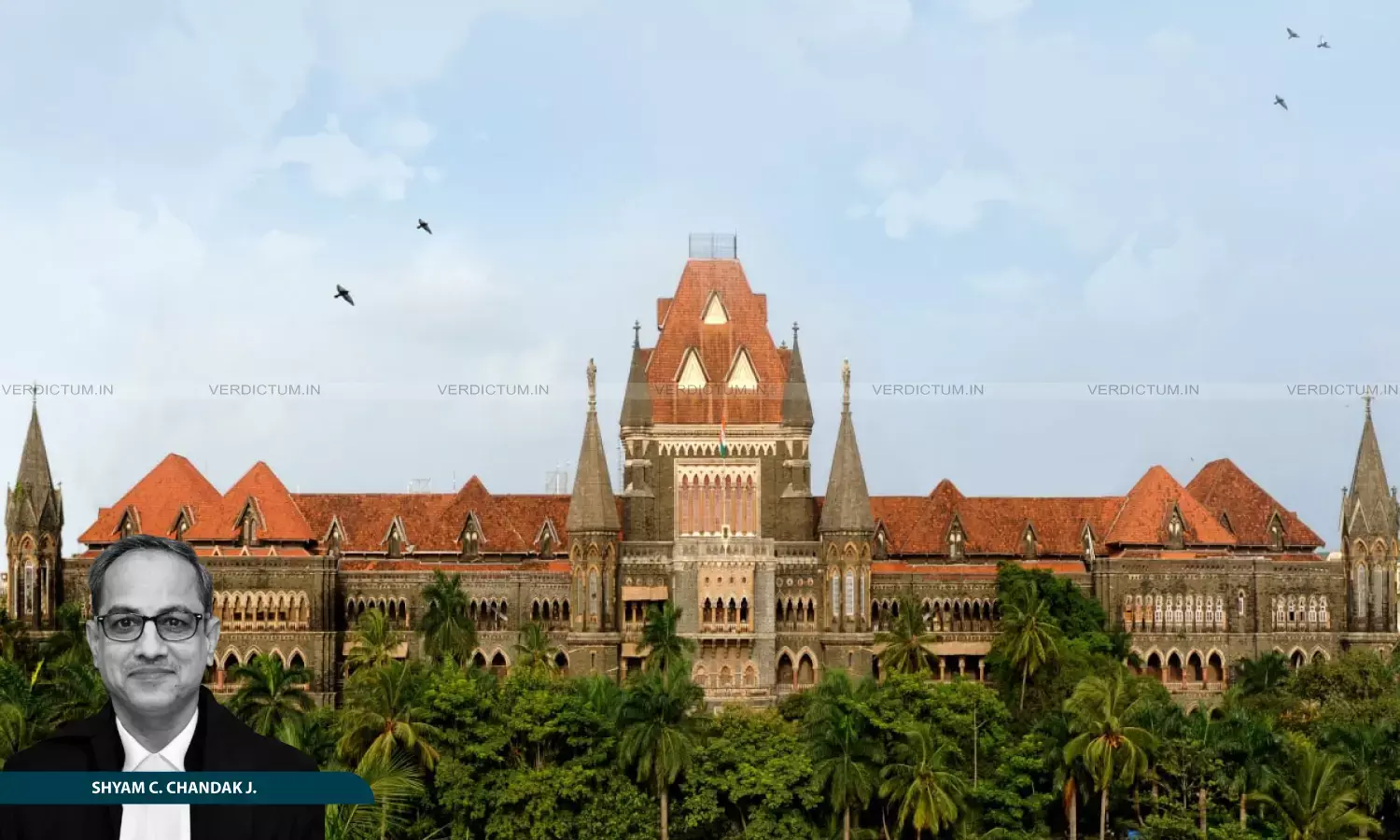
Justice Shyam C. Chandak, Bombay High Court
The Bombay High Court has refused to grant bail to the accused persons in 2024 Porsche Car crash case at Pune.
The accused persons filed Bail Applications before the Court, seeking their release on bail in a special case arising out of offences punishable under Sections 304, 279, 337, 338, 427, 120-B, 201, 213, 214, 466, 467, 468, 471, and 109 read with Section 34 of the Indian Penal Code, 1860 (IPC), Sections 7, 7-A, 8, 12, and 13 of the Prevention of Corruption Act, 1988 (PC Act), and Sections 184, 185, 199, 177, 3(1), 180, 5(1), 181, and 199 (a) of the Motor Vehicles Act (MV Act).
A Single Bench of Justice Shyam C. Chandak observed, “The reported decisions cited by the learned Counsel for the Applicants approve such a release. Nevertheless, it cannot be forgotten that whether in the given case bail should be granted on not, is purely a discretion of the Court dealing with such question of bail. Like the accused in this crime, the victims, who died in the accident, were equal before the law and entitled for equal protection of the laws in view of Article 14 of the Constitution. It is trite that the former is a negative concept as it implies the absence of any privilege in favour of any person and the later is a positive concept as it expects a positive action from the State. In my considered view, safeguarding the justice to be done to the victims of the crime/their families is one of the facets of Article 14.”
The Bench added that if there are some mistakes or intentional/accidental procedural lapse on the part of the police, who investigated into the crime, the same cannot be allowed to control the very discretion of the Court as to the bail relief.
“Otherwise, it would cause a serious dent to the principle enshrined in the Constitution that “everyone is equal before the laws”, which is also available to the victim of crime. Needless to state that victims of crimes are not controlling the police procedure of arrest of the accused of the crime. Therefore, in cases like the one in hand, the victims cannot be made to suffer for the mistakes or lapse on the part of the police”, it noted.
Senior Advocates Ashok Mundargi, Aabad Ponda, and Shirish Gupte appeared for the Applicants/Accused, while Special PP Shishir Hiray and Advocate Ankit Patil appeared for the Respondent/State.
Case Background
As per the prosecution case, the Applicant was the father of ‘V’ i.e., Child in Conflict with Law (CCL). On May 19, 2024, at about 2:00 a.m., CCL and his three friends were returning from a party in a Porshe car bearing no RTO registered number plate. The CCL was driving the car and his private driver had occupied the seat beside the CCL. The CCL’s three friends were occupied on the rear the seat and at about 2.10 a.m., when the car arrived near landmark society of Kalyani Nagar, on Airport Road, a motorcycle was proceeding ahead of the car.
Suddenly, the car dashed that motorcycle from its behind and as a result, the motorcycle rider and his pillion sustained grievous injuries and immediately, succumbed to their injuries. Allegedly, just before the accident, the CCL and his three friends with others had enjoyed a party consuming alcohol and therefore, at the time of accident, the CCL was under the influence of alcohol. It was alleged that he drove the car at a very high speed, in a rash and negligent manner despite he was cautioned not to drive the car in the drunken state and in such a rash and negligent manner. Consequently, an FIR was registered. As the Trial Court denied bail to the accused persons, the case was before the High Court.
Reasoning
The High Court in the above context of the case, said, “Considering the reported decisions cited by the parties, it is understandable that it is not the law that irrespective of the nature of crime and ignoring everything which is incriminating against any accused, Court must grant bail.”
The Court reiterated that the basic rule may perhaps be tersely put as bail, not jail, except where there are circumstances suggestive of fleeing from justice or thwarting the course of justice or creating other troubles in the shape of repeating offences or intimidating witnesses and the like, by the Petitioner who seeks enlargement on bail from the Court and this enunciation clearly makes out that bail can be refused, if the exceptions are made out in the given case.
“… there is a prima facie case against the Applicants of hatching a criminal conspiracy to tamper with and cause disappearance of the evidence with the help of false documents/forgery of valuable security. This act is punishable under Section 467 IPC for which the maximum punishment provided is ‘imprisonment for life’. No doubt, this offence is non cognizable, but non-bailable including certain associated offences”, it noted.
The Court was of the view that it is only the evidence in the case which helps a Court of law to do justice to the parties in the case.
“The object of police investigation in a crime is to collect evidence on behalf of and in the trust for the State, with an avowed object of producing it before Court of law to get justice to the victim of crime. Yet, in the case in hand, the Applicants jointly tried eroding that very way of the justice to be done to the two innocent, who died in the accident at very young age. As such, the offence is serious”, it also remarked.
The Court observed that if bail is granted to the Applicants even subjecting them to stringent conditions, there is every possibility of their tampering with the prosecution evidence using their money power and superiority dominance.
“This would ultimately thwart the course of justice in this case which was exposed to danger soon after the accident, because, as highlighted by the learned Special PP, there was unusual delay in the medical examination of the CCL and his two friends. Secondly, the belatedly recorded statement of Adi Shaikh also hints at that danger”, it added.
Conclusion
The Court further noted that the apprehension of the prosecution that the Applicant would tamper with the prosecution witnesses/evidence is well founded and therefore, this is not a fit case to exercise the discretion of bail in favour of the Applicants, at least, till the examination of the material prosecution witnesses is over, who are vulnerable to pressurising or any other influencing tactics leading to their turning non-supportive or hostile to the prosecution case.
“This way, the rights of both the parties would remain intact. I am, therefore, persuaded to reject these Applications and reject the same, accordingly. … The trial Court rejected the prayer for bail, at least, till the evidence of most of the material witnesses is recorded during the course of trial. The Applicants are behind bars for the last 18 months. Therefore, the trial Court to frame the charge as early as possible and hear the material prosecution witnesses at the earlier. In view thereof, liberty is granted to the Applicants to renew their prayer for bail before the trial Court after the material prosecution witnesses are over”, it concluded.
Accordingly, the High Court rejected the Bail Applications.
Cause Title- Aditya Avinash Sood v. The State of Maharashtra (Neutral Citation: 2025:BHC-AS:55451)
