

Unwanted Staring Not Voyeurism U/S.354-C IPC; Watching Or Recording Of Woman During Private Act Required For Prosecution: Bombay High Court
The Bombay High Court was considering a criminal application seeking the quashing of the First Information Report registered under Section 354-C of the Indian Penal Code.

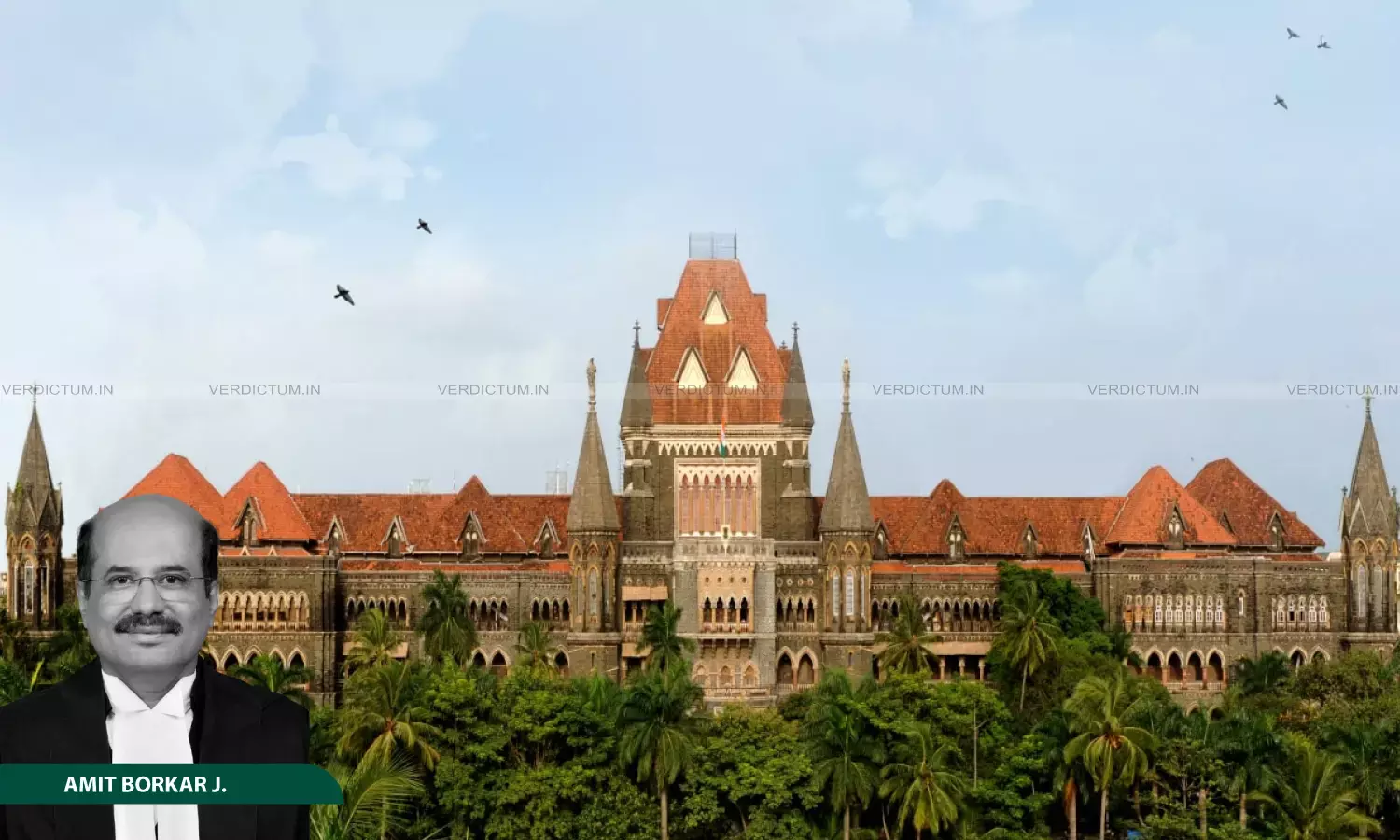
The Bombay High Court has held that alleged staring at a co-worker’s chest, insulting behaviour, and workplace harassment may, at the highest amount, amount to misconduct, indecency, or some other wrong, but it would not come within the ambit of Section 354-C of the IPC. The High Court further held that unwanted staring is not the same thing as voyeurism within the meaning of Section 354-C.
The High Court was considering a criminal application preferred under Section 482 of the Code of Criminal Procedure, 1973, seeking the quashing of the First Information Report registered under Section 354-C of the Indian Penal Code.
The Single Bench of Justice Amit Borkar held, “The complaint does not state that the applicant watched the complainant while she was engaged in any private act. It does not say that any image of a private act was captured. It does not say that the complainant was in a place or condition where she was reasonably expected not to be observed and that the applicant nonetheless watched her in that prohibited setting. The allegation is only that he stared at her chest during office meetings. Unwanted staring, even if accepted as true, is not the same thing as voyeurism within the meaning of Section 354-C. The statute cannot be stretched beyond its plain words.”
“The complainant may have genuinely felt offended and humiliated. The workplace atmosphere may indeed have become unpleasant. Yet criminal prosecution under Section 354-C cannot survive only on the basis of such allegations, unless there is watching or recording of a woman during a private act or dissemination of such image. That element is completely absent here. The FIR and the supporting statements, even if accepted in full, do not make out the offence”, it added.
Advocate Amol Patankar represented the Appellant while Addl. Public Prosecutor Yogesh N. Nakhwa represented the Respondent.
Factual Background
As per the application, during the course of employment, the applicant and the complainant were required to coordinate with others. It was stated that for official purposes and client meetings, the complainant was required to visit various client offices, at times in the company of the applicant. It was alleged that the applicant insisted that the complainant should attend certain meetings alone and it was further alleged that during the course of work, the applicant used to insult the complainant, avoid normal eye contact, and instead allegedly stared at her chest and made inappropriate comments. It was further the case that during a meeting held at the Borivali office, attended by the applicant and others, the complainant observed that the applicant was staring at her chest. The matter was brought to the notice of the Human Resources Manager; however, it was alleged that she expressed disbelief regarding the conduct attributed to the applicant.
It was further stated that, during another meeting at the Andheri office, and subsequent to the complaint made against the applicant, the applicant allegedly began to find faults with the work of the complainant and publicly insulted her. It was alleged that the company, being dissatisfied with the explanations, threatened termination of the complainant’s services, which led to the filing of the present complaint.
Reasoning
Referring to Section 354-C of the Indian Penal Code, which defines and penalises the offence of voyeurism, the Bench stated that the offence is not attracted merely on account of improper behaviour or unwelcome staring. The essential requirement is that a man must either watch a woman or capture her image while she is engaged in a “private act”. The provision further requires that such an act must be in circumstances where the woman has a reasonable expectation of privacy.
The Bench stated, “Therefore, the legislative intent is to penalise conduct involving invasion of bodily privacy in intimate or secluded settings. The section also covers a situation where images of such private acts are captured with consent but are later disseminated without consent. In such a case, even if the initial act was permitted, the subsequent act of sharing the images constitutes the offence.”
The Bench also made it clear that mere offensive conduct in an office environment, even if morally wrong, cannot be brought within this provision unless the statutory conditions are shown. On a perusal of the facts of the case, the Bench noted that the criminal case would fail for want of basic ingredients under Section 354-C. “The existence of an internal finding in favour of the applicant only adds support to his stand, but the real ground for quashing is the absence of the statutory offence itself”, it stated.
The Bench thus concluded, “Here, the substance is of alleged staring at the chest, insulting behaviour, and workplace harassment. These may at the highest amount to misconduct, indecency, or some other wrong, depending on the facts proved in proper proceedings. But they do not fit into the narrow mould of Section 354-C. To permit the prosecution to continue on such facts would be to ignore the clear language of the statute.”
Holding that the continuation of the criminal proceedings would amount to an abuse of the process of law, the Bench allowed the criminal application and quashed the proceedings.
Cause Title: Abhijit Baswant Nigudkar v. The State of Maharashtra & Ors. (Neutral Citation: 2026:BHC-AS:16818-DB)
Appearance
Applicant: Advocates Amol Patankar, Neil Chandiwala
Respondent: Addl. Public Prosecutor Yogesh N. Nakhwa, Advocate Ajinkya Udane, PSI Suryakant Doke