

Long Time And Birth Of Child Are Prima Facie Signs Of Relationship In Nature Of Marriage: Bombay High Court
It was the case of the Petitioner that the couple never lived in a shared household; therefore, the relationship cannot fall within the purview of the definition of a Domestic Relationship.

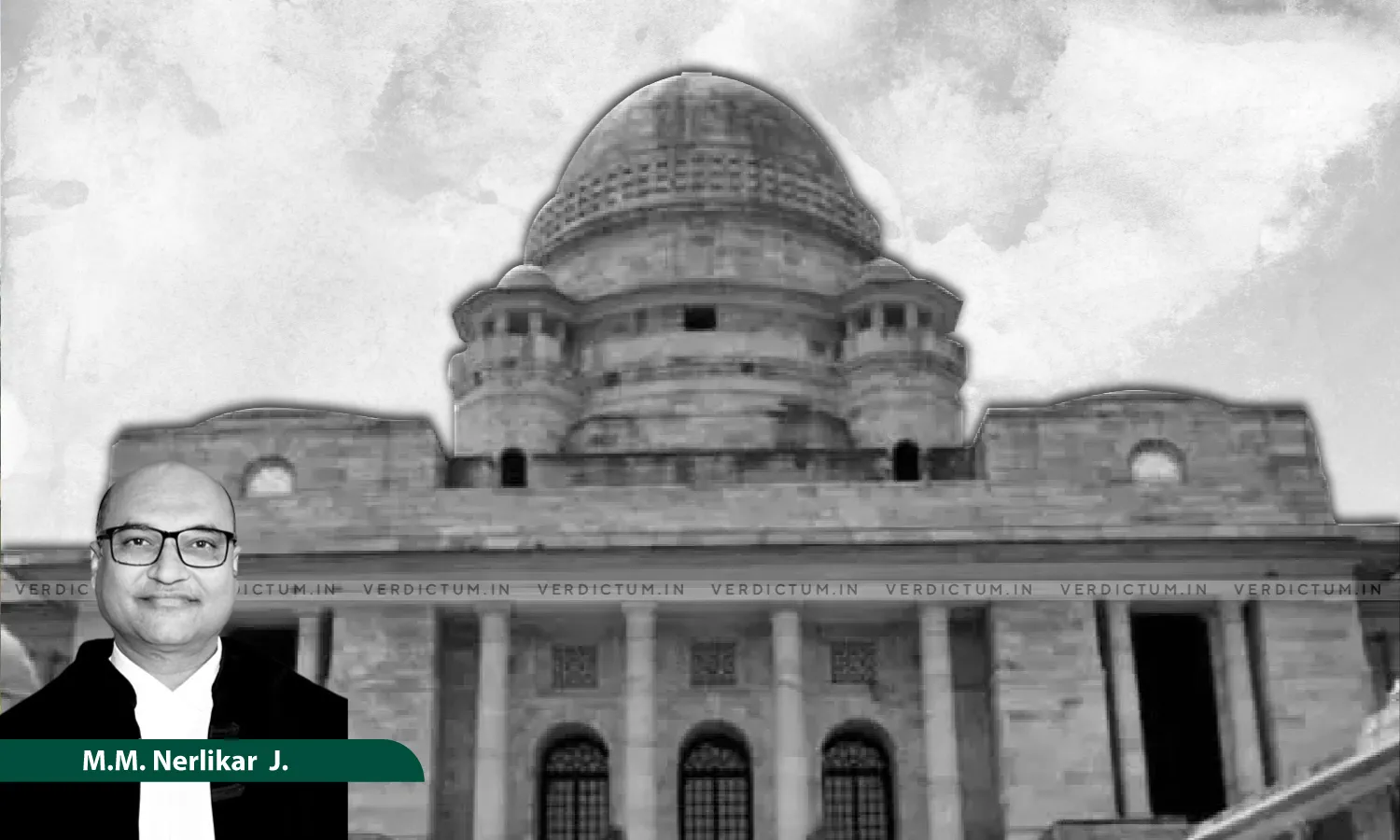
Justice M.M. Nerlikar, Bombay High Court, Nagpur Bench
The Bombay High Court has observed that if two persons are in a relationship for a long time and out of that relationship a child is born, then prima facie it will be considered as “a relationship in the nature of marriage”.
The Bench of Justice MM Nerlikar observed, “Considering the above, prima facie, it could be gathered that Petitioner No.1 and Respondent No.1 were having a relationship in the nature of marriage, as they were in relationship for long time and out of the said relationship, a child was born. Further, prima facie the guidelines laid down in D. Velusamy (supra) are also satisfied.”
Advocate AR Fule appeared for the Petitioners, while Advocate JA Anthony appeared for the Respondents.
Factual Background
Petitioner No. 1 is the husband of Petitioner No. 4. This petition was filed seeking to quash and set aside the proceedings and impugned orders in a matter filed by the Respondents.
Respondent No. 1-Woman and Respondent No. 2 (Daughter of Petitioner No. 1 and Respondent No.1) filed a matter under the Protection of Women from Domestic Violence Act, 2005 (“D.V Act”) before the Judicial Magistrate First Class.
According to the complaint, due to sexual intercourse between Petitioner No.1 and Respondent No.1, she became pregnant. However, it was aborted at the insistence of Petitioner No.1. Even thereafter, the relationship continued, and a second time, she became pregnant and thereafter a female child was born, i.e. Respondent No.2. It was averred in the complaint that the relationship between the couple was in the nature of marriage. As Petitioner No.1 declined to marry her, she registered an FIR under Section 376(2) (n) of the Indian Penal Code and under the provisions of the Scheduled Castes and Scheduled Tribes (Prevention of Atrocities) Act.
The main challenge was to the proceedings initiated by the Respondents under Section 12 of the D.V. Act. The Petitioners submitted that there was no relationship in the nature of marriage between the parties. The FIR was lodged by Respondent No. 1 alleging sexual abuse by Petitioner No.1. After completion of the investigation, a charge sheet was filed. The Petitioner No. 4 then got married to Petitioner No.1.
Contention of the Parties
It was the case of the Petitioner that the couple never lived in a shared household; therefore, the relationship cannot fall within the purview of the definition of a Domestic Relationship. As Petitioner No.1 and Respondents do not have any relationship, their relationship does not fall under the said definition of ‘Domestic Relationship and Relationship in the nature of marriage’. According to the FIR, which was registered, Respondent No. 1 has made allegations against Petitioner No. 1, stating that at the relevant time, she was residing with her brother at Alapalli and with her friend at Aheri. The Petitioners highly relied on the ingredients mentioned in the judgment of the Supreme Court in D. Velusamy Vs. D. Patchaiammal, 2010.
The Respondents submitted that the order passed by the Lower Court wherein the Court has already considered the first ingredient as laid down in D. Velusamy (supra) and granted interim maintenance of Rs. 5000/- per month to Respondent No.1 and Rs. 2000 to Respondent No. 2. It was also submitted that Respondent No.1. conceived pregnancy, however, Petitioner No.1 forced Respondent No. 1 to abort the first child.
Observations of the Court
The Court observed, “Considering the above facts and circumstances, I am not inclined to quash the complaint at this threshold where the fact has emerged that out of the relationship a female child was born. I am of considered opinion that evidence is required to be led by the parties so as to make an informed decision in the interest of justice. Further, the relationship between petitioner No.1 and petitioner No.4 though would be decided by the Trial Court after the parties lead the evidence, however prima facie the alleged date of marriage which is 06.07.2022, demonstrates that the relationship between petitioner No.1 and respondent No.1 was first in point of time. Therefore, I do not see any force in the submissions made by the counsel for the Petitioners so far as Petitioner No 1 is concerned.”
The Court further held that, as there were no allegations against Petitioner Nos. 2 to 4 in the entire complaint so as to invoke the provisions of the D.V. Act, the Court allowed the Petition partly. However, refused to grant any relief to Petitioner No. 1.
Accordingly, the Court partly allowed the petition qua Petitioner No. 2 to 4, but dismissed qua Petitioner No. 1.
Cause Title: XXXX v. YYYY [Neutral Citation: 2026:BHC-NAG:1174]
Appearances:
Petitioners: Advocate AR Fule
Respondents: Advocate JA Anthony