Senior Citizens Act Cannot Be Used As Tool For Eviction Without Maintenance Or Protection Claim: Bombay High Court
The High Court observed that while the Maintenance and Welfare of Parents and Senior Citizens Act, 2007, is a beneficial legislation meant to protect the elderly, it cannot be invoked solely for securing eviction when the statutory requirements for maintenance are absent.
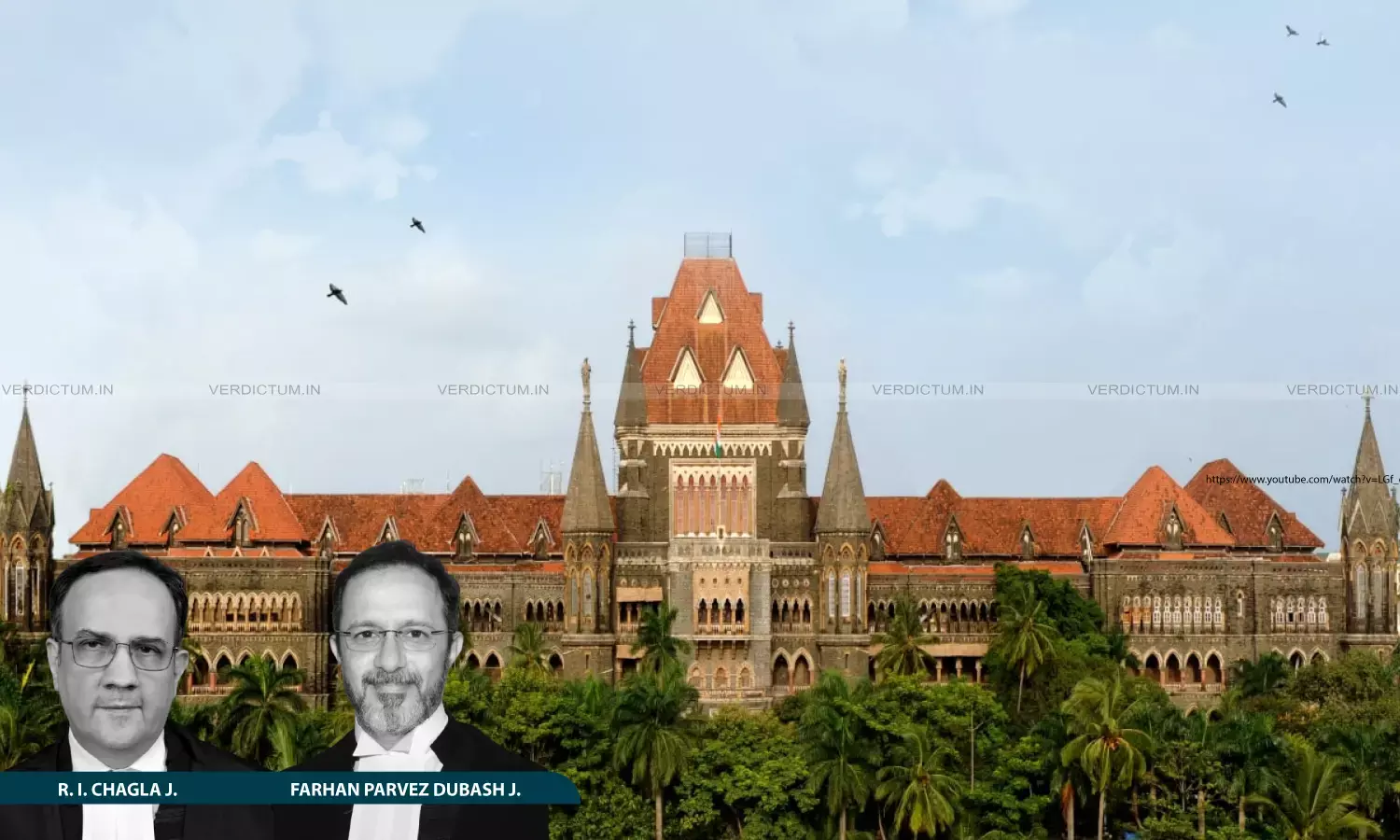
Justice R.I. Chagla, Justice Farhan P. Dubash, Bombay High Court
The Bombay High Court has held that a complaint under the Maintenance and Welfare of Parents and Senior Citizens Act, 2007, cannot be used to secure a summary eviction order when the senior citizen has not made any claim for maintenance or demonstrated need for protection of life or property under the statute.
The Court was hearing a writ petition filed by a son challenging the concurrent eviction orders passed by the Tribunal and the Appellate Tribunal directing him to vacate a bungalow claimed to be owned by his father.
A Division Bench of Justice R.I. Chagla and Justice Farhan P. Dubash observed that although the Act is a beneficial statute, “it cannot be (mis) used by the senior citizen as a tool for summary eviction without the fulfilment of statutory requirements.”
Background
The dispute arose from an application filed by the father (a 75-year-old retired IAS officer) under Section 5, seeking eviction of his son from a ground + one floor bungalow, alleging that he wished to occupy the ground floor due to age-related ailments. He did not seek any monetary maintenance.
The son contended that the property was acquired from ancestral income and that he bore all expenses relating to maintenance, utilities, and taxes. He also relied on a written declaration dated 2 January 2013 wherein the senior citizen had expressly allowed the couple to reside in the premises “for as long as they wanted” without payment.
The son further pointed out that he had instituted a partition suit in this Court regarding several properties owned by the father, including the disputed premises.
Both the Tribunal and Appellate Tribunal ordered eviction, leading to the present writ petition.
Court’s Observations
The Bombay High Court, upon examining the relevant provisions, emphasised that Section 4 and Section 5 of the Act contemplate relief only where the senior citizen is unable to maintain himself and requires maintenance support. The senior citizen in this case had never claimed any such relief.
The Bench noted that the complaint was filed only for eviction and thus did not satisfy the statutory conditions, stating that “the order of eviction is not in furtherance of any claim for maintenance… We fail to see how the application filed under Section 5 is maintainable in the first place.”
The Court stressed that eviction is not a standalone remedy under the Act, noting that “eviction would be an incident of enforcement of the right to maintenance and protection… granted only after considering competing claims of both parties.”
The Bench further held that the proceedings appeared retaliatory since the son’s partition suit preceded the eviction action, while underscoring that “the provisions of the Act cannot be employed as a means to secure the Respondent’s summary eviction while proprietary rights remain sub-judice.”
The Court also found no allegations of harassment or neglect made against the son and observed that the senior citizen continued to reside in another comfortable and fully serviced residence and did not depend on the son for financial support.
Records further showed that the son was maintaining the disputed premises, contrary to the father’s claim. The Court therefore held the eviction orders contrary to the scheme of the Act and passed in utter disregard of statutory safeguards.
Conclusion
Holding that the application itself was not maintainable, the Court set aside both the Tribunal’s eviction order and the appellate affirmation.
Cause Title: Jitendra Gorakh Megh v. Additional Collector & Anr. (Neutral Citation: 2025:BHC-OS:23802-DB)
Appearances
Petitioner: Party In Person
Respondents: Suraj Gupte, AGP, Advocates Kapil Moye, Eesha Jaifalkar, S.R. Page