

Cannot Be Allowed To Languish For Indefinite Period: Andhra Pradesh High Court Directs Regularization Of NMR Employees After Three Decades Of Service
The Court said that employees' cries for regularization cannot be hanging fire, without any positive action in sight at the hands of the State.

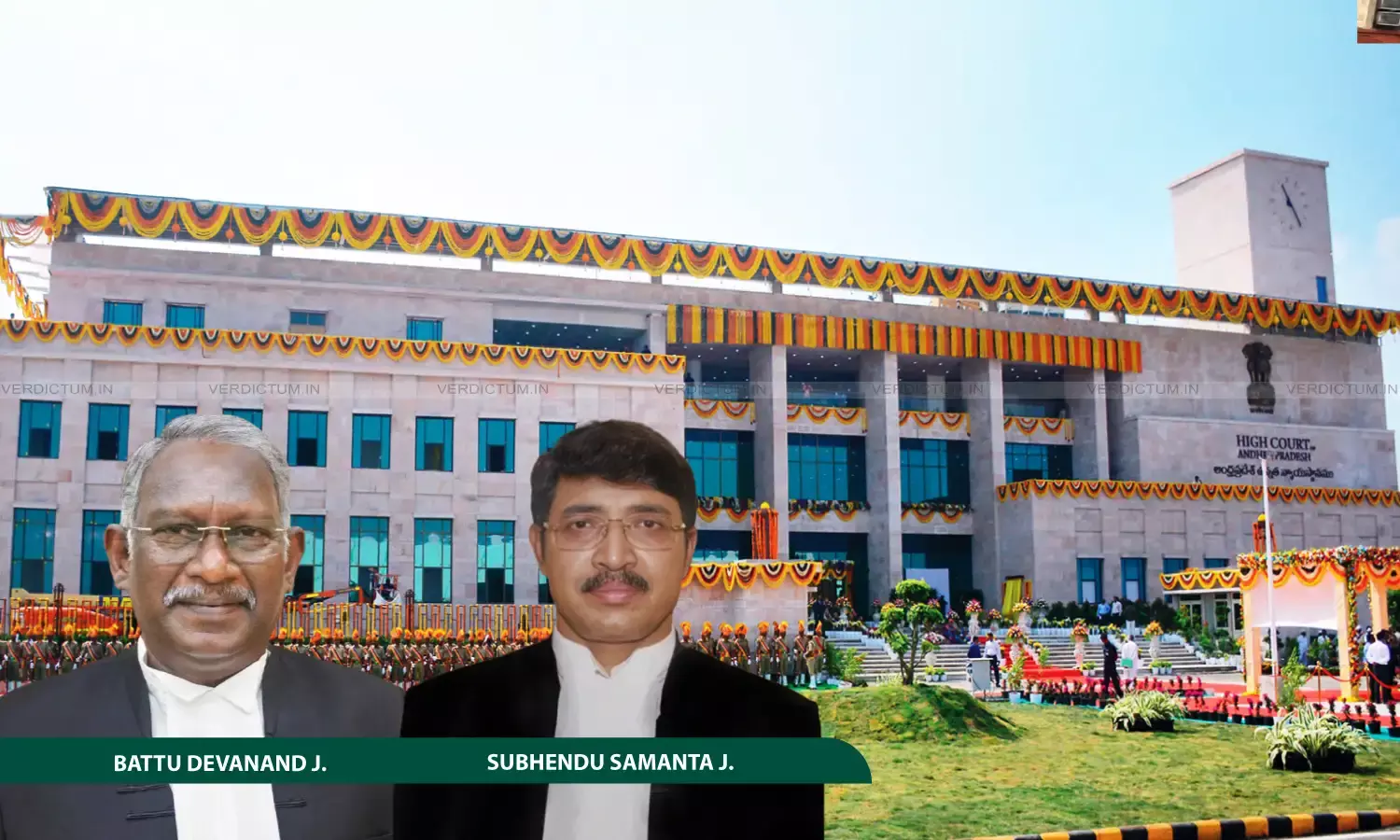
The Andhra Pradesh High Court observed that the State cannot exploit employees by keeping them on a temporary basis for decades while extracting regular work.
It was observed that the petitioners, who had served as Nominal Muster Roll (NMR) workers since the late 1980s, were being denied regularization based on mere technicalities and arbitrary cut-off dates.
The Court said that such indefinite temporary employment violates the constitutional obligation to provide a dignified livelihood under Article 21.
The Division Bench of Justice Battu Devanand and Justice Subhendu Samanta observed, “These petitioners have accepted such unfair treatment only with a hope that at some point of time their claim for regularization could be considered. Therefore, the petitioners cannot be allowed to languish as daily rated employees for indefinite period and be denied of the regular benefits of the Government employees forever. Such scenario does not show the welfare State in good light. Whenever a class of employees like the petitioners herein face unfair situation of being employed on a daily rate basis, denied of all benefits as that of regular employees, but discharging regular duties, such situation would only rob the State of its constitutional obligation to be reasonable to its citizens and provide adequate livelihood to support the sustenance of these petitioners, in furtherance of Article 21 of the Constitution of India”
Advocate M Pitchaiah appeared for the Petitioner.
Facts of the Case
The petitioners were appointed as Work Inspectors, Typists, and other cadres on a Nominal Muster Roll (NMR) basis in the Telugu Ganga Project Division between 1987 and 1989. They continued to serve in these positions for more than twenty years, receiving a minimum time scale of pay plus Dearness Allowance (D.A.). Despite their long service, the respondent authorities refused to regularize their services. The primary reason given for this refusal was that the petitioners had not completed five years of continuous service by the cut-off date of November 25, 1993, as required by G.O.Ms.No.212. The petitioners initially challenged this before the Andhra Pradesh Administrative Tribunal, which dismissed their applications. Consequently, the petitioners filed these writ petitions before the High Court.
Contention of Parties
The petitioners contended that they had rendered continuous service for over two decades in essential roles. They argued that the respondents had regularized other similarly situated persons in the past and that they were entitled to regularization based on Supreme Court precedents, such as the Umadevi and M.L. Kesari cases, which protected those with ten years of service. They further argued that their long-term employment proved a perennial need for their work.
The respondents argued that the petitioners were ineligible for regularization because they did not meet the specific five-year service criteria by the 1993 cut-off date. They relied on the A.P. Act 2 of 1994, which prohibited the regularization of daily wage and temporary employees. Additionally, they maintained that the petitioners did not establish they were working against duly sanctioned posts at the time of their initial appointment.
Observation of the High Court
The High Court observed that the petitioners had been discharging essential and perennial duties for nearly three decades. The Court noted that the state acted as an exploiter rather than a model employer by utilizing the petitioners' services for decades on meagre wages while keeping them in a state of "perpetual uncertainty".
The Court observed, “By following the judgments of the Apex Court in Shripal & Another v. Nagar Nigam, Ghaziabad, Jaggo v. Union of India, and Dharam Singh v. State of Uttar Pradesh, as stated supra, this Court, while dealing with the case of Commissioner, Dharmavaram Municipality v. The President, Municipal Engineering Employees Association, Dharmavaram, considered the case of workmen, who had been continuously discharging their duties for the last 28 years, i.e., nearly three decades, and held that since they were engaged in essential and perennial duties, they could not be relegated to a state of perpetual uncertainty.”
It was further observed that the existence of several vacancies in the department contradicted the state's refusal to regularize them.
“In several cases, this Court is noticing that in various departments of the State Government without filling the sanctioned vacancies by following regular selection procedure, engaging the educated and qualified persons on adhoc/ outsourcing/contract basis by paying meagre remuneration/wages and they are utilizing their services for more than one or two decades. Whenever they sought to regularize their services, the respondents departments are starting raising grounds against them contending that their appointments are not made by following the procedure and they are not appointed against the sanctioned posts. As and when the respondents departments utilizing their services and extracting work for them for more than decades, they are not permitted to contend like that”, it held.
The Court held that "bureaucratic limitations" and technicalities regarding cut-off dates could not override the fundamental rights of workers.
The Court said that the Government, being the model employer, has to keep all these aspects in mind when it rejects the request of the petitioners for regularization even after utilizing their services for essential and perennial duties. “The present cases are a classic example for illegal and arbitrary actions of the employers”, it said.
Consequently, the Court set aside the Tribunal's orders and directed the Respondents to regularize the petitioners' services with all consequential benefits within two months.
Cause Title: K. Narayana Reddy v. The State of Andhra Pradesh [Writ Petition Nos. 44902, 31806 & 45705 of 2018]
Appearances:
Petitioners: Advocate M Pitchaiah