

Child’s Testimony Not Inherently Unreliable: Allahabad High Court Upholds Murder Conviction Based On Minor Son's Testimony Against Mother & Her Lover
The Court held that delay in disclosure by child witnesses, when explained by fear and trauma, does not render their testimony unreliable.
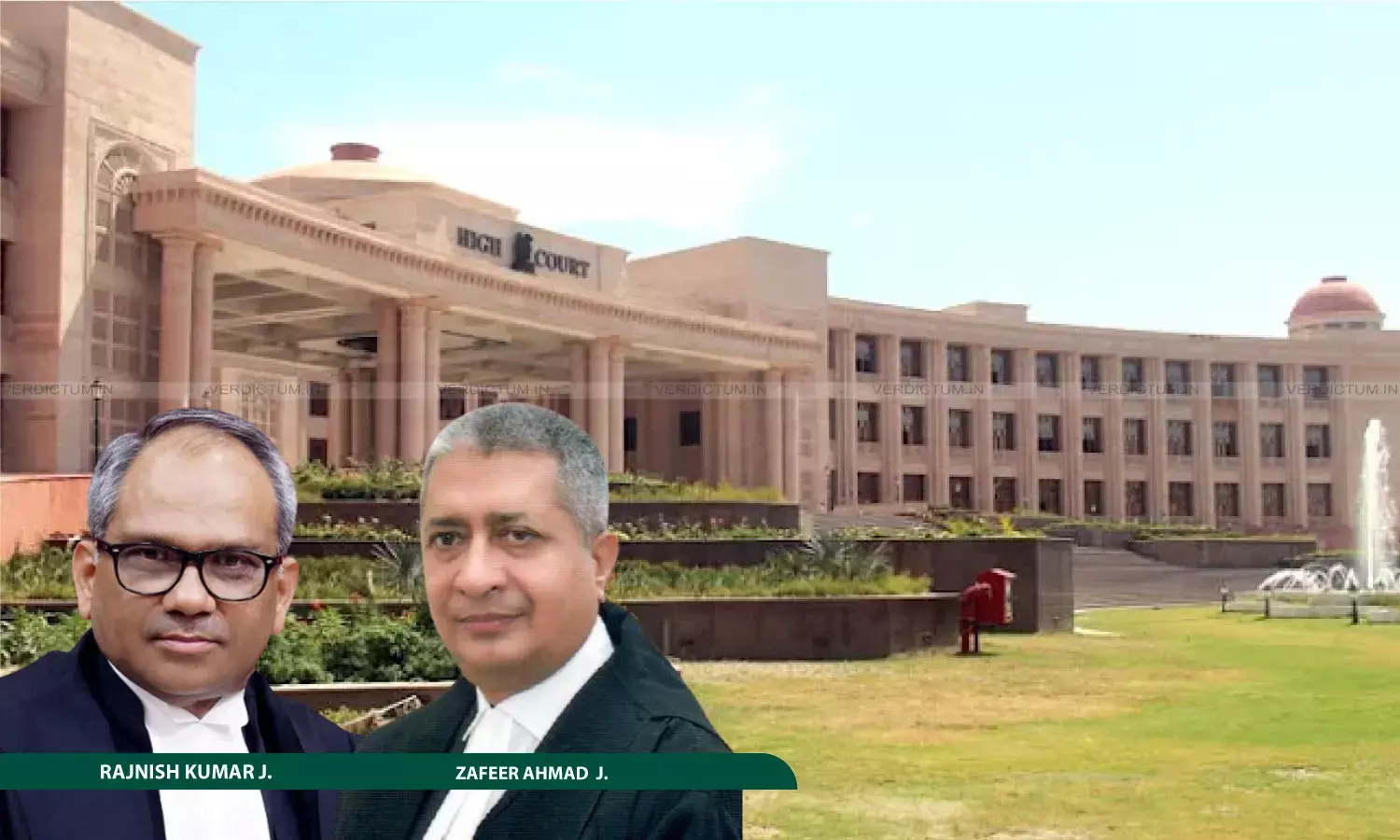
The Allahabad High Court has upheld a conviction for murder primarily based on the testimony of minor children, holding that the evidence of a child witness is not inherently unreliable and can form the basis of a conviction if found credible upon scrutiny.
The Court was hearing a criminal appeal challenging the judgment of the trial court convicting the appellant under Sections 302 and 404 IPC for the murder of four persons arising out of a single incident.
A Division Bench comprising Justice Rajnish Kumar and Justice Zafeer Ahmad observed: “The law relating to appreciation of evidence of child witnesses is well settled. It is not the rule of criminal jurisprudence that the testimony of a child witness is inherently unreliable or liable to be discarded merely because of age.”
Advocates Rishad Murtaza appeared for the appellant, while the State was represented by the AGA.
Background
The prosecution's case originated from an FIR lodged alleging a dacoity-cum-murder incident, wherein multiple assailants were stated to have entered the house and killed four members of the family during the intervening night.
However, during the investigation, the case took a different turn. It emerged that the incident was not one of dacoity, but a premeditated murder committed by the deceased’s wife and her alleged paramour, the present appellant. The motive, as gathered during the investigation, was an illicit relationship between the two, which had been discovered by the deceased.
The prosecution alleged that on the night of the incident, the accused entered the house with the connivance of the deceased’s wife, and together they committed the murder of four persons using a firearm and a sharp-edged weapon. Thereafter, a false FIR was lodged to project the incident as one of dacoity.
During the trial, charges were framed under Sections 302/34 IPC and other allied provisions. The co-accused (wife) died during the pendency of the trial and proceedings against her abated, leaving the present appellant to face trial.
The trial court, upon appreciation of evidence, convicted the appellant and sentenced him to life imprisonment, which was challenged in appeal.
Court’s Observation
The High Court undertook a comprehensive re-appreciation of the entire evidence on record, particularly focusing on the testimony of the child witnesses (PW-4 and PW-5), who were the sons of the deceased and claimed to be eyewitnesses.
The Court reiterated the settled legal position governing child witnesses and observed that their testimony is admissible and can form the basis of a conviction, provided it withstands careful judicial scrutiny.
In this regard, the Court observed: “However, as a matter of judicial prudence, such evidence requires closer scrutiny, as a child witness is always susceptible to tutoring and impressionable influence.”
The Court relied upon precedents, including State of M.P. v. Ramesh (2011) and Pramila v. State of U.P. (2021), reiterating that while corroboration is a rule of prudence, it is not a rule of law, and the testimony of a child witness can be relied upon if it inspires confidence.
Applying these principles, the Court found that both PW-4 and PW-5 had been duly examined by the trial court after assessing their competency under Section 118 of the Evidence Act, and were found capable of understanding and answering questions rationally.
The Court noted that the child witnesses had given a vivid, consistent and detailed account of the incident, including the manner of entry of the accused, the weapons used, and the sequence of assault. It further observed: “The description given by the witnesses regarding the manner of entry, the weapons carried, and the sequence of assault clearly reflects that they had actually witnessed the occurrence.”
Addressing the argument of tutoring, the Court held that there was no material on record to suggest that the witnesses had been tutored. On the contrary, their testimony appeared natural and spontaneous, and contained intrinsic details which could not have been fabricated.
The Court also attached significance to the fact that the child witnesses had implicated their own mother along with the appellant. It held that such conduct strongly supports the credibility of their testimony, as it is unlikely that a child would falsely implicate a parent in a serious offence.
On the issue of delay in disclosure, the Court found the explanation offered by the witnesses to be natural and convincing. It noted that the witnesses were threatened by the accused and had witnessed a brutal murder of close family members, and therefore, their silence for a few days could not be treated as unnatural.
The Court further examined the alleged inconsistencies in their testimony and held that the discrepancies pointed out by the defence were minor and related to peripheral aspects such as the number of gunshots, clothing, and the sequence of minor events. In this regard, the Court held: “These discrepancies are minor in nature and relate to peripheral details. The core of their testimony… remains consistent and unshaken.”
The Court also considered the medical evidence, which fully corroborated the ocular testimony. The post-mortem reports established that the deaths were caused by firearm injuries and sharp-edged weapons, consistent with the version of the eyewitnesses.
The recovery of the weapon of offence and stolen articles at the instance of the accused was also found to be duly proved and constituted an additional incriminating circumstance.
The Court further dealt with the hostility of certain witnesses and held that the testimony of a hostile witness is not to be discarded in toto and can be relied upon to the extent it supports the prosecution's case.
It also observed that the inconsistency between the General Diary entry and the testimony of a hostile witness indicated an attempt to suppress the truth, rather than weakening the prosecution's case.
Conclusion
The High Court held that the prosecution had successfully proved its case beyond a reasonable doubt and that the testimony of the child witnesses was reliable, credible and sufficient to sustain a conviction.
It found no infirmity in the judgment of the trial court and accordingly dismissed the appeal, affirming the conviction and sentence imposed upon the appellant.
Cause Title: Tarsem Singh v. State of Uttar Pradesh (Neutral Citation: 2026:AHC-LKO:23961-DB)
Appearances
Appellant: Advocates Arun Kumar Shukla, Anuradha Singh, Farhat Jamal Siddiqui, Furkan, Jaleel Ahmad, Jayant Singh Tomar, Manju Gupta, Rishad Murtaza, Smt. Arpita Srivastava
Respondent: Government Advocate
