Registered Adoption Deed Carries Statutory Presumption Under Hindu Adoption Law Unless Challenged Through Independent Proceedings: Allahabad High Court
The High Court held that a registered adoption deed carries a statutory presumption of validity under Section 16 of the Hindu Adoption and Maintenance Act, 1956, clarifying that such presumption can be displaced only through independent legal proceedings and not by mere doubt or assumption.
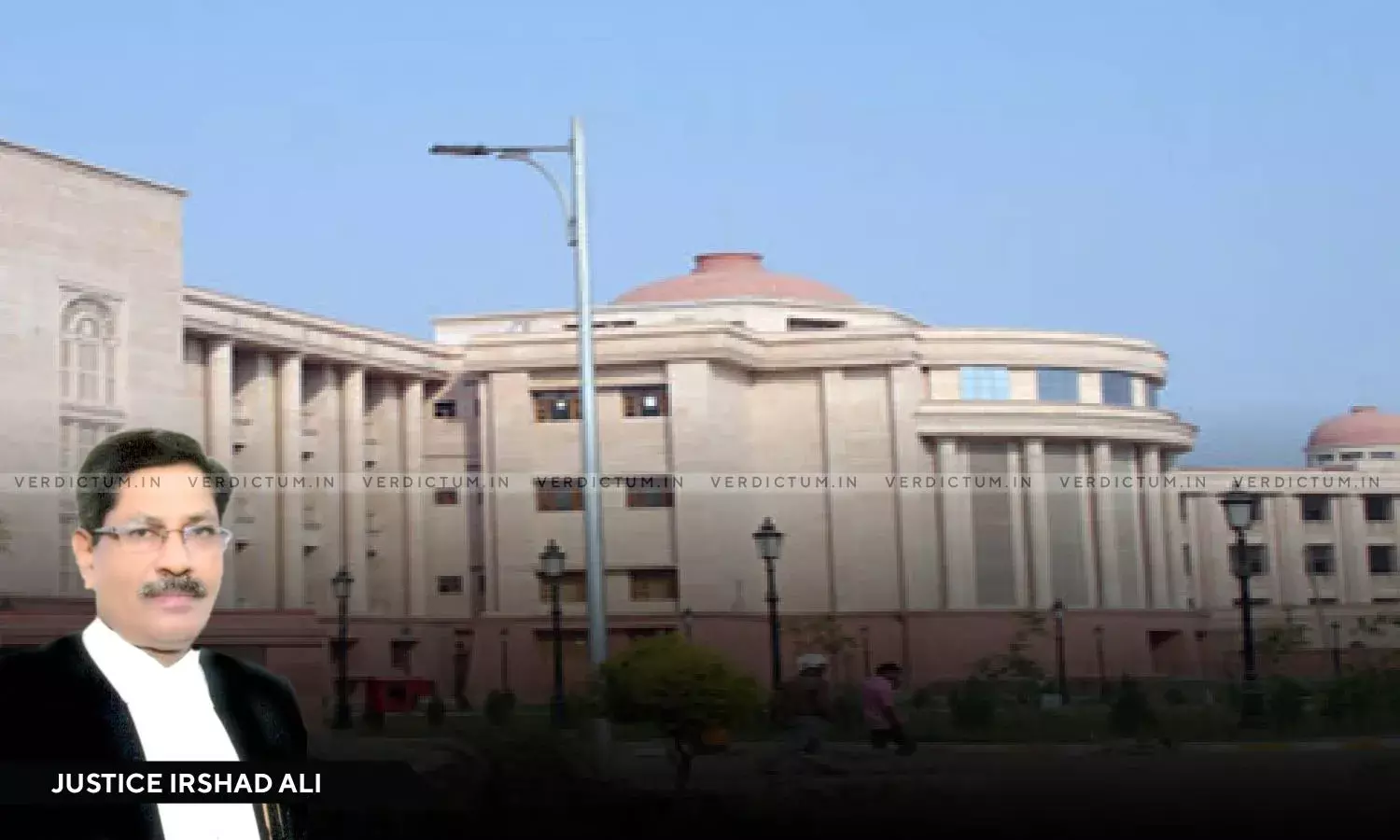
The Allahabad High Court has held that once a registered adoption deed, signed by the person giving and the person taking the child in adoption, is produced before a court, a statutory presumption arises under Section 16 of the Hindu Adoption and Maintenance Act, 1956 that the adoption was made in compliance with law, unless such presumption is disproved in independent proceedings.
The High Court clarified that mere suspicion or assumption regarding the validity of an adoption deed cannot displace the statutory presumption attached to a registered document, in the absence of any independent legal proceedings challenging the adoption.
The Court was hearing a writ petition challenging appellate and revisional orders passed in mutation proceedings, by which a registered adoption deed was doubted, and the mutation order passed in favour of the adopted son was set aside.
A Bench of Justice Irshad Ali, while allowing the writ petition, held that: “In view of Section 16, wherever any document registered under any law is produced before any court purporting to record an adoption made, and the same is signed by the persons mentioned therein, the court shall presume that the said adoption has been made in compliance with the provisions of the Act, until and unless such presumption is disproved. In view of Section 16, it is open for a party to attempt to disprove the deed of adoption by initiating independent proceedings”.
The petitioner was represented by Advocate Rajeev Kumar Tripathi, while the respondents were represented by Advocate Shiv Kumar Mishra.
Background
The petitioner claimed rights over agricultural land on the basis of a registered adoption deed executed in his favour in the year 1982, whereby he was adopted by Ram Asrey, who had no natural issue. Following the death of the adoptive father, a mutation application was filed on behalf of the petitioner.
The Naib Tehsildar allowed the mutation application after recording evidence of the natural mother, marginal witnesses, village Pradhan, and the priest who performed the adoption ceremony, and found the adoption deed as well as possession of the petitioner to be proved.
However, the Sub-Divisional Officer, in appeal, set aside the mutation order by doubting the adoption deed, and directed the recording of the names of the brothers of the deceased khatedar. The revisions filed by the petitioner before the Commissioner were also dismissed, without recording specific reasons for disbelieving the adoption deed.
Aggrieved, the petitioner approached the High Court.
Court’s Observation
The Allahabad High Court examined Section 16 of the Hindu Adoption and Maintenance Act, which mandates that whenever a registered document purporting to record an adoption is produced before a court and is signed by the person giving and the person taking the child in adoption, the court shall presume that the adoption has been made in compliance with the provisions of the Act, unless and until such presumption is disproved.
The Court held that in view of the statutory mandate, it was not open to the appellate or revisional authorities to doubt the adoption deed merely on assumptions or suspicions, particularly when no independent proceedings had been initiated by the respondents to challenge the validity of the adoption.
The Court observed that the adoption deed had been duly proved by oral and documentary evidence, and that no challenge was raised in cross-examination regarding the legality or validity of the deed. In such circumstances, the statutory presumption under Section 16 remained unrebutted.
Relying on the decisions of the Supreme Court in Laxmibai v. Bhagwantbuva and Mst. Deu v. Laxmi Narayan, the Court reiterated that once a registered adoption deed is produced, the burden shifts to the person challenging the adoption to disprove it by initiating appropriate legal proceedings.
The High Court further held that the appellate and revisional orders suffered from perversity, as they recorded adverse findings against the adoption deed without assigning reasons, and ignored the settled principle that reasons are the heartbeat of any judicial conclusion.
Conclusion
Holding that the statutory presumption under Section 16 of the Hindu Adoption and Maintenance Act had been wrongly ignored, the Allahabad High Court set aside the appellate and revisional orders and restored the mutation order passed in favour of the petitioner.
The writ petition was accordingly allowed.
Cause Title: Ram Kumar v. Narain & Ors. (Neutral Citation: 2025:AHC:LKO:79752)
Appearances
Petitioner: Rajeev Kumar Tripathi, Advocate
Respondents: Advocates Shiv Kumar Mishra, Rahul Mishra