

No Proof Of Public Servant Discharging Duty: Allahabad High Court Sets Aside Conviction U/S. 332,333 IPC
The High Court held that a conviction under Sections 332 and 333 IPC cannot be sustained unless the prosecution proves that the alleged victim, being a public servant, was acting in the lawful discharge of official duty at the time of the incident.
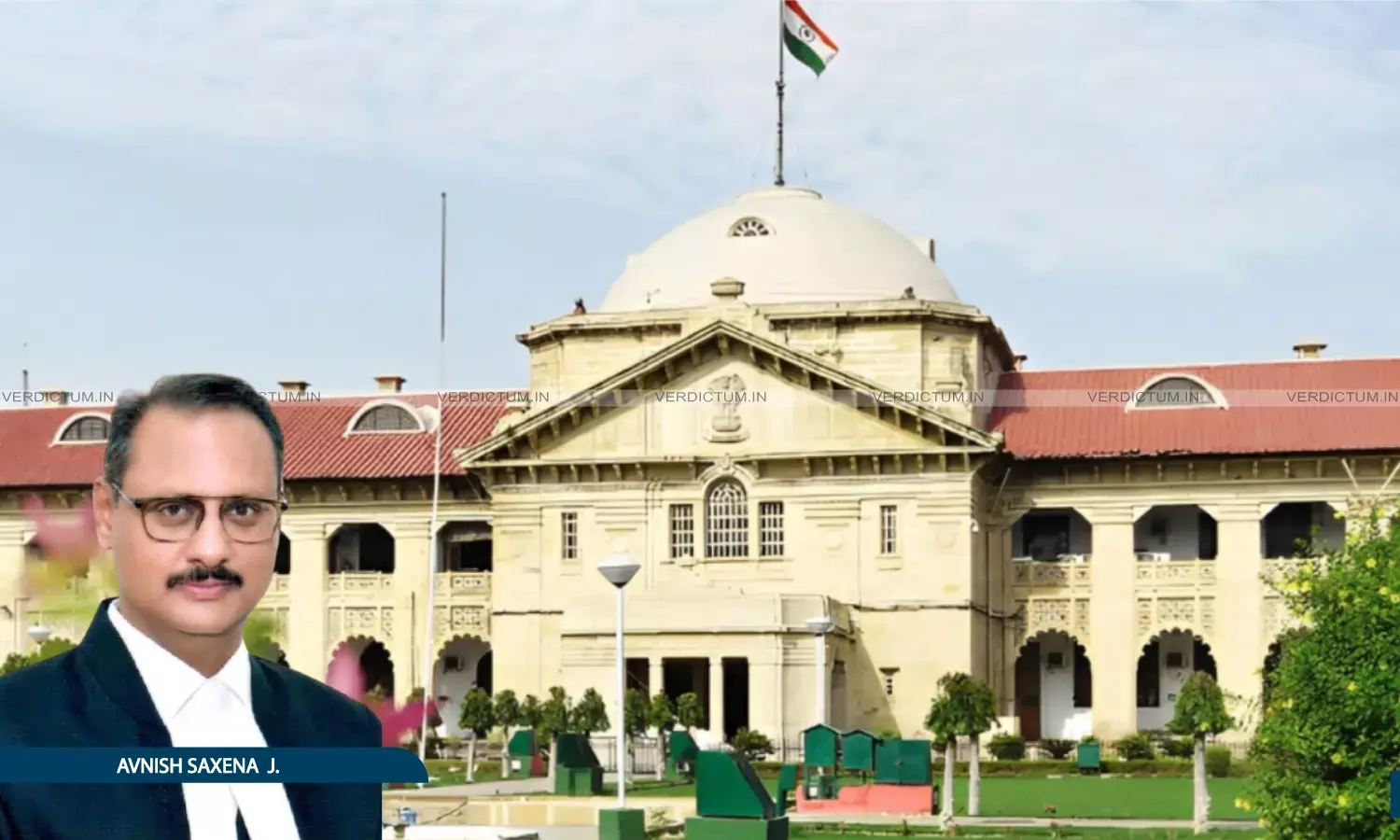
The Allahabad High Court observed that for sustaining a conviction under Sections 332 and 333 of the Indian Penal Code, the prosecution must establish that the public servant against whom the offence is alleged was discharging official duty at the relevant time.
The Court held that where the prosecution fails to prove that the public servants were authorised to carry out the act claimed to have been performed in discharge of such duty, the essential ingredients of the offence are not made out, and conviction cannot be sustained.
The Court was hearing a criminal appeal filed by a bus conductor challenging the judgment of the trial court, which had convicted him for voluntarily causing hurt and grievous hurt to traffic inspectors to deter them from performing their duties.
A Bench of Justice Avnish Saxena questioned the authority under which the three traffic inspectors entered the bus for checking, which is an essential prerequisite for recording a conviction for the offence under Sections 332, 333 IPC and held: “The learned trial judge has utterly failed to appreciate this necessary requirement in the judgment of conviction. The entire evidence on this point is presumptive in nature. Assuming the informants were discharging their duties, whereas the Rule of 1972 provides the phrase ‘authorised employee’ in Rules 23 and 24. Thus, in my opinion, the prosecution has failed to prove that the public servants, the three traffic inspectors, were discharging their official duty as such”.
Background
The case arose from an incident dated 6 August 1981 involving a bus of the Uttar Pradesh State Road Transport Corporation operating on the Saharanpur–Haridwar route. Three traffic inspectors boarded the bus and asked the conductor to produce the waybill during an alleged inspection. According to the prosecution, the conductor misbehaved with them and assaulted one inspector, resulting in the loss of two teeth, while the other inspectors were also allegedly assaulted.
Following the investigation, the appellant was charged with offences under Sections 332 and 333 IPC. The trial court convicted him and sentenced him to rigorous imprisonment for the said offences.
Aggrieved by the conviction, the appellant approached the High Court challenging the trial court’s appreciation of evidence.
Court’s Observation
The High Court examined whether the essential ingredients required to establish offences under Sections 332 and 333 IPC had been proved. The Court observed that to sustain a conviction under these provisions, the prosecution must establish that: The accused voluntarily caused hurt or grievous hurt; the injured person was a public servant; and the public servant was discharging official duty at the time of the incident.
While it was undisputed that both the accused and the informants were employees of the State Roadways corporation and thus public servants, the crucial issue was whether the traffic inspectors were lawfully performing their duties when they boarded the bus.
The Court referred to the U.P. State Road Transport Corporation Rules, 1972, particularly Rules 21 to 24, governing issuance and verification of bus tickets. These provisions place the liability on passengers to obtain tickets and empower a Magistrate or an “authorised employee” to require passengers to produce tickets during a journey.
The Court noted that Rule 21 specifically provides that no person other than the driver or conductor may travel in the bus without a ticket. Importantly, the Rules do not exempt traffic inspectors from this requirement. Therefore, if inspectors board a bus for inspection, their authority must be specifically established.
However, the prosecution failed to produce any material showing that the three traffic inspectors were authorised to conduct a check on the bus route on the day of the incident. The Court observed that the prosecution had not produced any document showing that the inspectors had been deputed or authorised to conduct the inspection.
In these circumstances, the Court held that the prosecution had failed to establish that the inspectors were acting in discharge of their official duties. Since this requirement is fundamental for attracting Sections 332 and 333 IPC, the absence of proof of authorisation rendered the prosecution case deficient.
The Court further referred to the Supreme Court decision in D. Chattaiah v. State of Andhra Pradesh, which held that there must be a clear nexus between the act of the accused and the intention to deter a public servant from performing official duties.
The High Court found that the trial court had wrongly presumed that the inspectors were performing official duties merely because they were public servants. The evidence on record, according to the Court, was largely presumptive and did not satisfy the necessary legal requirement.
The Court also found inconsistencies between medical evidence and eyewitness testimonies regarding the alleged injuries, and noted that crucial material evidence, such as torn documents allegedly seized during the incident, was never produced before the court.
Conclusion
In view of the failure of the prosecution to prove that the traffic inspectors were lawfully discharging official duties at the relevant time, the High Court held that the conviction under Sections 332 and 333 IPC could not be sustained.
The Court accordingly allowed the appeal and set aside the conviction and sentence recorded by the trial court. The appellant was acquitted of all charges, and his bail bonds were discharged.
Cause Title: Rajendra Kumar v. State of Uttar Pradesh (Neutral Citation: 2026:AHC:49013)
Appearances
Appellant: Anurag Upadhyay, G.S. Saxena, Ravinath Tiwari, Advocates
State: A.G.A.
