

Magistrate Not Always Bound To Order FIR U/S 175(3) BNSS; Same Principles As S.156(3) CrPC Apply: Allahabad High Court
Direction for FIR is not automatic; judicial discretion must be exercised on lines settled under CrPC

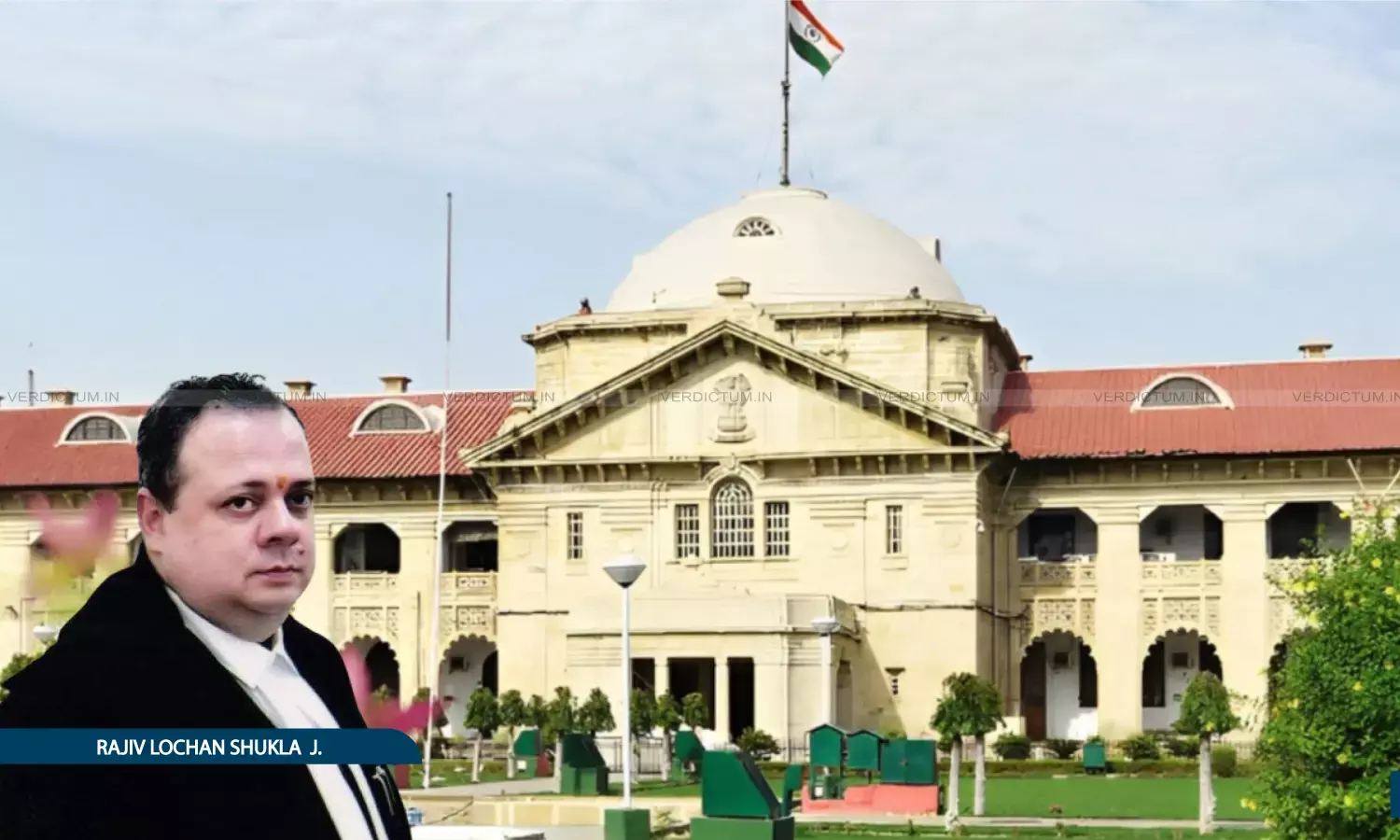
The Allahabad High Court has held that Section 175(3) of the Bharatiya Nagarik Suraksha Sanhita, 2023 (BNSS) does not mandate automatic direction for registration of an FIR or police investigation in every case. A Magistrate retains judicial discretion to treat such an application as a complaint if the facts do not require investigation by police machinery, the bench said.
The Court further clarified that although Section 175(3) BNSS expands procedural safeguards, including affidavit requirement and enabling inquiry, however, the principles governing exercise of discretion remain aligned with those under Section 156(3) CrPC, as explained in earlier precedents like Sukhwasi v. State of Uttar Pradesh 2007 (59) ACC 739 and Lala Ram v. State of U.P. and Ors. 2021 (1) ADJ 145.
Justice Rajiv Lochan Shukla observed, “These considerations are without prejudice to the claims of the applicant in the application under Section 175(3) B.N.S.S. The Learned Magistrate has rightly treated the application under Section 175(3) B.N.S.S, as a complaint by applying the same principles, as were applicable to the exercise of powers under section 156(3) Cr.PC”.
The court, thus, dismissed the petition challenging the order of the Chief Judicial Magistrate, Kanpur Dehat, who had treated an application under Section 175(3) BNSS as a complaint instead of directing registration of an FIR and police investigation.
Advocate Ejaz Ahmad Khan appeared for the petitioner and Shashi Dhar Pandey, A.G.A. appeared for the respondent.
As per the facts, the applicant had alleged that his brother was brutally assaulted, his leg tied with barbed wire to a motorcycle and dragged, resulting in amputation.
Therefore, it was claimed that despite approaching the police and sending a complaint to the Superintendent of Police, no FIR was registered, leading to the filing of the application under Section 175(3) BNSS.
The Magistrate, however, recorded that the applicant was fully aware of the facts and circumstances of the case, that no technical or specialised evidence requiring police investigation was indicated, and that the complainant could lead evidence before the court. Relying on the division bench judgment in Sukhwasi, the application was treated as a complaint.
The Court, thus, reiterated that a Magistrate is not bound to order registration of an FIR in every case disclosing a cognizable offence. Where the complainant possesses complete details of the accused and the evidence, and no recovery or specialised investigation is necessary, the application may appropriately be treated as a complaint.
Finding that the Magistrate had applied judicial mind and recorded reasons for declining to order police investigation, the High Court held that no perversity or jurisdictional error was made out and dismissed the application under Section 528 BNSS.
Cause Title: Pradeep Kumar v. State Of U.P. And 2 Others [Neutral Citation: 2026:AHC:31226]
Appearances:
Petitioner: Ejaz Ahmad Khan, Mohd. Monis, Advocates.
Respondent: Hari Nath Chaubey, Shashi Dhar Pandey, A.G.A., Advocates.