

Ensure Proper Parking Spaces, Lifts, Playgrounds & Gyms In Residential Buildings For Disabled Persons: Allahabad High Court
The Allahabad High Court held that the 'Right to Accessibility' cannot be confined only to public places, but as a fundamental right, it is also to be extended to a structure or building which is being utilised as community living.

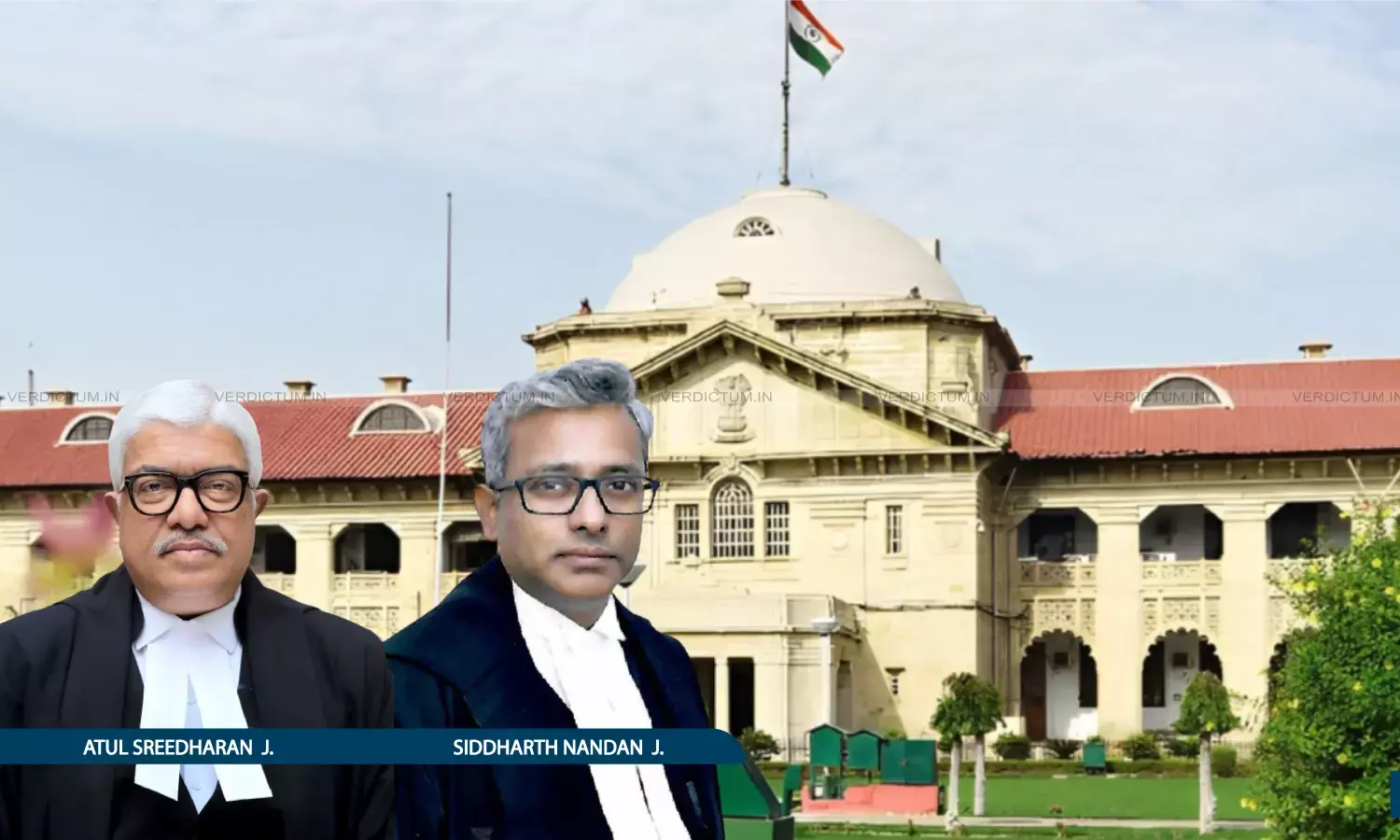
The Allahabad High Court has held that the 'Right to Accessibility' cannot be confined only to public places, but as a fundamental right, it is also to be extended to a structure or building which is being utilised as ‘community living’, and such right has to be adhered to in residential buildings.
The High Court rendered such findings while directing the Development Authorities in the State to incorporate necessary guidelines to ensure that maps which are being sanctioned for community living must include proper parking spaces for persons with disability and also provisions for convenience and access to other common facilities such as lifts, pavement, playgrounds, community centres, gymnasium, etc. are made.
The High Court was considering a writ petition challenging the order by which a complaint under the provisions of the Rights of Persons with Disabilities Act, 2016, was decided.
The Division Bench of Justice Siddharth Nandan and Justice Atul Sreedharan ordered, “...the Development Authorities in the State of Uttar Pradesh to incorporate necessary guidelines, which may be necessary to ensure that persons with disability are not put to a inequitable position and the maps which is being sanctioned for such community living, it may be necessary that proper parking spaces may be made for persons with disability, from where there is a clear access to a common facility like lift; and also provisions for convenience of "persons with disabilities" to have access to other common facilities like pavement, playgrounds, community centres, gymnasium etc.”
Advocate Devendra Singh represented the Petitioner, while Chief Standing Counsel represented the Respondent.
Factual Background
The allottee who is 90% disabled, was given an allotment by the builder in one of the projects named as SCC Sapphire as per terms of the agreement. She was also allotted Parking No. UB - 37. Subsequently, after eight years, another flat was sold by the builder. In pursuance thereof, he divided the disabled allottee’s parking space into two areas. Aggrieved by the aforesaid action, she approached the Ghaziabad Development Authority. The State Commissioner found the complaint to be correct.
Reasoning
The Bench refused to accept the objection of the petitioner that proceedings were allegedly ex parte in light of the fact that the representative of the petitioner was part of the proceeding and he had admitted the facts that the original allotment was not cancelled or whether he could have challenged the original allotment after five years. “Therefore, approach of the Commissioner that an allottee with 90% disability cannot be made to run from pillar to post and on account of fact as the development authority had already carried out a spot inspection and submitted a report on 25.10.2025, which was not controverted by the representative of the petitioner, cannot be faulted; and accordingly we do not find any error in the proceedings or violation of the principles of natural justice”, it added.
Referring to the judgment in State of Himanchal Pradesh v. Umed Ram Sharma (1986), the Bench affirmed the view that the ‘Right to Accessibility’ is a fundamental right as guaranteed under Article 21 of the Constitution of India and the same is broad enough to incorporate and be extended to a "Right to Accessibility in a Community Living also. “These rights are essential for enabling persons with disabilities (hereinafter referred as "PWDs) to live independently, participate in a Society and enjoy their rights on a equal basis with others. Article 14 of the Constitution of India upholds equal access to spaces and services, as well”, the order read.
The Bench was of the view that sanctioning of the map for a building meant for community living, now ought to take into account parking space with clear and unhindered access to the common facilities like lift for PWDs and any change or hindrance to the access of common facilities (including access to lift from the parking lot), should be seen as violation of the fundamental right under Article 21 of the Constitution of India. “Therefore, at both stages—when the building plan is prepared and at the stage of completion—mandatory adherence to the accessibility Rules is envisaged by the Act”, it added.
Coming to the facts of the case, the Bench found that the Commissioner had taken note of the fact that during the on spot inspection, the complainant's right to accessibility to a common facility e.g. lift, was assessed by observing contingencies and it was found the act of the builder, by dividing her parking into two, was causing inherence to the incumbent, from accessing the lift.
“It is a fundamental right of a PWD to have right to accessibility, for facilities which are common in a building or structure, which is providing a shelter to an incumbent”, the Bench stated while also adding, “In the present case, we do not find any prejudice being caused to the petitioner; and on the contrary by unilaterally dividing petitioner's parking into two parking spaces, it has been to the detriment of the allottee, the same cannot be sustained; and in view of the aforesaid admitted position and documents, no infirmity or perversity can be found in the impugned order or any prejudice being caused to the petitioner or there being any violation of the procedure prescribed, under the Act.”
The Bench concluded the matter by suggesting that the Government ensure mandatory observance of the Accessibility Rules applicable at the stage of granting permission to build any structure.
Cause Title: M/S Scc Builders Pvt. Ltd. v. State Of U.P. (Neutral Citation: 2026:AHC:44277-DB)
Appearance
Petitioner: Advocates Devendra Singh, Pravindra Singh
Respondent: Chief Standing Counsel, Advocate Tejasvi Misra