

Permission Not Required For Religious Prayer Meetings In Private Premises: Allahabad High Court
A plea sought permission to hold a religious congregation of worship within its private property.
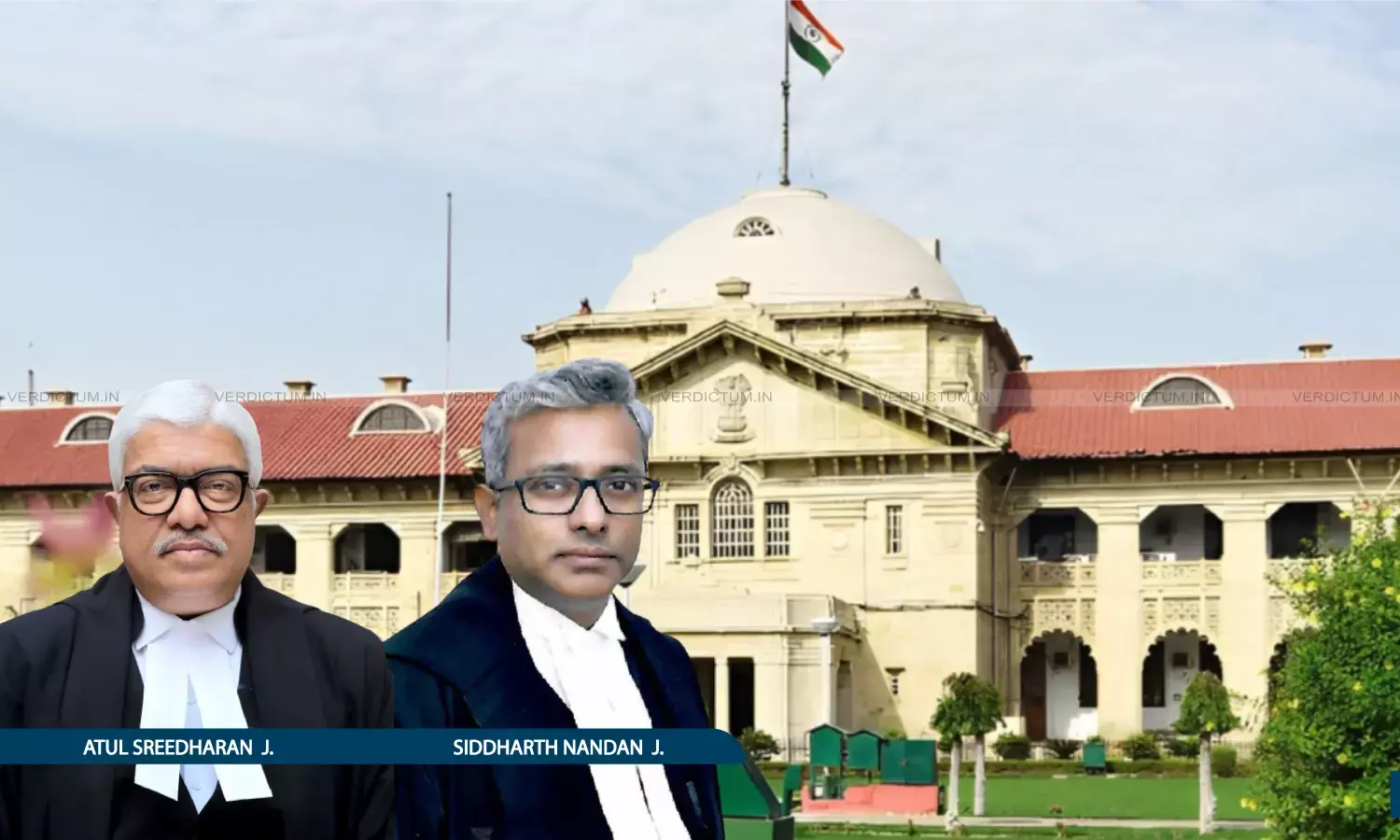
The Allahabad High Court has held that no permission is required from the State to conduct a religious prayer meeting within one’s own private premises, as such activity is protected under Article 25 of the Constitution of India.
A plea sought permission to hold a religious congregation of worship within its private property. The petitioner contended that despite making several representations to the State authorities, no action had been taken regarding grant of permission.
A Division Bench of Justice Atul Sreedharan and Justice Siddharth Nandan held, “Instructions have come from the State. Paragraph no.18 is relevant. It is very clearly stated that there is no prohibition on the petitioner to conduct religious prayer meeting within his private premises. It is also stated that equal protection of the law is accorded by instrumentalities of the State to all citizens across the State without discrimination with regard to religion or any other consideration. The petitioner does not require any kind of permission under the law to pursue an act which is the petitioner's fundamental right under Article 25 of the Constitution of India subject to the fact that he conducts and carries out religious prayer meeting within its private premises of his own property.”
Advocate Manoj Kumar appeared for the Petitioner.
The Court specifically inquired whether any procession or activity on public roads or public property was contemplated. The Court noted, “he has categorically answered that there is no procession to be carried out or conducted by the petitioner and that prayer would be restricted and limited only to the private premises of the petitioner.”
The Court observed that the petitioner has the right to conduct prayer meetings as per convenience in its own private premises without any permission from the State Government. However, the Court mandated, “if any occasion arises where it has to spill over the public road or public property, in such a situation, this Court mandates that the petitioner shall at least intimate the police and take any requisite permission under the law, if so require.”
The Court further added, “The manner in which protection, if required, is to be provided, the same is within the discretion of the State. However, it is a concomitant duty on the State to ensure that property, rights and life of the petitioner are protected at all cost. How this is done is entirely the discretion of the police.”
The writ petition was disposed of.
Cause Title: Maranatha Full Gospel Ministries v. State of U.P. & Ors., [2026:AHC:18364-DB]
