

Legal Representatives Of Deceased Employee Always Remain Entitled To Claim Terminal Dues And Family Pension: Allahabad High Court
The appeal arose from the dismissal of a writ petition by the Single Judge on the ground that the widow had no locus to seek revision of service benefits of her deceased husband.
The Allahabad High Court has held that the legal representative of a deceased employee may always remain entitled to claim terminal dues including family pension by way of estate of the deceased reiterating that the rights flowing from service do not extinguish upon the death of an employee.
The appellant was the widow of a retired assistant teacher at D.A.V. Inter College.
The appeal arose from the dismissal of a writ petition by the Single Judge on the ground that the widow had no locus to seek revision of service benefits of her deceased husband. The Single Judge had also attributed delay in approaching the Court.
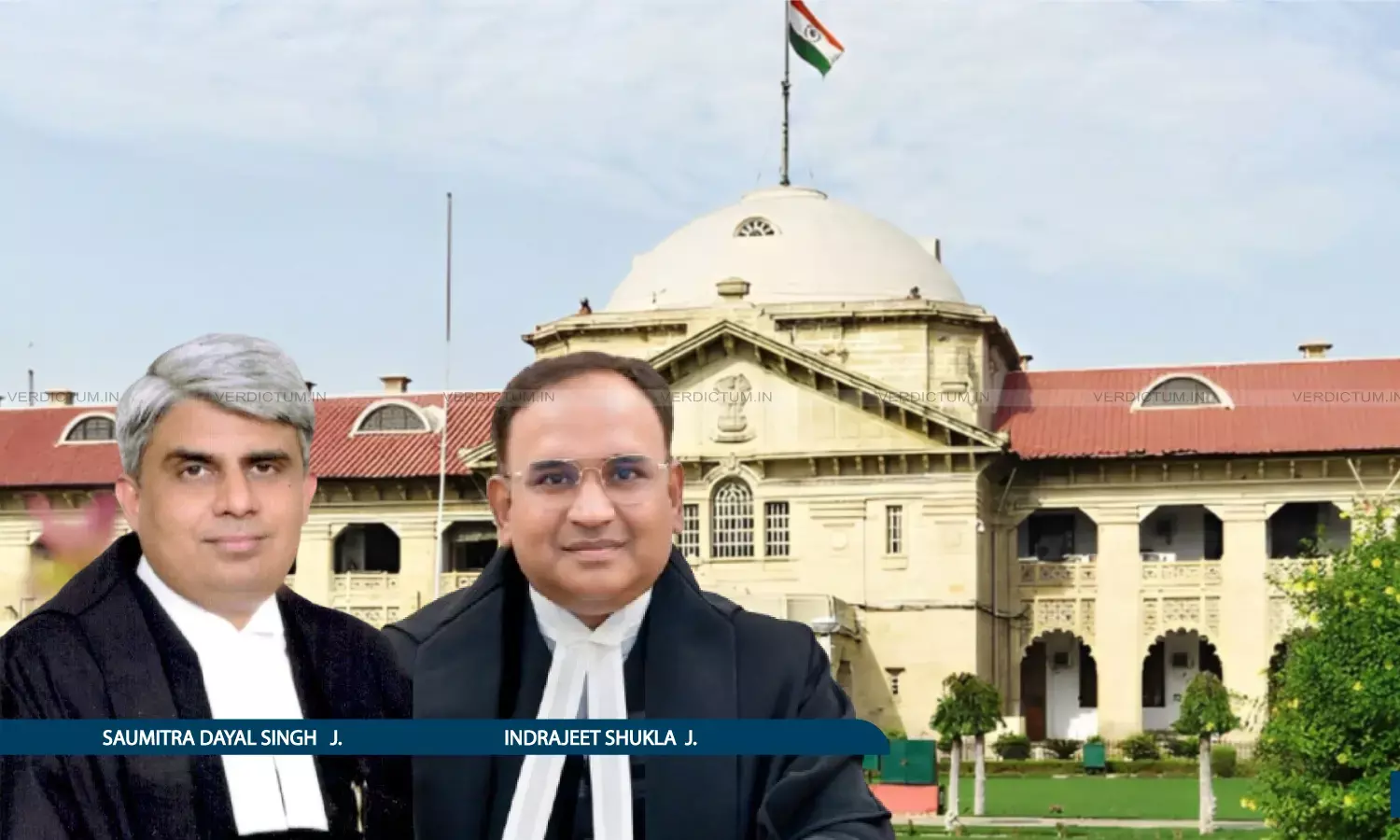
The Division Bench of Justice Saumitra Dayal Singh and Justice Indrajeet Shukla held, “Legal representative of the deceased employee may always remain entitled to claim terminal dues including family pension by way of estate of the deceased. In absence of any dispute as to the right of the original petitioner to make such claim, the observation of the learned single judge that the original petitioner had no locus to claim such benefit is clearly erroneous.”
Advocate Amit Singh appeared for the Appellant and Additional Chief Standing Counsel Arimardan Singh Rajpoot appeared for the Respondents.
The Division Bench observed that in the absence of any dispute regarding the petitioner’s status as widow of the deceased employee, it was difficult to sustain the finding that she lacked locus. The Court emphasized that terminal benefits, including pensionary entitlements, form part of the estate of the deceased employee and can be claimed by his legal heirs.
The Court further noted that the date of regularisation of the late assistant teacher already been corrected by the Regional Regularisation Committee in its resolution and the said decision had been acted upon by the authorities through subsequent communications. Therefore, the claim raised by the widow was not a fresh claim but a request to give effect to an existing decision.
Rejecting the objection of delay, the Bench held that once the decision regarding regularisation had been taken, there was no issue of laches in seeking consequential benefits. The Court said, “As to the three year delay attributed to the petitioner, we are unimpressed by the objection raised by the learned Additional Chief Standing Counsel to the extent, the order had already been made and objection of the petitioner was pending with the respondent, the prayer no. (e) prayed for had not been made with any laches, it having been made well within three years from the last communication/acknowledgement dated 12.03.2025, issued by the DIOS, Prayagraj. The money claim being under active consideration, it deserves a decision.”
Setting aside the order passed by the Single Judge, the High Court directed the concerned authorities to pass an appropriate reasoned order and grant all consequential benefits arising out of the resolution of the Regional Regularisation Committee, preferably within one month.
Cause Title: Madhuri Tiwari v. State of U.P. & Ors., [2026:AHC:25997-DB]
Appearance:
Appellant: Senior Advocate Prabhakar Awasthi, Advocate Amit Singh
Respondents: Additional Chief Standing Counsel Arimardan Singh Rajpoot
