

Investigating Officer To Provide Seizure Order To Bank: Allahabad High Court Issues Guidelines On Freezing Of Bank Account Under Cyber Crime Suspicion
The Allahabad High Court was considering a petition filed by the petitioner whose bank account was frozen.

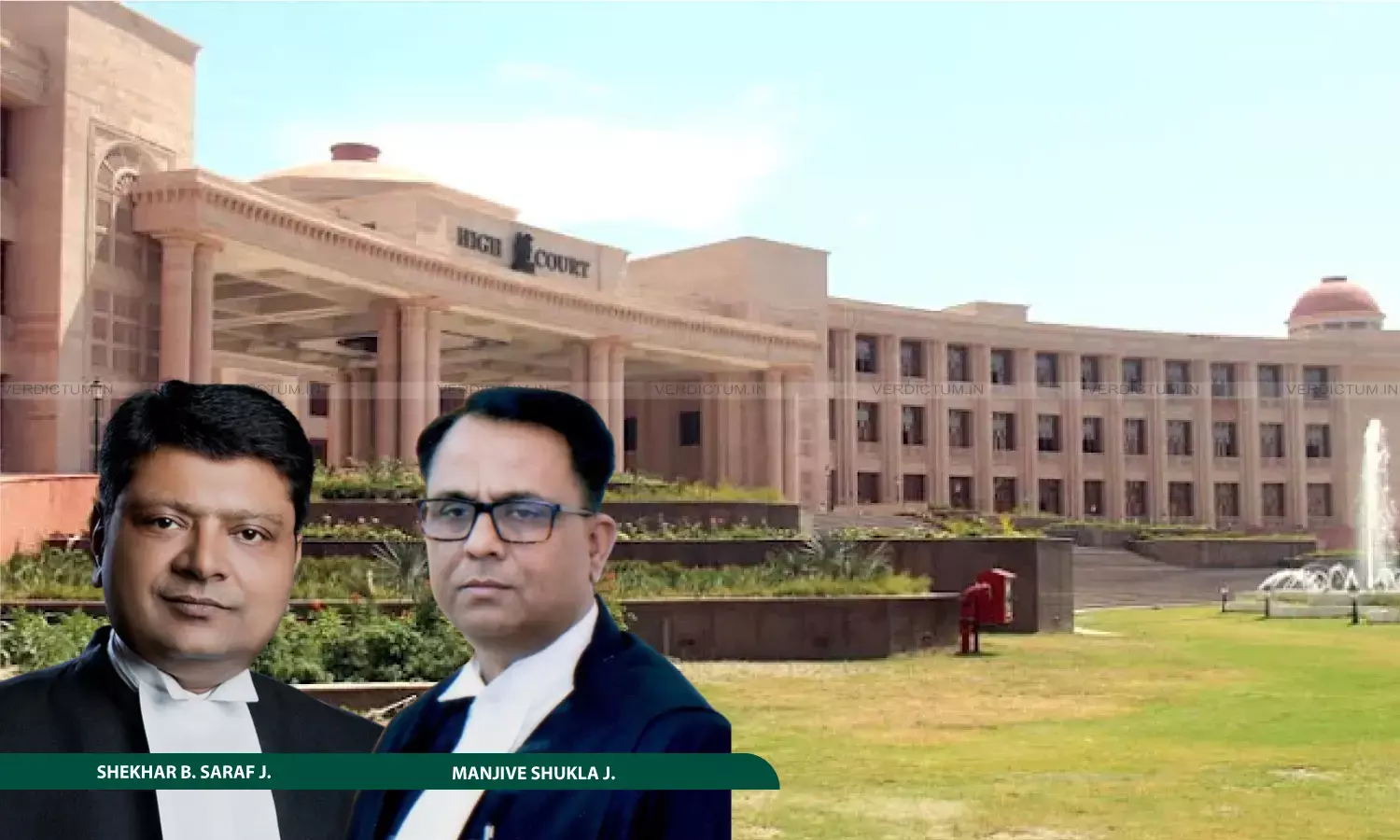
Justice Shekhar B. Saraf, Justice Manjive Shukla, Allahabad High Court (Lucknow Bench)
While holding that the Investigating Officer must provide the bank with the seizure order, the Allahabad High Court has enumerated guidelines for the freezing of bank accounts under the suspension of a cyber crime.
The High Court was considering a petition filed by the petitioner whose bank account was frozen.
The Division Bench of Justice Manjive Shukla and Justice Shekhar B. Saraf held, “From a perusal of the above, we are of the view that in case of a cyber crime, the Investigating Officer is required to not only issue notice under Section 94/106 of the B.N.S.S., 2023 to the banks concerned but the same must contain the amount for which lien is sought. A blanket notice without indicating the amount, on which lien is being sought, would be illegal and arbitrary. Furthermore, the Investigating Officer is required to intimate the jurisdictional Magistrate of the said cyber crime and inform the banks of the case number that has been registered on basis of which said lien / freezing is sought.”
“One may understand a situation wherein there is a requirement for freezing an account for a limited period so that the proceeds of crime are not removed. However, even in these extreme cases, it is incumbent upon the Investigating Officer to provide the bank within three to four days the seizure order passed for putting a lien on the bank account, the case number on the basis of which such lien/freezing is being conducted, as well as, provide the amount on which the lien is sought to be created”, it added.
Advocate Jalaj Kumar Gupta represented the Petitioner while Advocate Amit Jaiswal represented the Respondent.
Arguments
It was the case of the Bank that they had neither received any seizure order nor received any indication as to the amount that was required to be put in lien with regard to the petitioner's bank account. No further documents were received by the bank in spite of several letters written by the bank to the Investigating Officer concerned.
Reasoning
On a perusal of various judgments relating to freezing of a bank account under a suspicion of cyber crime, the Bench enumerated the following principles:
- Section 106 of BNSS should not be interpreted to empower police officers to intervene in money disputes by seizing property especially based on mere suspicion but it must be bolstered by reasonable belief.
- Information for freezing the bank account by the investigating officer shall be sent immediately to the nodal officer of the bank of the beneficiary or payment service system, including the payment aggregator, so as to take action at their end. The police officer must furnish information with relation to the alleged crime and should accompany a copy of the FIR or information received. The bank or the payment system operator (PSO) may decline a request, if it is received without a copy of any complaint or FIR.
- The notice under Section 106 of the BNSS may require to mark lien on a specific amount (money allegedly transferred from or to the bank account of accused), but in no case the police may ask or request any bank or payment system operator (PSO) including payment aggregator, to block or suspend entire financial account.
- As soon as information to block or put on hold or marking of a lien is forwarded to a bank or any financial intermediary, including a payment system operator (PSO), then the information shall simultaneously be sent to the jurisdictional Judicial Magistrate within 24 hours. Failure to inform may render such an action as void.
- If any bank puts on hold any bank account or escrow account maintained by any entity / citizen on the request of the police without following the proper procedure, then the bank shall be personally liable for the Civil and Criminal consequences for the loss including financial and reputational damage of such entity / citizen.
Considering the facts of the case, the Bench noted that no amount had been indicated in the notice that has been issued to the bank. “Furthermore, copy of the F.I.R. has not been provided nor any seizure order has been provided to the bank, in spite of the bank having written to the Investigating Officer to provide the same”, it added.
Unable to countenance the mechanism used by the Investigating Officer wherein the entire account of the petitioner had been frozen and considering that no information was provided to the bank with regard to the court wherein the particular case is pending, the Bench quashed the impugned notice.
The Bench directed the banks concerned to immediately de-freeze the accounts of the petitioner and allow the petitioner to carry on his normal banking activities.
Cause Title: Khalsa Medical Store Thru. Prop. Yashwant Singh v. Reserve Bank Of India (Neutral Citation: 2026:AHC-LKO:3701-DB)