

Delays Have Dangerous Ends: Allahabad HC Refuses To Interfere In 13-Year-Old Cheque Bounce Case, Calls for Expeditious Trial
Prolonged delay runs contrary to the constitutional guarantee of speedy trial under Article 21 of the Constitution of India

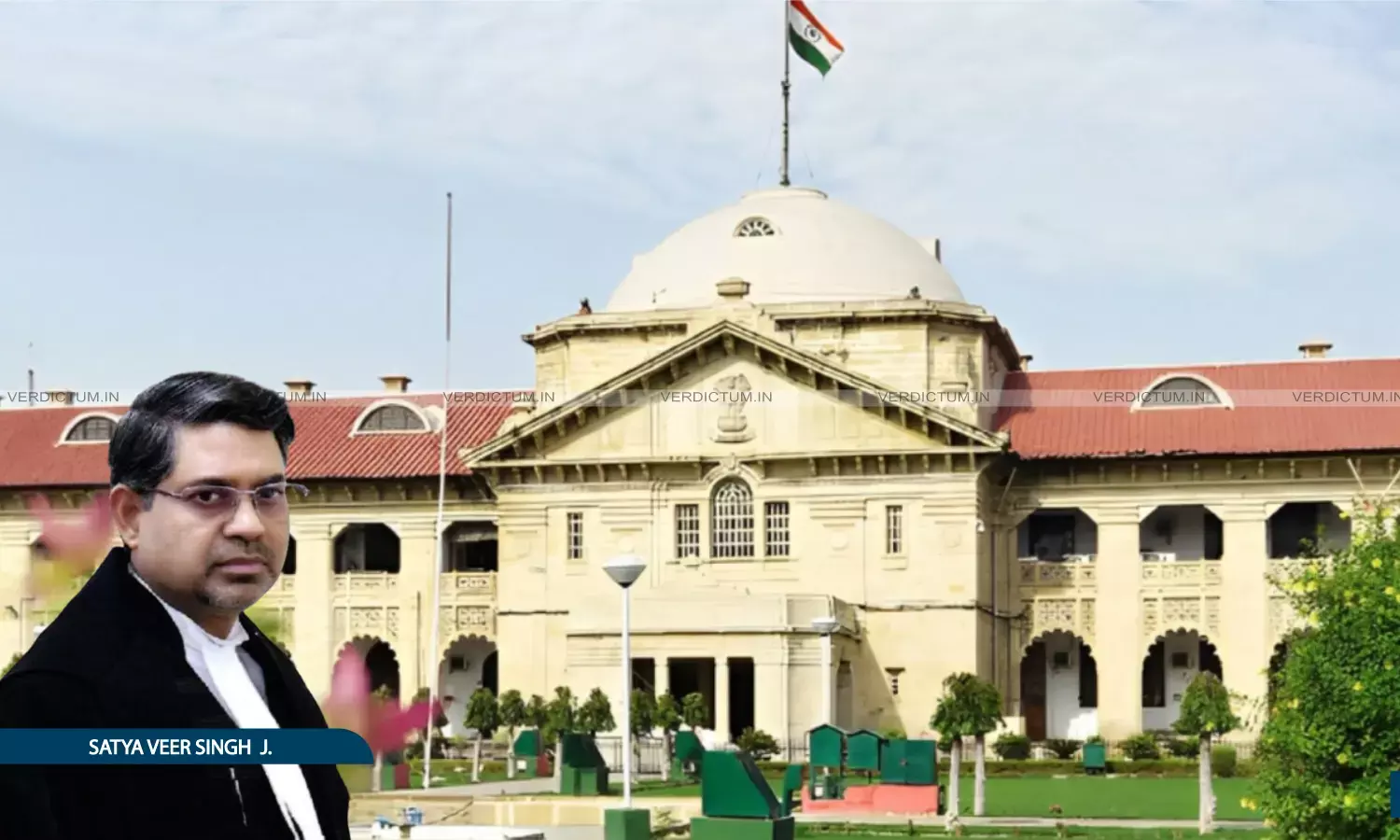
The Allahabad High Court while invoking William Shakespeare’s caution that “delays have dangerous ends”, dismissed an application seeking to quash proceedings in a cheque dishonour case pending since 2013, observing that such prolonged pendency defeats the very object of summary trials under Section 138 of the Negotiable Instruments Act , 1881.
Observing that nearly 13 years had passed since the institution of the complaint, the Court described the case as a “stark exemplification of inordinate delay” and reiterated that such procrastination is abhorrent to justice. It further noted that prolonged delay runs contrary to the constitutional guarantee of speedy trial under Article 21 of the Constitution of India.
Justice Satya Veer Singh observed, “On perusal of the records annexed as annexure to the affidavit filed in support of the application, in the present matter, the complaint under Section 138 N.I. Act was filed on 01.02.2013, and now 2026 is running. Almost 13 years have passed. In the hallowed pursuit of justice, the maxim ‘In diem vivere in lege sunt detestabilis’ stands as an eternal rebuke to protracted litigation and signifies that unnecessary procrastination or stalling tactics in legal proceedings are abhorrent to justice. Such tardiness not only erodes public confidence but also renders the law an instrument of distress rather than relief. In this context, the words of William Shakespeare ring true: ‘Defer no time; delays have dangerous ends’. Such prolonged legal proceedings starkly illustrate the maxim 'Justice Delayed is Justice Denied'. Furthermore, such delays also run counter to the essence of the right to speedy trial under Article 21 of the Constitution of India, 1950”.
“…it is an admitted fact that a complaint under section 138 N.I. Act was filed in the year 2013, and since then, the said complaint has been pending. More than 12 years have already passed, rendering this case a stark exemplification of inordinate delay in the adjudication of a summary trial. Such protracted pendency constitutes a gross abuse of the process of Court in summary trial cases”, the Bench further observed.
Advocate Raj Nath Bhakta appeared for the applicant and Advocate Subhendra Singh appeared for the respondent.
In the matter, the application under Section 528 of the Bharatiya Nagarik Suraksha Sanhita, 2023 challenged the Magistrate’s order dated 16-10-2025, which had rejected the accused’s plea for reopening defence evidence to file a handwriting expert’s report.
However, the High Court found that ample opportunities had already been granted and that the accused failed to diligently pursue the expert evidence even after sample signatures were obtained on 18-04-2023.
The Court noted that the complaint was instituted on 01-02-2013 and that the accused’s statement under Section 313 CrPC had been recorded on 30-07-2021. Despite reminders and repeated opportunities, the accused did not take effective steps to bring the expert report on record. The trial court ultimately closed the defence evidence on 18-08-2025, and a belated application filed on 08-09-2025 to reopen the opportunity was rightly rejected.
The Court on finding no procedural irregularity, held that the trial court had acted within its jurisdiction and that the accused had already been afforded “more than sufficient opportunities.”
The Bench while emphasising the legislative intent behind Sections 143 to 145 of the Negotiable Instruments Act, reiterated that cheque bounce cases are meant to be tried summarily and disposed of as expeditiously as possible, ideally within six months of filing.
The Court referred to the Supreme Court’s guidelines in In Re: Expeditious Trial of Cases Under Section 138 of NI Act (2021) 16 SCC 116 and Sanjabij Tari v. Kishore S. Borcar & Anr. (Criminal Appeal No. 1755 of 2010), which were issued to address mounting pendency and ensure strict compliance with summary procedure in NI Act matters.
Refusing to interfere with the impugned order, the Court directed that the matter be expedited and disposed of within the statutory framework, unless stayed by a superior court. A copy of the judgment has also been directed to be placed before the concerned District and Sessions Judge for necessary compliance.
Cause Title: Brijesh Kumar v. State of U.P. and another [Neutral Citation: 2026:AHC:39262]
Appearances:
Applicant: Raj Nath Bhakta, Binod Kumar Yadav, Advocates.
Respondent: B.P. Pandey, A.G.A., Subhendra Singh, Advocate.
Click here to read/download the Judgment