Non-Examination Of Persons In FIR Cannot Raise Presumption That Their Testimony Is Adverse To Prosecution Or Favours Defence: Allahabad High Court
The High Court held that the prosecution cannot be faulted merely because every person named in the First Information Report was not examined as a witness, clarifying that the prosecution is entitled to rely on the evidence it considers sufficient, and that the absence of certain witnesses does not automatically imply that their testimony would have been favourable to the defence.
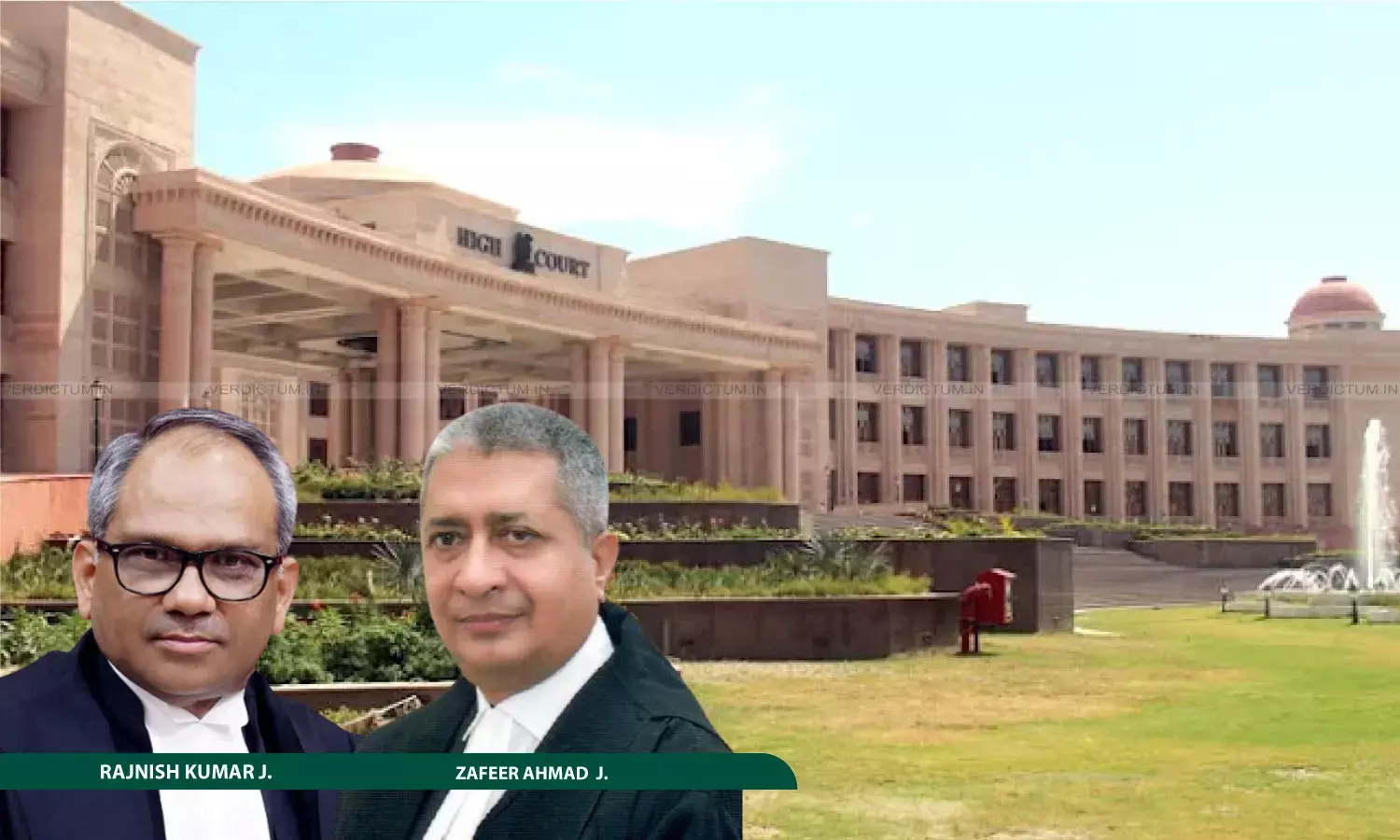
The Allahabad High Court observed that merely because certain individuals named in the First Information Report were not examined during trial, it cannot automatically be presumed that their testimony would have supported the defence or weakened the prosecution's case.
The Court held that the prosecution is entitled to rely on the evidence it chooses to produce, and the non-examination of every named individual does not, by itself, vitiate the case.
The Court was hearing a criminal appeal challenging the conviction of the accused persons for offences punishable under Section 302 read with Section 34 of the Indian Penal Code.
A Division Bench of Justice Rajnish Kumar and Justice Zafeer Ahmad observed: “It is the prerogative of the prosecution to adduce such evidence as it considers necessary to support its case. Merely because certain persons named in the F.I.R. were not examined, it cannot automatically be inferred that their testimony would have been favourable to the defence or adverse to the prosecution. The prosecution is entitled to rely on the evidence it chooses to present, and non-examination of every named individual does not, by itself, vitiate the case”.
Background
According to the prosecution's case, the incident occurred in the morning when the deceased was present at a marketplace where essential commodities were being distributed to villagers through a fair price shop. During the course of the distribution, the accused persons allegedly arrived at the location and opened fire, resulting in the death of the victim at the spot.
Based on a written complaint, a First Information Report was promptly registered the same morning under Section 302 IPC. During the investigation, the police prepared the inquest report, recovered physical evidence from the scene, and sent the body for post-mortem examination. The post-mortem report revealed multiple firearm injuries on the body of the deceased and opined that death occurred due to shock and haemorrhage resulting from ante-mortem injuries.
Following the investigation, a charge sheet was filed against the accused persons under Section 302 read with Section 34 IPC. The trial court convicted them and sentenced them to life imprisonment along with a fine. Aggrieved by the conviction, the accused preferred the present appeal before the High Court.
Before the High Court, the defence contended that the prosecution's case was unreliable, as it was based mainly on the testimony of two eyewitnesses whose presence at the scene of the occurrence was doubtful. It was further argued that several persons named in the First Information Report and other individuals present at the spot were not examined by the prosecution, which should lead to an adverse inference against the prosecution.
Court’s Observation
The High Court undertook a detailed examination of the evidence on record and noted that the First Information Report had been lodged promptly after the incident and the names of the accused persons had been clearly mentioned in it.
The Court further observed that the testimonies of the two eyewitnesses were consistent and coherent regarding the time, place, and manner of the occurrence. Their account of the incident was also found to be corroborated by the medical evidence contained in the post-mortem report, which indicated firearm injuries corresponding with the eyewitness narration.
The Bench rejected the contention that the eyewitnesses were “chance witnesses,” holding that their presence at the scene was natural in view of the activities taking place at the location. It further noted that extensive cross-examination of the witnesses did not reveal any material contradictions that could undermine the prosecution's case.
Addressing the argument regarding the non-examination of certain witnesses named in the FIR, the Court held that such an omission does not automatically weaken the prosecution's case. It observed that the prosecution has the discretion to present the evidence it considers necessary, and the failure to examine every individual mentioned in the FIR does not, by itself, justify drawing an adverse inference.
The Court emphasised that where reliable eyewitness testimony is available and is corroborated by medical evidence, the prosecution's case cannot be rejected merely because additional witnesses were not examined.
The Bench also noted that the defence had attempted to attribute false implication to alleged political rivalry but had failed to produce any substantive evidence in support of this contention.
Upon considering the entire evidence on record, the Court held that the findings recorded by the trial court were based on proper appreciation of the evidence and did not suffer from any illegality or perversity.
Conclusion
Accordingly, the High Court dismissed the appeal and upheld the conviction and sentence imposed by the trial court, holding that the prosecution had proved the case beyond a reasonable doubt. The Court directed that the appellants, who were already in custody, shall continue to serve the sentence awarded to them.
Cause Title: Basheer Ahmad & Others v State of Uttar Pradesh (Neutral Citation: 2026:AHC-LKO:16932-DB)
Appearances
Appellants: Advocates Rishad Murtaza, A.K. Srivastava, Ashok Kumar Singh, Girish Kumar Pande, Jaikaran, Rahul Kumar Singh, Saurabah Srivastava and Saurabh Srivastava
Respondents: Pawan Kumar Mishra, A.G.A. and Advocate Amar Nath Dubey