

Petition U/S. 482 CrPC Not Maintainable Against NIA Special Court Discharge And Summoning Orders; Remedy Lies In Statutory Appeal: Allahabad High Court
The Court held that the NIA Act applies to all "Scheduled Offences" regardless of whether the investigation was conducted by the Central Agency or the State Police.

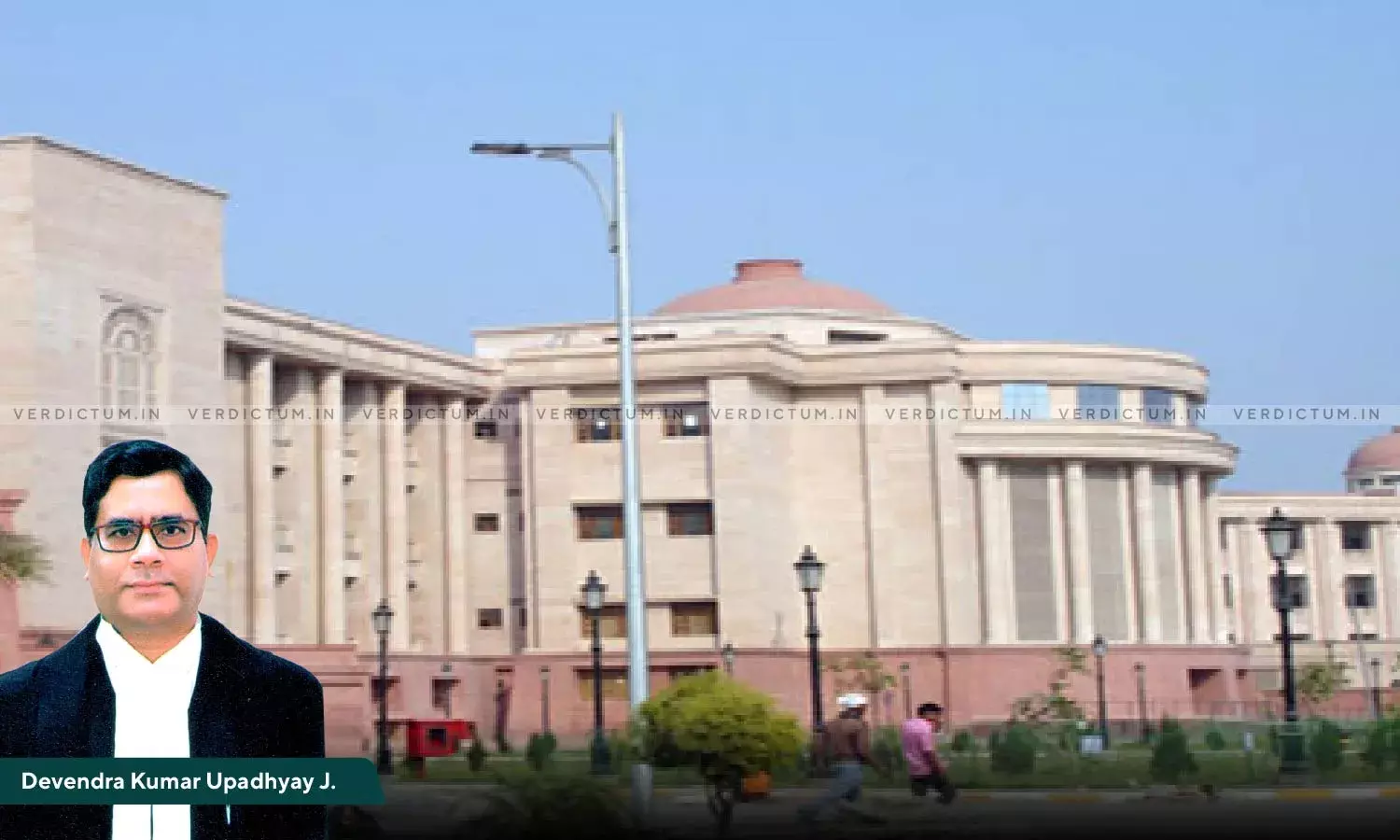
Justice Brij Raj Singh, Allahabad High Court
The Allahabad High Court has dismissed an application filed under Section 482 Cr.P.C. (Section 528 BNSS), observing that challenges to orders passed by a Special NIA Court must be pursued through a statutory appeal under Section 21(1) of the National Investigation Agency (NIA) Act, 2008.
The Court rejected the applicants' contention that the NIA Act was inapplicable because the U.P. Police had conducted the investigation rather than the National Investigation Agency.
The Bench of Justice Brij Raj Singh observed, “Since the order has been passed by the Special Judge, NIA Act, therefore, an appeal would lie under Section 21(1) of the Act, 2008, hence the argument of counsel for the applicant that the NIA Act, 2008 is not applicable in the present case, is not sustainable. The applicability of the NIA Act, 2008 to the applicants can be seen only when the application under Section 482 Cr.P.C./528 BNSS is maintainable. Since the application under Section 482 Cr.P.C./528 BNSS is not maintainable against the summoning order and refusal order of discharge, this Court would not dwell upon the submission made by the counsel for the applicant that the Act, 2008, is not applicable.”
Advocate Aftab Ahmad appeared for the Applicants, while AGA Shiv Nath Tilhari appeared for the Opposite Parties.
An application was filed seeking to set aside a judgment passed by the Special Judge NIA/Additional Sessions Judge arising out of a case under Sections 121-A, 153-A and 295-A IPC, and the cognizance order passed by the Additional Chief Judicial Magistrate, with a further prayer to quash the entire proceedings of the aforesaid case.
The State submitted that the application under Section 482 Cr.P.C. is not maintainable against the order of refusal to discharge in view of Section 21(1) of the National Investigation Agency Act, 2008, which provides that an appeal shall lie from any judgment, sentence or order not being an interlocutory order of a Special Court to the High Court both on facts and on law.
Counsel for the applicant submitted that the Court has inherent power to entertain the application under Section 482 Cr.P.C./528 BNSS, and the rejection of the discharge application can be heard and decided by this Court. He noted that the NIA Act was designed specifically for a national agency to investigate and prosecute "Scheduled Offences" that affected national sovereignty and security.
Counsel contended that for the NIA Act to apply, two conditions had to be met: the offence must be listed in the Schedule, and it must be investigated by the NIA. He argued that if the NIA did not investigate, it could not prosecute. He pointed out that the mandatory procedures under Section 6 of the NIA Act—where the State report is sent to the Central Government for a determination on the "gravity" of the offence—were never followed in this case.
The Court observed, “The offence under Section 121-A IPC falls under the category of the Scheduled offence as specified in the Scheduled given in the NIA Act, 2008. The provisions of NIA Act, 2008 would be applicable in both cases either investigated by NIA or State Agency. For applicability of the Act, the requirement is that the offence should come in the category of scheduled offence. Section 2(1)(g) of the NIA Act, 2008 defines "Scheduled Offence" according to which an offence is specified in the schedule. The NIA Act, 2008 provides that the "Scheduled Offences" shall be investigated by the Agency. The meaning of "Agency" is defined in Section 2(a) of the NIA Act, 2008. According to Section 2(a) of the NIA Act, 2008, “Agency” means the National Investigation Agency. However, according to Section 22 sub-section (2), clause 2 "Agency" means the "Investigating Agency of the State Government”.”
The Court clarified that the applicability of the NIA Act is determined by the nature of the offence itself; if an offence is listed in the Schedule, the Act’s provisions are triggered.
The Court noted that Section 10 of the Act explicitly saves the power of the State Government to investigate and prosecute Scheduled Offences, meaning the U.P. Police's involvement did not strip the case of its special status.
The Court clarified that the applicability of the Act is triggered solely by the nature of the "Scheduled Offence"—such as Section 121-A IPC—and noted that Section 10 of the Act explicitly preserves the State Government's power to investigate such matters without stripping them of their special legal status.
Consequently, the Court found the application seeking to quash a refusal of discharge to be legally non-maintainable.
Cause Title: Mohd. Faizan and Ors. v. State of U.P. and Ors. [Neutral Citation: 2026:AHC-LKO:20344]
Appearances:
Appellant: Advocate Aftab Ahmad
Respondents: AGA Shiv Nath Tilhari