

Can Sitting Judges Comment On Ongoing Litigation?

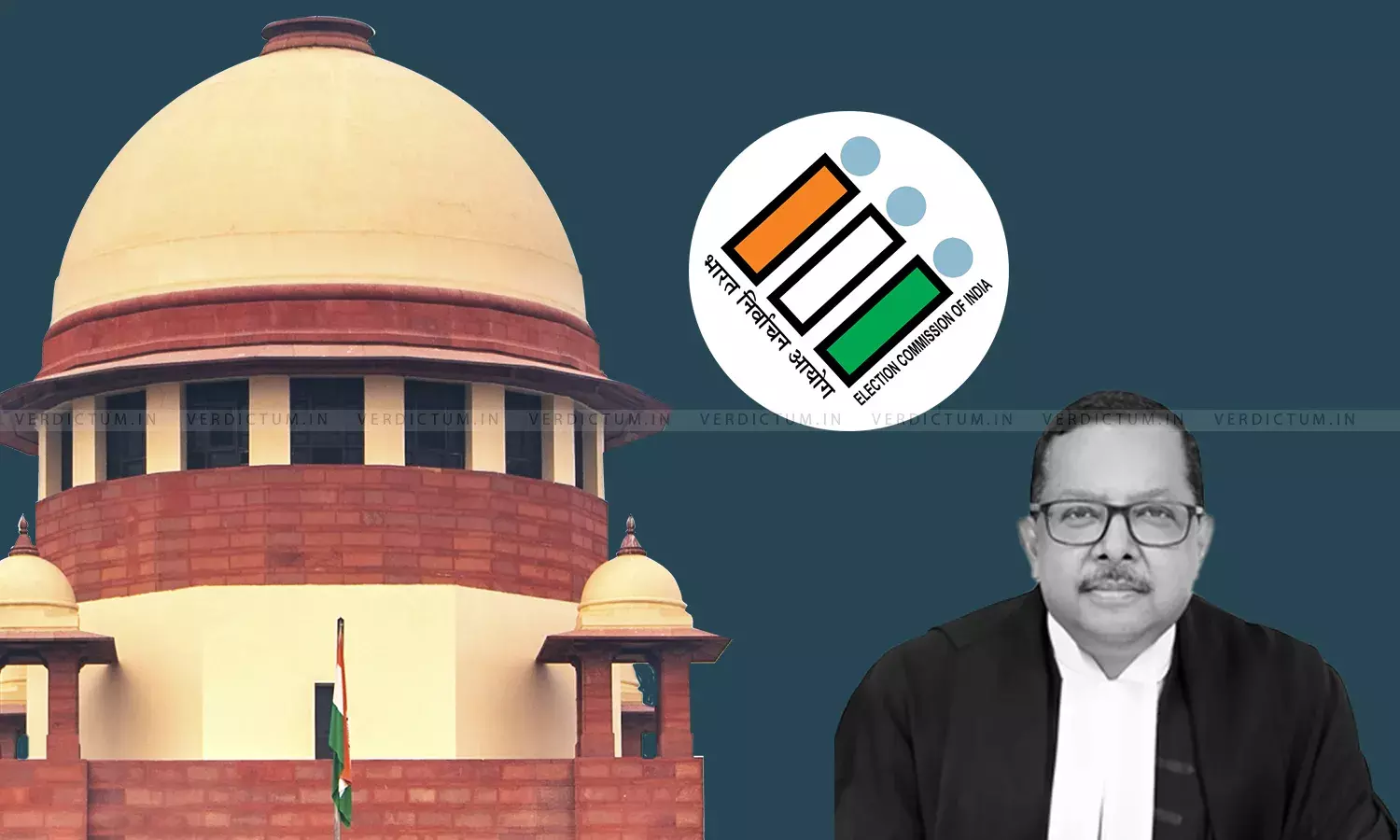
Justice Ujjal Bhuyan’s recent comments on the subject matter of SIR case, in NALSAR University function at Hyderabad, has justifiably attracted wide & poignant criticism. In civilized jurisdictions, judges are not expected to comment on the subject matter of cases that are pending or in the offing. How courts in relevant parts of the globe treat this aspect of the matter contextually assumes significance. Hence, this short write-up.
Comments, be it by commoners or judges, prejudicially affecting the ongoing judicial proceedings are not welcome, not only because they will adversely affect the parties involved but do have potential to affect their manner & outcome. In Roach v. Garvan, (1742) 26 Eng. Rep. 683, the Editors/Publishers of a magazine were found guilty and punished. Same was the treatment in King v. Clemen, (1821) 106 Eng. Rep. 918. The principles regulating the subject were reiterated by the Privy Council in Independent Publishing Co. Ltd. v. Attorney-General of Trinidad and Tobago, [2004] UKPC 26. All these cases are from U.K.
Let us see how such cases are dealt with in other jurisdictions. The US Supreme Court in Toledo Newspaper Co. v. United States, 247 US. 402 (1918), treated prejudicial comments on a pending proceeding as amounting to contempt of Court. In Packer v. Peacock, [1912] HCA 8, the Australian High Court found three publishers & one editor for contempt since their write-up transcended the limits of neutrality in reporting judicial proceedings. In R. v. Bryan, [1954] O.R 255, the Ontario High Court (Canada) handed a judgment of conviction & fine for contempt against publishers of a magazine which had unfairly put in public domain evidentiary material in an ongoing murder case. In Attorney General v. Pang Cheng Lian, [1974] SBHC 17, the Singapore High Court having convicted the publishers for contempt, fined them for expressing prejudicial view on a pending matter.
In India the normative judicial process has been consistent with what has been obtaining in the foreign jurisdictions as mentioned above. This becomes clear by Apex Court decision in In Re: P.C Sen, (1969) 2 SCR 649, wherein a sitting Chief Minister of West Bengal, was found guilty of contempt for making adverse comments on an ongoing proceeding on the ground that they interfered with the due administration of justice.
Now let us examine the judicial trend in civilized jurisdictions as to how judges’ comments on pending cases are viewed. The California Supreme Court in Howard R. Broadman v. Commission on Judicial Performance, 18 Cal. 4th 1079, found the judge concerned guilty for making public comments prejudicial to a pending matter before another court. The Supreme Court of Mississippi vide Mississippi Commission on Judicial Performance v. Carlos E. Moore, Municipal Court Judge, 2024-jp-00121-SCT, punished the Judge by removing him from service and levying a fine of three thousand dollars, after finding his comments as prejudicial to a pending proceeding. In the Matter of Benoit, 523 A.2d 1381, the Maine Supreme Judicial Court (US) handed a punishment of suspending the Judge for a week and fining him with one thousand dollars. In The Queen v. Gray, [1900] 2 QB 36, a Divisional Court in U.K faltered the judicial conduct in making overboard comments on a proceeding and punished the judge for contempt. Judge Robert Newlinds of Australia made highly critical comments during and in his judgment in R. v Martinez [2023] NSWDC 552 concerning the Director of NSW Judicial Commission and directed his recusal in criminal cases for the foreseeable future.
In the Full Court Meeting of our Supreme Court held on May 7, 1997, a unanimous resolution was adopted in which para ‘h’ reads: “A judge shall not enter into public debate or express his views in public on political matters or on matters that are pending or are likely to arise for judicial determination”. This prescription puts beyond the pale of doubt that in matters of misconduct of the kind, judges stand on par with other delinquents and therefore, no immunity avails to them as a class apart. In the Judges’ Conference held in New Zealand on 12 April 1996, the Australian Chief Justice Sir Gerard Brennan appropriately said, “…It is not for a judge to disqualify himself or herself from the full performance of duty by prior public comment…”.
It is very pertinent to mention paragraph 2.4 of The Bangalore Principles of Judicial Conduct, 2002 which unambiguously prescribes, “A judge shall not knowingly, while a proceeding is before, or could come before, the judge, make any comment that might reasonably be expected to affect the outcome of such proceeding or impair the manifest fairness of the process, nor shall the judge make any comment in public or otherwise that might affect the fair trial of any person or issue”. This is a representative prescription made by Judges of Constitutional Courts and only for the Judges, and therefore, public at large legitimately expects its scrupulous adherence. Justice Felix Frankfurter of US Supreme Court in Vitarelli v. Seaton, 359 US 535 (1959), said “An executive agency must be rigorously held to the standards by which it professes its action to be judged…”. This, equally if not more, applies to judicial agencies in whom is vested huge public confidence, its progressive diminution nowadays, notwithstanding.
Keeping all the above in mind, one can safely opine that Justice Ujjal Bhuyan ought not to have made the subject comments when the Supreme Court Bench beside his has been conducting the proceedings in the SIR case that has created repulse in the socio-political circles. Such comments not only embarrass his colleague judges but have the potential to prejudice the social acceptability of the outcome of proceedings. Senior Advocate Mr. Harish Salve is more than justified in expressing his anguish in so many words. Of course, the justifiability of alleged disfranchising of large chunks of voters from the Register, is an issue apart.
Lastly, a question arises: whether mere criticism of the culpable conduct of sitting judges will drive to rectitude or something more needs to be done…?
Author is a former Judge of the Karnataka High Court, retired as a Judge of the Orissa High Court.
[The opinions expressed in this article are those of the author.]