

SDM Cannot Unilaterally Issue Orders Imposing Pecuniary Penalties Under Disaster Management Act: Chhattisgarh High Court
The Chhattisgarh High Court was considering a Petition filed by the petitioner seeking quashing of the order passed by the Sub-Divisional Magistrate.

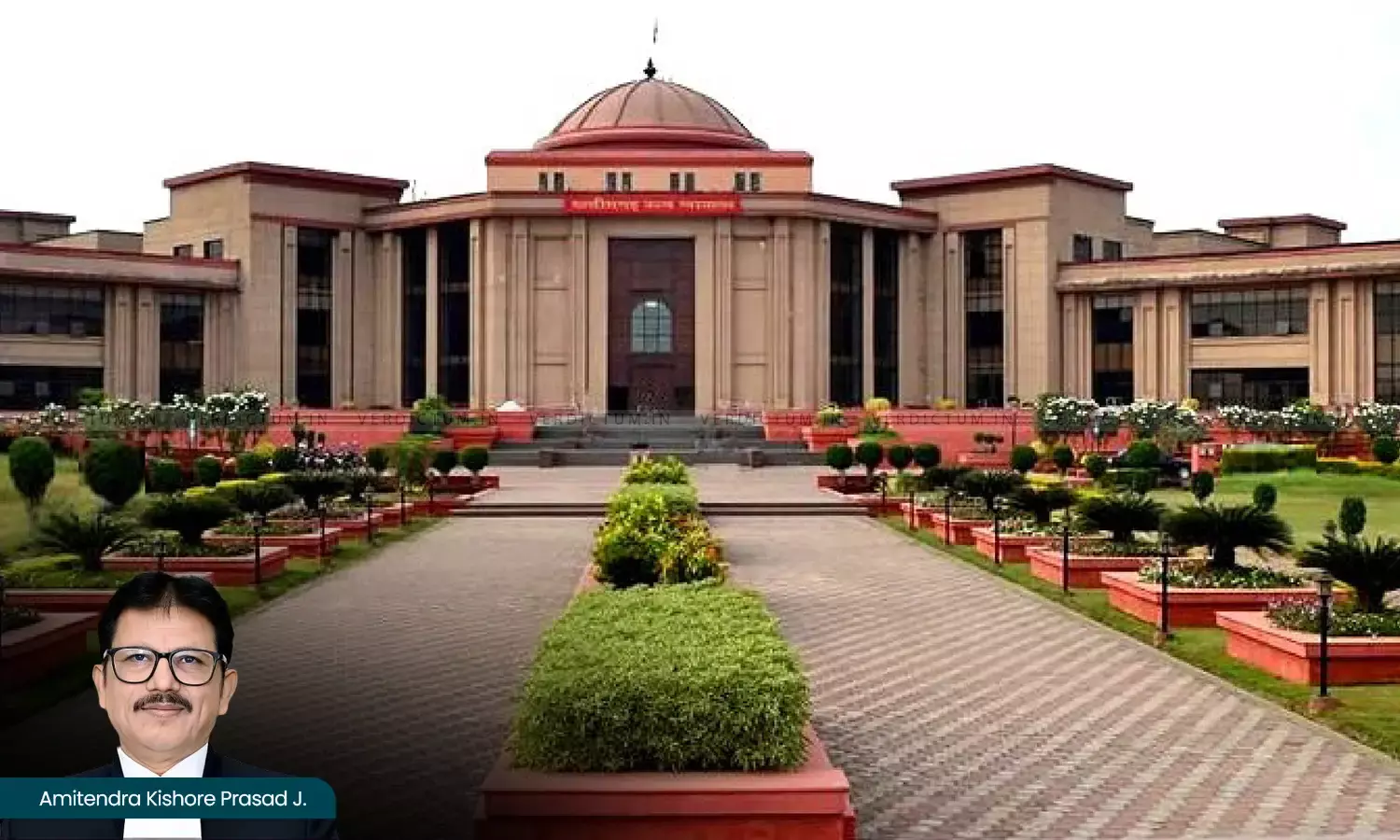
The Chhattisgarh High Court has quashed an order imposing penalties on the litigants for allegedly carrying out a marriage function exceeding the maximum permissible attendance of attendees during COVID-19 in the year 2021. The High Court held that the Sub-Divisional Magistrate lacks jurisdiction to unilaterally issue orders for the imposition of pecuniary penalties under the Disaster Management Act, 2005.
The High Court was considering a Petition filed by the petitioner seeking quashing of the order passed by the Sub-Divisional Magistrate.
The Single Bench of Justice Amitendra Kishore Prasad held, “Evidently, under the Act of 2005, the Sub Divisional Magistrate lacks jurisdiction to unilaterally issue orders for the imposition of pecuniary penalties. Under the scheme of the Act of 2005, a complaint must first be instituted and duly adjudicated before holding a person guilty. In the present case, no such complaint as contemplated under the Act of 2005 was ever lodged or adjudicated upon. The direct imposition of fine, without the filing of a complaint and in the absence of due statutory adjudication, is entirely beyond the jurisdiction and competence of the authority concerned.”
“In view of the foregoing discussion, the imposition of penalties upon the respective petitioners is held to be contrary to law and unsustainable. Accordingly, the impugned orders imposing penalties passed by the concerned Sub Divisional Magistrate in 11 each of the Writ Petitions are hereby quashed”, it ordered.
Senior Advocate Prafull N. Bharat represented the Petitioner while Government Advocate Akhilesh Kumar represented the Respondent.
Factual Background
The marriage between Harsh Sahu (son of petitioner - Saroj Sahu) and the daughter of petitioner - Prakash Sahu, was solemnised in 2021 at Chourasia Marriage Garden. The first Petitioner, Virendra Chourasia, was the proprietor of the said marriage garden. It was alleged that the marriage ceremony was attended by a gathering exceeding 50 persons, purportedly in violation of the prescribed COVID-19 protocol. During the subsistence of the pandemic, the Ministry of Home Affairs, Government of India, had issued an order under the Disaster Management Act 2005 (Act of 2005). In the State of Chhattisgarh, all Collectors-cumDistrict Magistrates were duly authorised under the provisions of the Epidemic Diseases Act, 1897 (Act of 1897) and the Act of 2005, to declare containment zones.
The regulations stipulated that marriage functions must strictly adhere to COVID-19 protocols and the directives prescribed by the Government of India, which capped the maximum permissible attendance at 50 persons and mandated that all attendees undergo COVID-19 testing. The Naib Tehsildar submitted a report alleging that a marriage function had taken place involving a gathering of about 1,000 persons. On the basis of the said report, a First Information Report (FIR) was registered against the petitioners for offences punishable under Sections 188 and 269 of the Indian Penal Code, 1860 and Section 3 of the Act of 1897.
The third Respondent (Sub-Divisional Magistrate-cum-Incident Commander) concluded that the petitioners had committed a breach of the Notification and passed an administrative order imposing penalties of over Rs 5 lakh on the three petitioners.
Reasoning
The Bench held that Section 3 of the Epidemic Diseases Act contains no provision empowering executive authorities to directly impose pecuniary penalties. “The said section does not lay down any independent penal procedure and it merely stipulates that any person disobeying a regulation or order made under the Act shall be deemed to have committed an offence punishable under Section 188 of the IPC”, it added.
The Bench also clarified, “Under Chapter IV of the Act of 2005, the District Disaster Management Authority is headed by the Collector or District Magistrate as its Chairperson, who alone is vested with executive powers to exercise functions under the Act. In the absence of any statutory delegation or express power conferred upon the concerned Sub Divisional Magistrate to levy fines, the impugned orders imposing penalties is manifestly illegal and without jurisdiction.”
The Bench was of the view that once the First Information Report lodged against the petitioners on the very same set of factual allegations had already been quashed by the Division Bench of the Court on the ground that it was unsustainable, the very basis for the imposition of fine stood completely erased.
Thus, the Bench quashed the impugned orders imposing the penalties.
Cause Title: Saroj Sahu v. State Of Chhattisgarh (Neutral Citation: 2026:CGHC:44242)
Appearance
Petitioner: Senior Advocate Prafull N. Bharat, Advocate P. Vishal Sahu
Respondent: Government Advocate Akhilesh Kumar, Advocate Anand Pandey, Bhupendra Singh