

"Sharia Court" Has No Jurisdiction To Adjudicate Marital Status, Its Orders Not Binding Or Enforceable: Chhattisgarh High Court
The Court held the Idara-E-Shariya's talaq declaration incapable of altering legal rights of parties; and left the constitutional validity of Talaq-e-Hasan open pending Supreme Court decision.

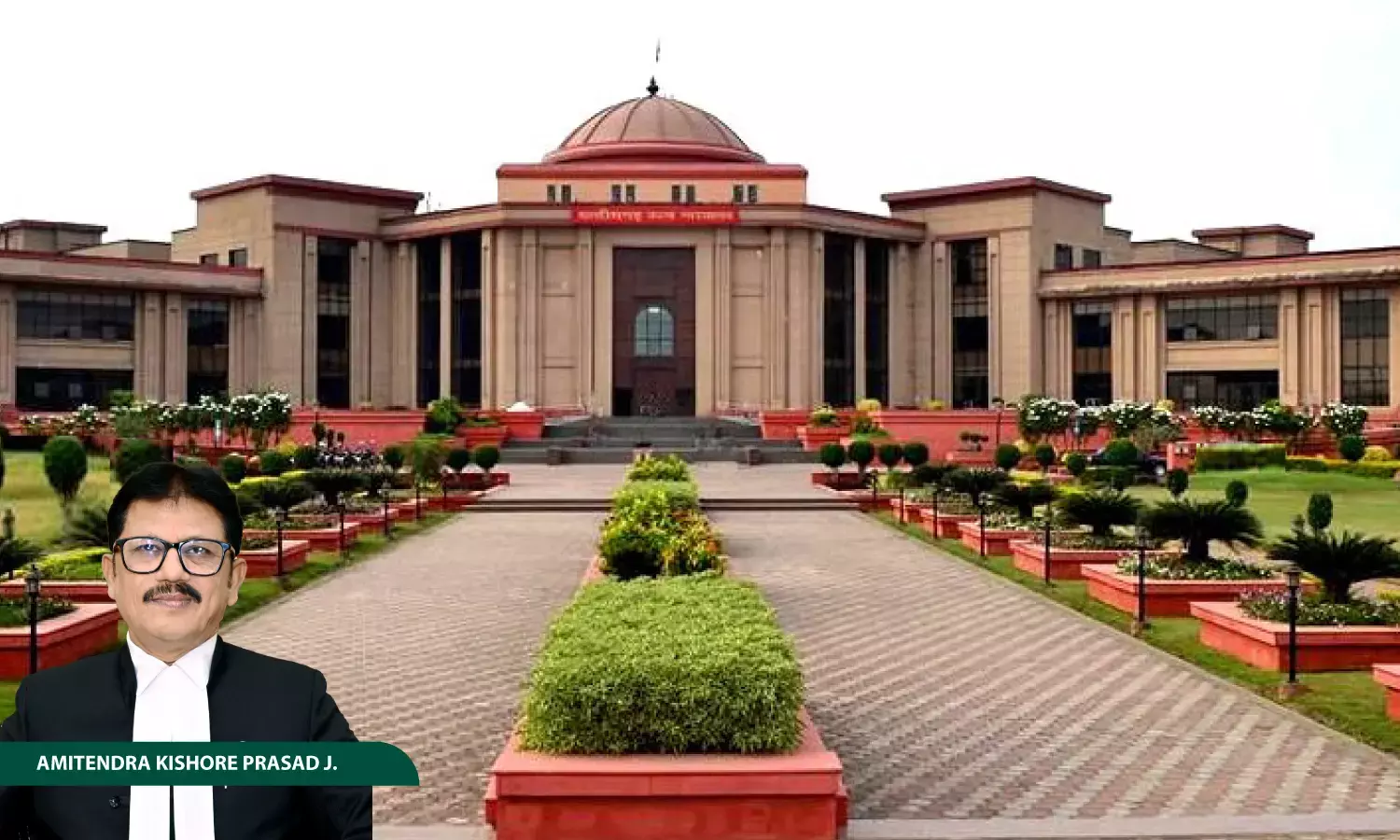
The Chhattisgarh High Court has held that a self-styled "Idara-E-Shariya Islami Court" possesses no jurisdiction to adjudicate upon or determine the marital status of a Muslim woman, ruling that its order purporting to declare her divorced by Triple Talaq was without legal authority and incapable of creating, extinguishing or altering any legally enforceable right or status.
The Court further clarified that any opinion, verdict or fatwa issued by such private religious bodies, however styled, cannot be enforced through coercive process or treated as a binding adjudication of civil or matrimonial rights, while consciously declining to pronounce upon the larger constitutional validity of Talaq-e-Hasan, a question left open in view of its pendency before the Supreme Court.
A Bench of Justice Amitendra Kishore Prasad observed, “Respondent No.9 cannot be recognised as a Court constituted under the Constitution or any statute. It has no jurisdiction to adjudicate upon the marital status of the petitioner or to pass an order which, in law, determines whether the petitioner stands divorced from Respondent No.10…pendency of such proceedings cannot confer jurisdiction upon Respondent No.9 which it otherwise does not possess. Nor can a purported decision of a private religious body be treated as a substitute for an adjudication by a Court established under law…”.
“More importantly, the Hon'ble Supreme Court cautioned that no Dar-ul-Qaza or other institution, by whatever name called, should issue a verdict or fatwa touching upon the rights, status or obligations of an individual unless such individual has sought it, and further held that such a decision, not emanating from a judicial system recognised by law, is not binding and cannot be enforced by coercive process”, the Bench further said.
Advocate Devershi Thakur appeared for the petitioner and Abhishek Banjare, Central Government Counsel and Senior Advocate Fouzia Mirza appeared for the respondents.
The petitioner, a Muslim woman whose first husband had passed away in 2015, married Respondent No. 10 in July 2020. Her children from her first marriage lived with the couple. Respondent No. 10 allegedly claimed the children could not adjust to the new family, on which ground the petitioner was subjected to Talaq-e-Biddat/Triple Talaq.
She contested this, asserting Shariyat Law could not override Indian law, and separately filed a harassment and cruelty complaint that led to an FIR under Sections 498-A and 34 IPC. Despite these pending proceedings, Respondent No. 9, the Idara-E-Shariya Islami Court, passed an order on January 18, 2022 declaring her divorced by Triple Talaq, received by her on January 21, 2022.
The petitioner challenged both this order and the very existence of the Idara-E-Shariya Islami Court as unconstitutional. The State supported her, arguing that bodies like "Sharia Courts" or "Darul Qaza" have no statutory recognition, and that Respondent No. 9 had projected itself as a parallel judicial system using court-like terminology and a balance emblem. Respondent No. 10, who had pronounced Talaq-e-Hasan in three phases between August and October 2021, argued he had no role in Respondent No. 9's functioning, and noted the constitutional validity of Talaq-e-Hasan was separately pending before the Supreme Court in Benazeer Heena v. Union of India. Respondent No. 9 defended itself as a purely advisory religious institution, relying on Vishwa Lochan Madan v. Union of India [(2014) 7 SCC 707].
Relying on Vishwa Lochan Madan, the Court held that adjudicatory power must flow from validly enacted law, and bodies like Dar-ul-Qaza, being uncreated by any legislature, fall outside the recognised judicial system. A fatwa is merely an opinion, not a binding decree, and cannot be enforced coercively, though its existence isn't itself illegal.
Applying this, the Court held Respondent No. 9 could not be recognised as a Court and had no jurisdiction over the petitioner's marital status. Its order was, at best, a religious opinion incapable of altering any legal right or status.
“Respondent No.9 is further held to have no jurisdiction to function as a Court constituted under the Constitution or any law enacted by a competent legislature, and any opinion, verdict or decision issued by it cannot be enforced by coercive process or treated as a binding adjudication of the civil or matrimonial rights of the parties”, the Bench said.
The writ petition was allowed in part, the order dated January 18, 2022, insofar as it purported to declare the petitioner's marital status or dissolve her marriage, was declared without legal authority and incapable of altering any legal right or status.
Cause Title: Nirosh Abbasi v. Union of India and Others, WPC No. 795 of 2022
Appearances:
Petitioner: Devershi Thakur, Advocate.
Respondents: Abhishek Banjare, Central Government Counsel, R.K. Gupta, Additional Advocate General, Fouzia Mirza, Senior Advocate, Ali Afzaal Mirza, Advocate.