Presumption U/S 139 NI Act Can Be Rebutted Based On Circumstances: Chhattisgarh High Court Upholds Acquittal Over Alleged Lost Cheque Misuse
The accused had informed his bank about the lost cheque book before the date stated on the disputed cheque and consistently maintained that the complainant had misused it.
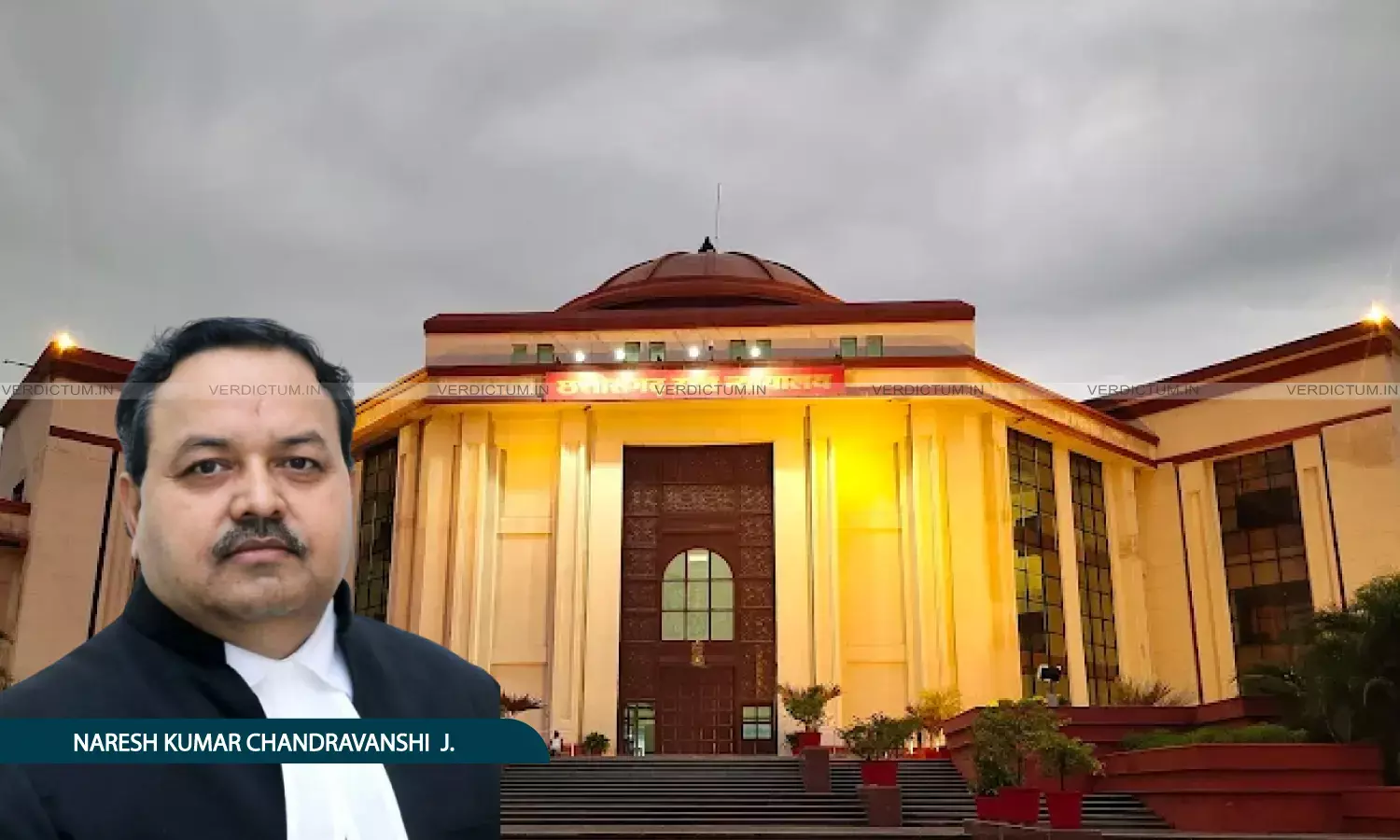
Justice Naresh Kumar Chandravanshi, Chhattisgarh High Court
The Chhattisgarh High Court has held that an accused may rebut the presumption under Section 139 of the Negotiable Instruments Act, 1881 by relying on his own evidence, the materials produced by the complainant and the circumstances established in the case.
Applying the preponderance-of-probabilities standard, the Court upheld the accused’s acquittal after finding that his lost-cheque defence was supported by a prior intimation to the bank and contradictions in the complainant’s account.
The Court was hearing a criminal revision under Sections 438 and 442 of the Bharatiya Nagarik Suraksha Sanhita, 2023 challenging the Upper Session Judge’s decision affirming the Judicial Magistrate First Class’s acquittal of the accused under Section 138 of the NI Act.
A Bench of Justice Naresh Kumar Chandravanshi, referring to Basalingappa v. Mudibasappa (2019), reiterated: “To rebut the presumption, it is open for the accused to rely on evidence led by him or accused can also rely on the materials submitted by the complainant in order to raise a probable defence. Inference of preponderance of probabilities can be drawn not only from the materials brought on record by the parties but also by reference to the circumstances upon which they rely.”
Advocate Parag Kotecha appeared for the complainant. Advocate Ashwin Panickar appeared for the accused.
Background
The complainant alleged that, because of their family relationship, he had advanced ₹60,000 to the accused four months before filing the complaint. According to him, the accused issued a cheque to repay the loan, but the cheque was dishonoured for insufficient funds and the amount remained unpaid despite a legal notice.
The accused denied the debt and asserted that some signed cheques and a blank cheque book had been misplaced and that the complainant had misused one of the cheques. He examined himself and his father and produced documents in support of the defence.
The Judicial Magistrate First Class acquitted the accused after finding material contradictions concerning when the cheque was issued and deposited. The Trial Court also relied on an intimation sent by the accused to his bank before the date on the cheque, stating that the cheque book had been lost and requesting stoppage of payment. The Upper Session Judge affirmed the acquittal.
In revision, the complainant submitted that the accused had not denied his signature and that the police and court complaints alleging misuse had been made only after receipt of the legal notice. He argued that the courts below had wrongly relied on those documents and disregarded the presumptions under Sections 118 and 139 of the NI Act.
The accused responded that the bank intimation predated the alleged issuance of the cheque and supported his defence. He further relied on the concurrent acquittal and submitted that the complainant had established no perversity or illegality warranting revisional interference.
Court’s Observations
Concurrent Acquittal Reinforced Presumption Of Innocence
The Court held that revisional jurisdiction was confined to correcting patent defects, jurisdictional errors, perversity or manifest injustice. It could not reappreciate the evidence as an appellate court merely because another view was possible.
Referring to Sri Dattatraya v. Sharanappa (2024), the Court noted the higher threshold applicable to a challenge against concurrent acquittals. The Supreme Court had explained: “Criminal jurisprudence emphasises on the fundamental essence of liberty and presumption of innocence unless proven guilty. This presumption gets emboldened by virtue of concurrent findings of acquittal. Therefore, this court must be extra-cautious while dealing with a challenge against acquittal as the said presumption gets reinforced by virtue of a well-reasoned favourable outcome.”
The Court found no perversity or illegality in the concurrent decisions that would warrant revisional interference.
Presumption Could Be Rebutted On Probabilities
The Court explained that Section 139 of the NI Act created a rebuttable presumption that an admitted cheque had been issued in discharge of a debt or liability. The accused was required to raise a probable defence on the standard of preponderance of probabilities rather than prove it beyond reasonable doubt.
The Court further highlighted the nature of that burden by reproducing Basalingappa: “That it is not necessary for the accused to come in the witness box in support of his defence, Section 139 imposed an evidentiary burden and not a persuasive burden.”
The Court consequently assessed the defence evidence together with the complainant’s materials, cross-examination and surrounding circumstances instead of requiring the accused to disprove the alleged loan conclusively.
Prior Bank Intimation Supported Lost-Cheque Defence
The Court found that the accused had consistently asserted the lost-cheque defence in his reply to the legal notice, during the complainant’s cross-examination, in his statement under Section 313 of the Code of Criminal Procedure, 1973 and through defence evidence supported by his father.
Although the accused approached the police and a criminal court after receiving the demand notice, the Court found that he had informed his bank about the missing cheque book well before the date stated on the disputed cheque and had requested stoppage of payment. It held that this prior intimation, read with the later complaints, prevented the misuse defence from being brushed aside.
Complainant’s Account Contained Material Contradictions
The Court found inconsistencies among the complaint, legal notice, affidavit evidence and cross-examination concerning when the accused allegedly issued the cheque and when the complainant deposited it. It also noted that the complainant had not specified when the alleged loan was advanced and had not attested or proved that the signature on the cheque belonged to the accused.
Applying the rebuttal standard to the combined material, the Court held: “Having considered the aforesaid vague statements and further considering the defence taken by the respondent/accused and the action taken by him vide Ex-D/1 to D/7, in the considered opinion of this Court, the learned Trial Court as well as the learned Appellate Court have not erred in recording the finding that the subject cheque (Ex-P/1) was not issued by the respondent/accused to the applicant/complainant to discharge any debt or legal liability and on the basis of preponderance of probabilities, the respondent/accused has succeeded to rebut the presumption arisen under Section 139 of the NI Act in favour of the applicant/complainant.”
The Court therefore found no perversity or illegality in the concurrent conclusion that the cheque had not been issued to discharge a legally enforceable debt.
Conclusion
The High Court upheld the Trial Court’s acquittal and the Appellate Court’s affirming decision. Holding that the accused had rebutted the presumption under Section 139 of the NI Act on a preponderance of probabilities, it dismissed the complainant’s criminal revision.
Cause Title: Gurvinder Singh v. Balvinder Singh (Neutral Citation: 2026:CGHC:48127)