RTE Students Cannot Demand Automatic Transfer From One Private Unaided School To Another Upon Closure: Chhattisgarh High Court
The Court held that Article 21A requires the State to provide free, compulsory and uninterrupted elementary education, but does not confer an absolute right to education in a particular private unaided school.
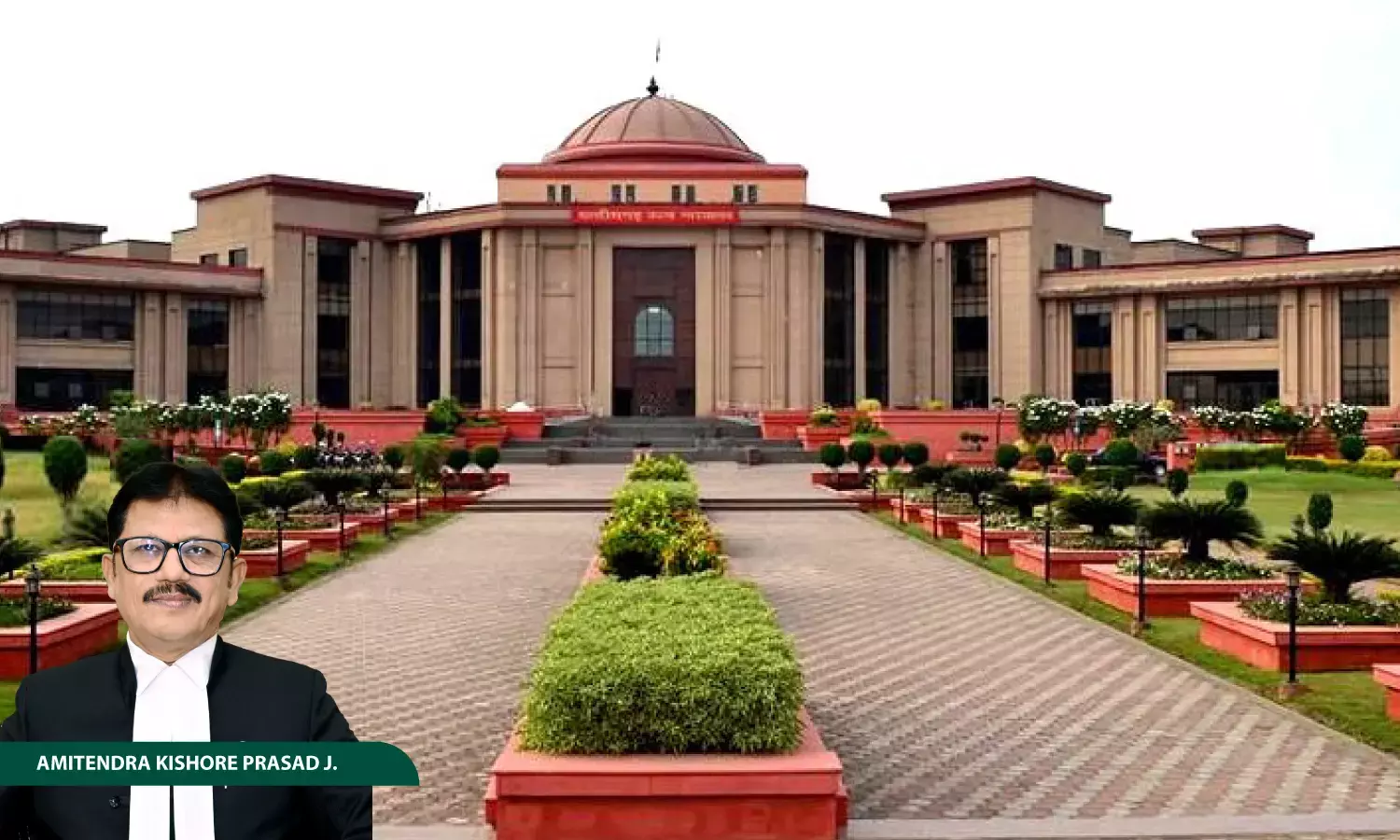
The Chhattisgarh High Court has held that students admitted under the Right to Education quota cannot demand automatic transfer from one private unaided school to another upon the closure of the former in the absence of enabling legislation.
While declining to interfere with the direction to relocate them to Government schools, the Court directed the State to prioritise nearby State-run English-medium institutions and ensure a smooth academic transition.
The Court was hearing a petition challenging the District Education Officer’s refusal to permit RTE students of a private school’s Kota branch to shift to its Bharni branch following the former’s closure. The petitioners also challenged the application of a State circular requiring students of closed private schools to be accommodated in nearby government schools.
A Bench of Justice Amitendra Kishore Prasad observed: “Neither the RTE Act nor the Chhattisgarh RTE Rules, 2010 contain any statutory provision permitting or compelling the automatic transfer of RTE quota students from one private unaided school to another private unaided institution upon the closure of the former. Voluntary undertakings, consent of parents, or internal arrangements between the private management and guardians cannot create an enforceable public law remedy or entitle the petitioners to a writ of mandamus against the State in the absence of enabling legislation”.
The Bench added: The mandate of Article 21 A of the Constitution of India read with Sections 8 and 9 of the RTE Act, imposes a continuing duty upon the State to guarantee free, compulsory and uninterrupted elementary education. This fundamental right guarantees access to elementary education, however, it does not confer an absolute right to demand education exclusively within a private unaided institution of choice”.
Advocate Vagisha Tiwari appeared for the petitioners, while Additional Advocate General R.K. Gupta appeared for the State.
Background
The Court noted that the petitioners were among approximately 66 RTE-quota students studying at St. Xavier’s High School’s Kota branch. The management decided to merge the branch with its separately recognised Bharni branch, situated in a different development block and approximately 20 kilometres away.
The petitioners stated that the management had agreed to continue their education at the Bharni branch without charging an additional admission fee, transfer their records and provide transportation at a reasonable cost. Their parents had consented to the arrangement.
The District Education Officer rejected the proposed accommodation at the Bharni branch and directed that the affected students be shifted to nearby government schools under a State circular governing the closure of private schools.
The petitioners contended that a voluntary arrangement between the school management and consenting parents did not require specific statutory authority. They also argued that treating the Kota branch as closed without following Section 18 of the Right of Children to Free and Compulsory Education Act, 2009 and Rule 16 of the Chhattisgarh RTE Rules, 2010 was illegal.
The State submitted that neither the RTE Act nor the applicable Rules or policy permitted compulsory transfer between private unaided schools. It argued that Article 21A did not confer a right to insist upon education in a private institution and that all similarly affected students had been uniformly accommodated in nearby government schools.
Court’s Observations
No Enforceable Right To Transfer Between Private Schools
The Court held that voluntary undertakings by the school management, parental consent or internal arrangements between a private institution and the students’ guardians could not create an enforceable public-law remedy in the absence of enabling legislation.
The Court consequently held that the petitioners could not compel the State to transfer them to the Bharni branch or another private English-medium institution merely because the management and parents were willing to implement such an arrangement.
Article 21A Does Not Guarantee A Private School Of Choice
The Court observed that Article 21A, read with Sections 8 and 9 of the RTE Act, imposed a continuing obligation upon the State to guarantee free, compulsory and uninterrupted elementary education.
However, the Court distinguished that obligation from a right to demand education in a particular private institution.
The Court found that the State had satisfied its constitutional and statutory obligations by immediately accommodating the affected students in nearby recognised government schools under the applicable circular.
Uniform Application Of Closure Policy Was Not Discriminatory
The Court observed that the State circular created a uniform administrative mechanism for reallocating students from closed private schools to nearby State institutions. It found that the policy had been applied to all 66 students affected by the closure of the Kota branch.
The Court stated: “In the absence of statutory guidelines permitting inter-block private migration, the State acted strictly within its policy domain.”
Since the petitioners had not established hostile discrimination or an arbitrary departure from the governing policy, the Court rejected their challenge under Article 14 of the Constitution.
Right To Education Includes Quality Education
The Court referred to Dr. Jaya Thakur v. Government of India and Others (2026), which discussed the constitutional development of the right to free and compulsory education and relied upon Devesh Sharma v. Union of India (2023) to emphasise that the right must involve education of satisfactory quality.
The Court also referred to State of Tamil Nadu v. K. Shyam Sunder (2011), which held that the right to education was not confined to free and compulsory access but extended to quality education without discrimination based on a child’s social, economic or cultural background.
Relying further on Dinesh Biwaji Ashtikar v. State of Maharashtra (2026), the Court noted that the RTE Act contemplated neighbourhood schools as common educational spaces and imposed obligations upon recognised government, aided, specified-category and unaided schools.
Portal Listing Did Not Create A Right To Private-School Transfer
The petitioners had argued that the Kota branch continued to appear on the RTE admission portal and had participated in the online process for the relevant academic session. The Court held that a delay or technical error in updating the portal could not override the fact that the management had merged the functioning of the school with its Bharni branch.
“A mere administrative listing on a Government portal cannot create an enforceable legal right to demand a transfer to another private institution,” the Court observed.
The Court further noted that the petitioners had not produced material establishing that fresh RTE admissions were actually made after the Kota branch ceased its academic operations.
Derecognition Procedure Did Not Apply To Voluntary Closure
The Court held that the procedure under Section 18 of the RTE Act and Rule 16 of the Chhattisgarh RTE Rules, requiring notice, inquiry and hearing before withdrawal of recognition, applied when the State initiated penal action to derecognise a school.
The Court clarified that the procedure did not apply to a voluntary policy decision by private-school management to close or relocate its operations. It consequently rejected the petitioners’ allegation of procedural non-compliance.
Children Must Not Suffer Academic Loss
Although the Court declined to recognise an automatic right of transfer between private schools, it emphasised that the welfare of children admitted under the RTE scheme remained paramount.
“The Right to Education under Article 21-A is meant to protect children and official procedures should never cause them academic loss just because a private school closes down,” the Court observed.
The Court accordingly directed the State to complete the affected students’ accommodation in nearby government schools expeditiously. It further directed the authorities to prioritise nearby State-run English-medium institutions, including Atmanand Excellent English Medium Schools, to prevent hardship arising from a mid-stream change.
Conclusion
The Court upheld the District Education Officer’s decision rejecting the proposed transfer of the RTE students to the private school’s Bharni branch and declined to interfere with the State’s policy of accommodating them in government schools.
The Court directed the State to complete their placement expeditiously, prioritise nearby State-run English-medium institutions and ensure a smooth transition without administrative delays in issuing transfer certificates or transferring school records for the academic session.
Cause Title: Atharv Gupta and Others v. Union of India and Others (Neutral Citation: 2026:CGHC:43126)