

Bank Operating As Group Insurance Master Policyholder Cannot Absolve Itself Of Liability By Terming Insurer Solely Responsible: Chhattisgarh High Court
The Court said that a bank acting as a master policyholder under a group insurance scheme cannot pass the entire burden of communication onto the insurance company.

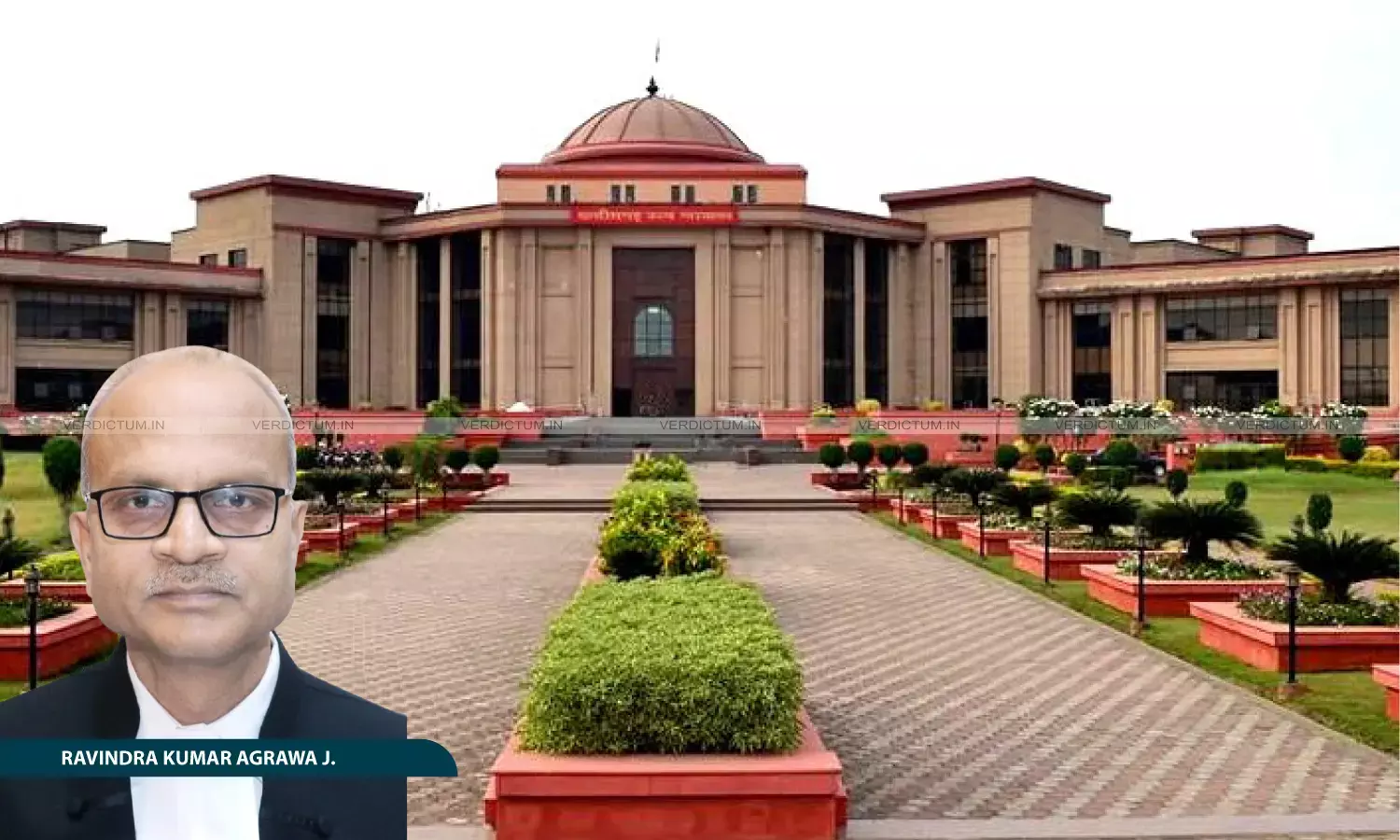
The Chhattisgarh High Court observed that a banking institution operating as a master policyholder under a group insurance scheme cannot absolve itself of contractual obligations by shifting the entire communication burden onto the insurance company.
It was held that once a bank undertakes the responsibility of facilitating life insurance coverage for its borrowers as an integral part of a loan transaction, its role extends far beyond serving as a mere conduit for premium remittance.
The Court held that where the bank admittedly receives an intimation regarding the rejection of an insurance proposal along with the refunded premium amount from the insurer, it owes a strict duty of due diligence to communicate the same to the borrower during their lifetime.
Consequently, the bank's failure to notify the borrower or timeously credit the refund—thereby depriving the individual of an opportunity to rectify application deficiencies—constitutes a distinct, actionable negligence that amounts to a "deficiency in banking service" under Section 2(7) of the Consumer Protection Act, 2019.
The Bench of Justice Ravindra Kumar Agrawal said, "In these circumstances, the petitioner cannot absolve itself of its obligations by saying that the insurer alone was required to communicate with the insured. Once the petitioner undertook to facilitate insurance under the Master Policy and admittedly received the insurer's communication along with the refunded premium, it was under a corresponding duty to act with due diligence and keep the borrower informed."
Advocate Pankaj Singh appeared for the Petitioner, while the Respondent/complainant appeared in person.
Brief Facts
The complainant’s husband availed a housing loan from the petitioner bank. To secure the said loan liability, he submitted a proposal for insurance coverage under a group insurance scheme floated by the insurance company, wherein the complainant was designated as the nominee. The premium amount was successfully deducted by the petitioner bank from the borrower’s account and remitted to the insurance company. The borrower subsequently passed away due to a sudden brain haemorrhage during the subsistence of the loan arrangement. Following his demise, the complainant submitted a claim application for the liquidation of the outstanding loan amount, which was repudiated by the opposite parties.
The complainant filed a consumer complaint alleging a deficiency in service and unfair trade practice. The District Consumer Commission partly allowed the complaint against the petitioner bank, finding it negligent in failing to communicate the rejection of the insurance proposal to the borrower during his lifetime. This order was successively affirmed in first appeal by the State Consumer Commission and in second appeal by the National Consumer Disputes Redressal Commission. Aggrieved by these concurrent findings, the petitioner bank approached the High Court by way of a writ petition under its supervisory jurisdiction.
Contentions of the Parties
The petitioner bank contended that it merely acted as a lending institution and its role was strictly confined to the deduction and remittance of the insurance premium. It was argued that the insurance proposal was independently scrutinized and cancelled by the insurance company due to the borrower's non-compliance with medical requirements, thereby absolving the bank of any liability to communicate the rejection or refund. The petitioner further argued that the complaint was not maintainable as the complainant did not satisfy the statutory definition of a "consumer" vis-à-vis the bank, given that no independent banking service was hired or availed for the execution of the insurance contract.
The insurance company contended that no valid contract of insurance ever came into existence because the deceased borrower failed to submit the requisite medical documents necessary for the assessment of life risk. It was further pleaded that the proposal was cancelled during the lifetime of the proposer and the premium amount was duly refunded to the master policyholder bank, meaning no risk was ever assumed by the insurer.
The respondent/complainant supported the impugned orders of the consumer forums and contended that the petitioner bank, as the master policyholder, owed a legal and contractual duty to keep the borrower informed of any deficiencies or rejection. It was submitted that the bank negligently retained the refund cheque and adjusted the premium amount into the loan account long after the borrower’s demise, thereby depriving him of an opportunity to rectify the medical deficiencies and secure insurance coverage.
Observations and Findings of the Court
The High Court observed that the statutory definition of a "consumer" under the Consumer Protection Act explicitly encompassed any beneficiary of a service hired for consideration and commanded a liberal construction to advance the legislative intent.
"The Bank was, therefore, not acting merely as a conduit for remittance of the premium but had undertaken the responsibility of facilitating insurance coverage for its borrowers under the Master Policy. The material on record further reveals that after the Insurance Company declined the proposal, the communication regarding rejection along with the refund of premium was admittedly received by the petitioner-Bank, yet the borrower was neither informed of the rejection nor was the refunded amount credited to his account during his lifetime. Thus, the deficiency alleged by the complainant arises not out of the insurance contract alone but from the banking service rendered by the petitioner", the Court held.
It found that the deceased borrower hired the banking services of the petitioner for consideration, which integrated the facilitation of insurance under the master policy, thereby rendering the complainant a valid consumer entitled to maintain the complaint.
The Court further found that under the group insurance arrangement, the petitioner bank did not act as a mere conduit but as the master policyholder through whom the transaction was processed. The evidence on record established that the insurance company sent the rejection intimation and the refund cheque to the bank, but the bank failed to inform the borrower or credit his account during his lifetime, choosing to adjust the amount only after his death.
Relying on established judicial precedents, the Court held that once a banking institution undertook the responsibility of facilitating insurance, any negligence or dereliction in discharging that obligation constituted an explicit deficiency in banking service.
Finally, the Court observed that its supervisory jurisdiction under Article 227 of the Constitution of India was restricted to examining jurisdictional errors, patent perversities, or manifest injustices, and could not be extended to act as an appellate court for the re-appreciation of evidence.
"At this juncture, it is apposite to note that the supervisory jurisdiction of this Court under Article 227 of the Constitution is confined to examining whether the subordinate forum has acted without jurisdiction, in excess of jurisdiction, committed a patent perversity, or ignored material evidence resulting in manifest injustice. The power under Article 227 is neither appellate nor intended to permit re-appreciation of evidence merely because another view may also be possible. Where findings of fact are based upon an appreciation of evidence and have been concurrently recorded by competent forums, interference is warranted only when such findings are shown to be perverse, arbitrary, or wholly unsupported by the record", the Court said.
Finding no illegality, arbitrariness, or perversity in the concurrent findings recorded by the three consumer forums below, the High Court dismissed the writ petition.
Cause Title: Branch Manager, State Bank of India v. Smt. Rashmi Shrivastava & Anr. [Neutral Citation:2026:CGHC:26160]
Appearances:
Petitioner: Advocate Pankaj Singh
Click here to read/download the Judgment