

Calcutta High Court Upholds ECI Requisition Of College Teachers As Presiding Officers For West Bengal Assembly Elections
The Court held that the Election Commission is constitutionally empowered to requisition staff for election duties and such appointments cannot be termed illegal when drawn from State-controlled institutions.
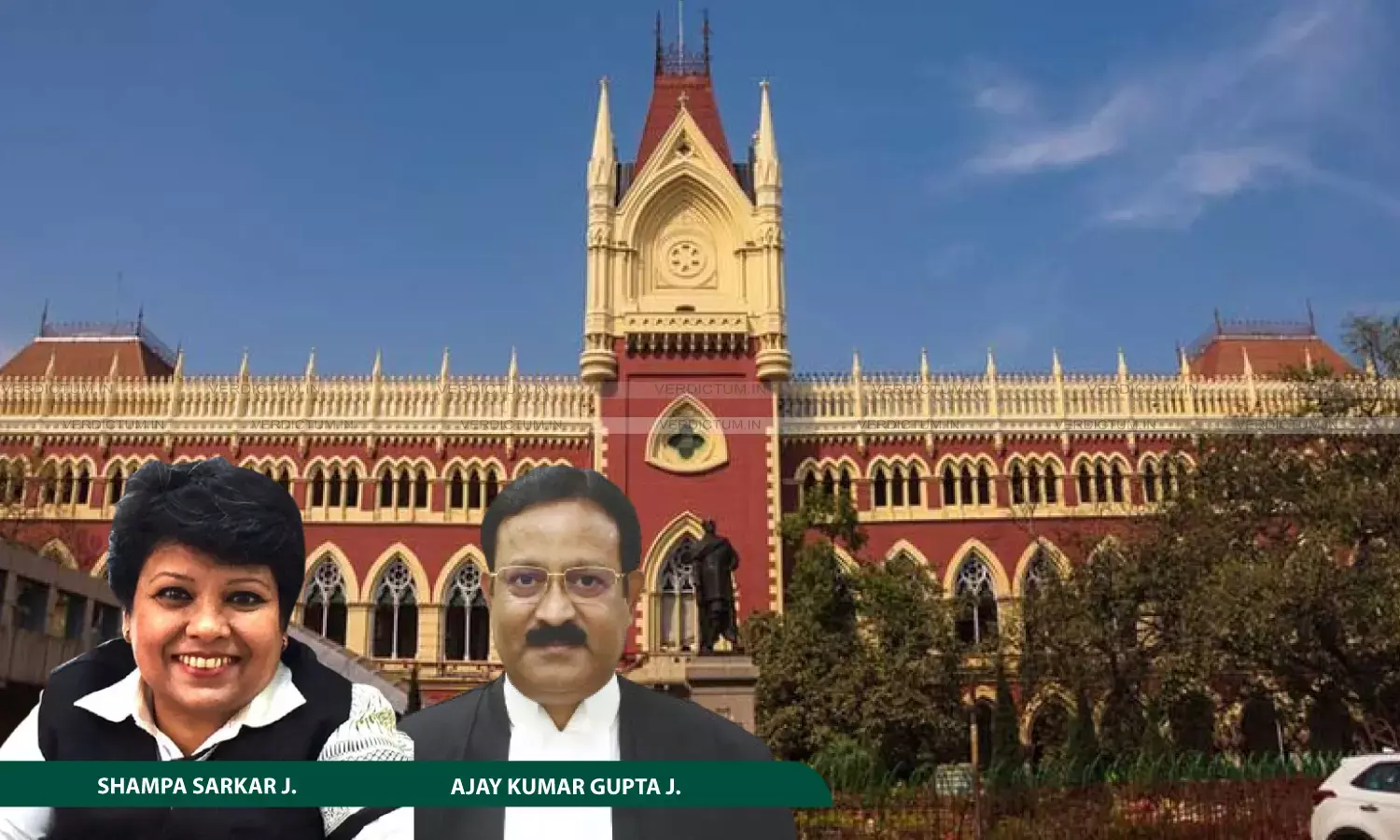
The Calcutta High Court has held that requisition of college teachers for election duty as presiding officers is neither illegal nor contrary to the constitutional mandate under Article 324 of the Constitution of India or the statutory framework under the Representation of the People Act, 1951.
The Court was hearing an appeal filed by the Election Commission of India challenging an order passed by the Single Judge directing reconsideration of the appointment of college teachers as presiding officers in polling stations.
A Division Bench of Justice Shampa Sarkar and Justice Ajay Kumar Gupta observed: “Each citizen has a duty to render service in national interest and uphold the democracy for which we stand. Requisition of staff by the Commission is permitted by the Constitution under Article 324(6), and the power has been vested in the Commission by the Constitution itself. Section 159 of the 1951 Act was incorporated by the legislature to carry forward the constitutional mandate under Article 324”.
“The authorities specified under Sub-Section (2) shall make available to any returning officer such staff as may be necessary for the performance of any duty in connection with an election. An authority includes every university established or incorporated by or under the Central Provisional or the state Act. Sub-Clause 4 of Sub-Section (2) provides that staff can be requisitioned from any other institution which is established by or under a central or state Act or which is controlled or financed wholly or substantially by funds provided directly or indirectly by the Central Government or State Government”, the Bench added.
Senior Advocate Jishnu Chowdhury appeared for the appellants; Senior Advocate Abhratosh Majumder appeared for the respondents.
Background
The writ petition was filed by the President of the West Bengal Government College Teachers’ Association, contending that members of the association were aggrieved by their requisition for election duty and appointment as presiding officers.
It was alleged that the Election Commission had acted in violation of its own circulars, particularly by engaging Group-A level college teachers for polling duties without recording specific reasons. The petitioners further contended that such teachers ought to have been assigned roles commensurate with their rank, such as observers or micro-observers.
The Single Judge accepted the contention that the Commission had failed to justify the necessity for such appointments and disposed of the writ petition with directions affecting the requisition process.
Aggrieved, the Election Commission preferred the present appeal, contending that it possessed constitutional and statutory authority to requisition staff and that such power had been exercised in accordance with law.
Court’s Observation
The High Court examined the constitutional framework under Article 324 and the statutory scheme under Section 159 of the Representation of the People Act, 1951. It held that the Constitution itself empowers the Election Commission to requisition staff necessary for the conduct of elections and that such power is further reinforced by statutory provisions.
The Court observed: “The authorities specified… shall make available… such staff as may be necessary for the performance of any duty in connection with an election.”
The Court noted that the term “authority” includes universities and institutions established or substantially controlled by the State, thereby bringing college teachers within the ambit of requisition.
On the facts, the Court found that the members of the association were employees of colleges fully controlled by the State Government.
It held: “it is an admitted position that the members… are employees of colleges fully controlled by the State Government… their appointment is neither illegal nor contrary to the constitutional mandate or the legislative mandate.”
The Court rejected the contention that such appointments were arbitrary or dehors statutory provisions. The Court undertook a detailed examination of the roles of presiding officers and observers and found that the two operate in distinct spheres.
It noted that observers are required to be government officers with extensive administrative experience and act as an interface between the Election Commission and the field machinery, whereas presiding officers are in charge of polling stations on the day of the poll.
The Court held that there was no hierarchy placing presiding officers below observers or sector officers and that the contention regarding a mismatch of rank and pay scale was misconceived.
The Court emphasised the broader constitutional principle that the conduct of elections is a national function requiring the participation of citizens.
It observed: “It is a solemn duty of all citizen to serve in national interest and this solemn duty outweighs personal preference.”
The Court further noted that the dignity and status of teachers were not compromised by their temporary assignment as presiding officers. The Court examined the reliance placed on earlier circulars and held that the revised circular of 2023 had superseded previous instructions.
It observed that such instructions primarily guide administrative allocation of duties and do not override the constitutional and statutory powers of the Election Commission.
The Court found that the learned Single Judge had not adequately considered the constitutional mandate and statutory provisions governing requisition of staff. It also noted that the impugned order was passed at a stage when election preparations were underway and that interference at such stage would disrupt the electoral process.
The Court observed that such directions could result in administrative chaos, particularly where training of personnel had already commenced.
Conclusion
The High Court held that requisition of college teachers for election duty as presiding officers is within the constitutional and statutory powers of the Election Commission and cannot be termed illegal.
The Court stayed the operation of the impugned order passed by the Single Judge and permitted the Election Commission to proceed with the appointment of presiding officers in accordance with law.
Cause Title: The Election Commission of India & Ors. v. Rupa Banerjee Nee Samjpati
Appearances
Appellants: Senior Advocate Jishnu Chowdhury; Advocates Anamika Pandey, Sanskriti Agarwal, Rishika Pandey, Ghanshyam Pandey
Respondents: Senior Advocate Abhratosh Majumder; Advocates Subhasis Chakraborty, Aditya Mondal, S. Chakraborty, Sushmita Singh; Advocates Biswaroop Bhattacharyya, Arkaprava Sen, Sayantan Kar, Deboleena Mukherjee
